
Hijab Bans and Islamophobia in Europe: How Religious Freedom Is Under Fire
An in-depth analysis of hijab bans and rising Islamophobia across Europe — exploring how religious freedom, equality, and democracy are being challenged in the name of secularism.

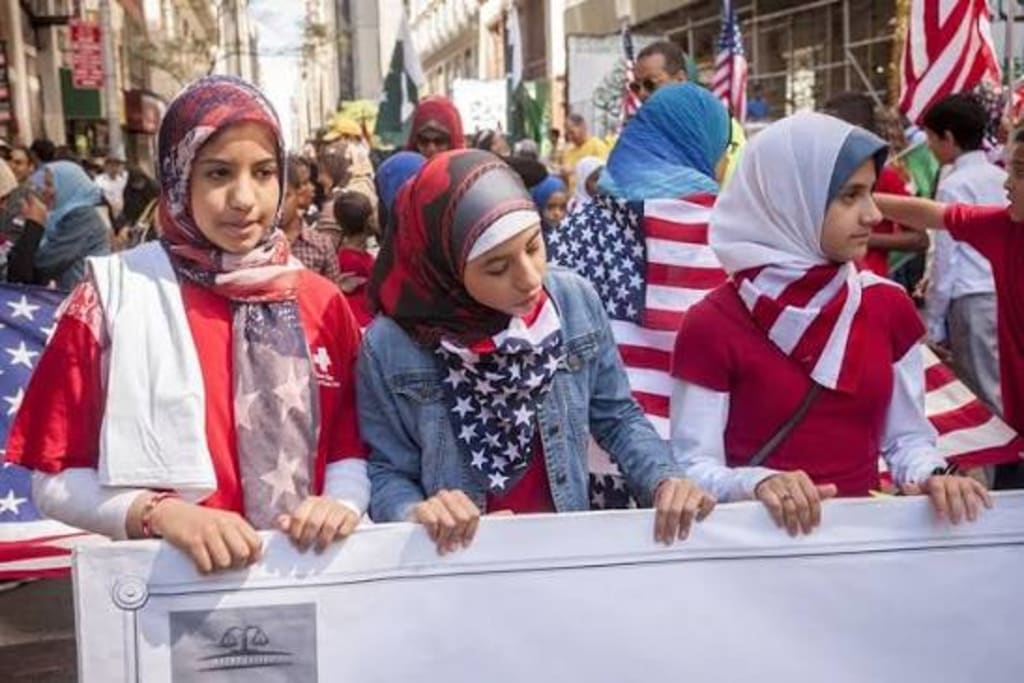
The Growing Controversy Over Religious Symbols in Europe
In recent years, Europe has found itself at the center of a heated debate over religious freedom — particularly concerning Muslim women who wear the hijab or niqab. What began as isolated incidents of restriction in schools or workplaces has now become a continent-wide issue, raising serious questions about equality, diversity, and the meaning of freedom in democratic societies.
From France’s long-standing ban on religious symbols in public schools to new discussions in Germany, Belgium, and the Netherlands, the issue of whether faith-based clothing belongs in public spaces has polarized Europe’s political and cultural landscape.
The Post-Gaza Surge in Islamophobia
The war in Gaza has intensified anti-Muslim sentiment across Europe. Reports from human rights organizations indicate a sharp rise in hate crimes, verbal assaults, and workplace discrimination targeting Muslim communities — particularly women in hijab.
In cities like Paris, London, and Berlin, protests supporting Palestine have often been met with police crackdowns and accusations of “promoting extremism.” This has made many Muslims feel that expressing solidarity with Gaza — or even practicing their faith openly — is now seen as a political act rather than a personal right.
This environment has created fear, resentment, and isolation for thousands of European Muslims who once believed that the continent represented liberty and equality for all.
France and Germany at the Heart of the Debate
France has been the focal point of this controversy since it passed a law in 2004 banning religious symbols, including the hijab, in public schools. The French government argues that the law protects secularism — a principle known as laïcité — by keeping religion out of public institutions.
However, critics argue that secularism is being misused as a tool of exclusion. For many Muslim women, the ban feels like a direct attack on their identity, forcing them to choose between education, employment, and their faith.
Germany, meanwhile, presents a more complex picture. Some states allow religious attire in certain professions, while others prohibit it. The issue reached the European Court of Justice (ECJ), which ruled that private companies can ban religious symbols under specific conditions — a decision that many viewed as legitimizing discrimination.
The European Court’s Dilemma: Neutrality or Suppression?
The European Court of Justice insists that such bans are not discriminatory as long as they apply to all religions equally. Yet, the reality is far from equal.
Christian crosses and Jewish kippahs often face less resistance than the hijab or niqab, suggesting that Islamophobia may be hiding behind the language of “neutrality.”
By claiming to protect equality, Europe may actually be reinforcing old prejudices — presenting a version of freedom that excludes those who appear “too different.”
The Voices of Muslim Women: Between Resistance and Survival
For Muslim women living in Europe, this debate is not theoretical — it affects their everyday lives. Some women have chosen to resist by wearing the hijab proudly despite social pressure, while others have felt forced to remove it to secure jobs or education.
Their voices reveal a deep emotional struggle. One woman from Belgium said, “They say it’s about freedom, but I lost my freedom to choose.”
Many Muslim women argue that the bans do not liberate them but rather silence them, making them invisible in the name of “equality.”
What This Means for Europe’s Identity
The ongoing restrictions have sparked a broader conversation about Europe’s identity in the 21st century. Is the continent still a beacon of freedom and diversity — or is it drifting toward cultural conformity?
When laws target visible expressions of faith, they risk alienating millions of citizens whose only “crime” is being visibly Muslim. This alienation could have long-term consequences for social harmony, integration, and trust between communities.
The irony is that while Europe promotes freedom of speech, the freedom to express one’s faith is being quietly suppressed.
My Personal Reflection
As a writer and observer, I believe the heart of this issue lies not in religion but in understanding. Every society has the right to define its values, but when those values begin to silence a part of its population, it’s time to pause and reflect.
Europe’s beauty lies in its diversity — a mosaic of cultures, languages, and beliefs. To preserve that beauty, it must learn to accept difference, not erase it.
If the hijab represents submission for some, for others it symbolizes faith, strength, and dignity. The choice should belong to the individual, not the state.
The question Europe must now answer is this:
Will it continue to preach freedom while restricting it — or will it truly embrace the pluralism it once promised?
About the Creator
Filmon Ke Raaz | Movie Mysteries Explained
Filmon Ke Raaz is a storytelling platform where movies are explained in a simple and engaging way. We uncover hidden meanings, untold facts, and deep mysteries behind thriller, horror, and mystery films.
Keep reading
More stories from Filmon Ke Raaz | Movie Mysteries Explained and writers in Writers and other communities.
Miss Persephone's Manual to a Seemingly Ordinary Life
Miss Persephone was found at the dining table, her blue eyes swollen, her tears arriving and retreating like the tides of the ocean. Earlier that day, her family had visited her in the retirement home where she had lived for eight years. It was her eightieth birthday.
By Imola Tóth3 days ago in Fiction



Comments
There are no comments for this story
Be the first to respond and start the conversation.