
Health campaign reaches over 150 learners in Juba with lessons on ulcers, food safety, and healthy eating
Over 150 learners in Juba have benefited from a week-long health awareness campaign by the Excellence Foundation for South Sudan, equipping them with vital knowledge on ulcers, food safety, and hygiene.

Author: Emmanuel Bida
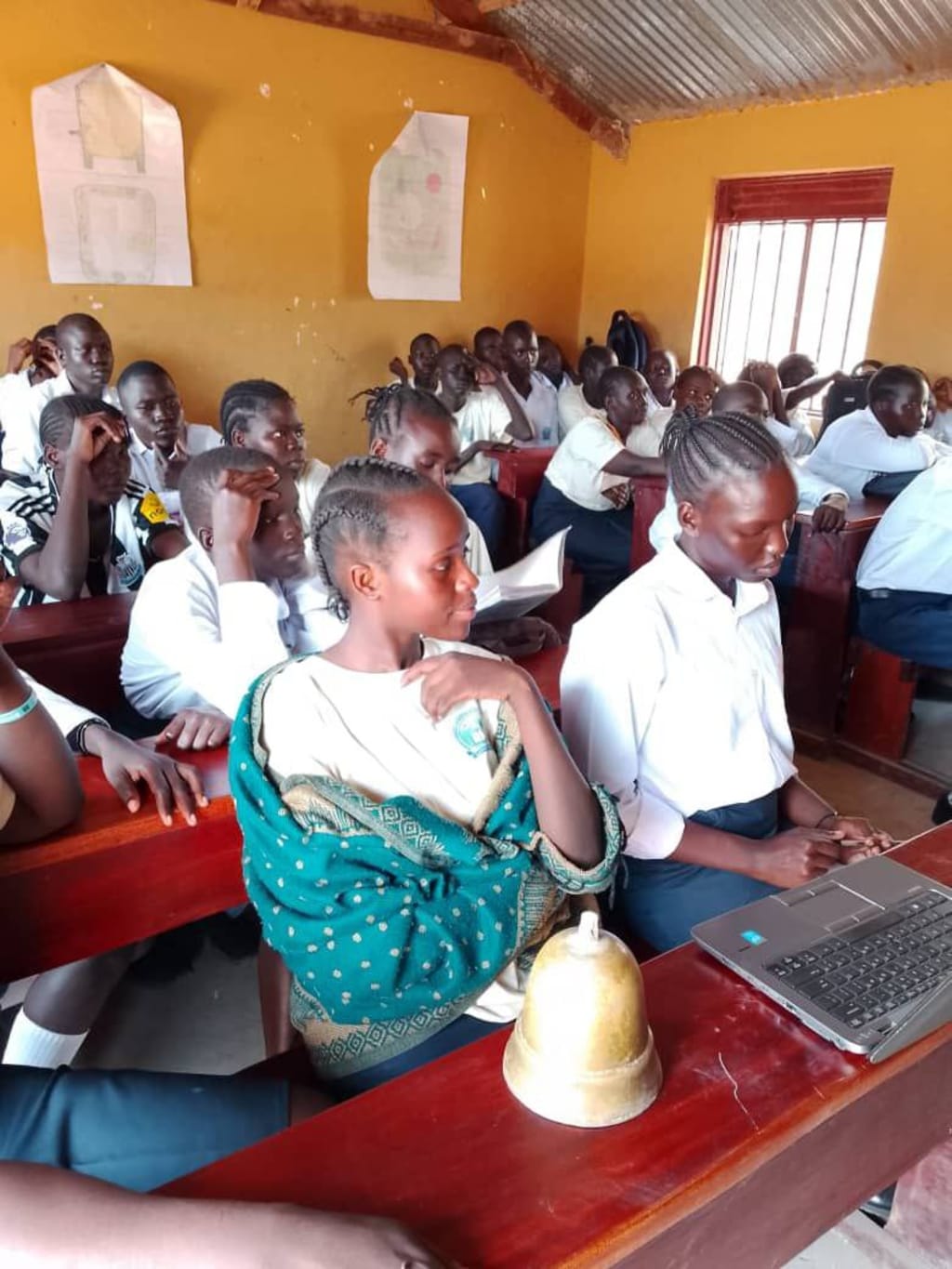
Juba, South Sudan – July 23, 2025 — More than 150 pupils and students across three schools in Juba have completed a week-long health awareness campaign spearheaded by the Excellence Foundation for South Sudan (EFSS), aimed at addressing rising health concerns among school-aged children.
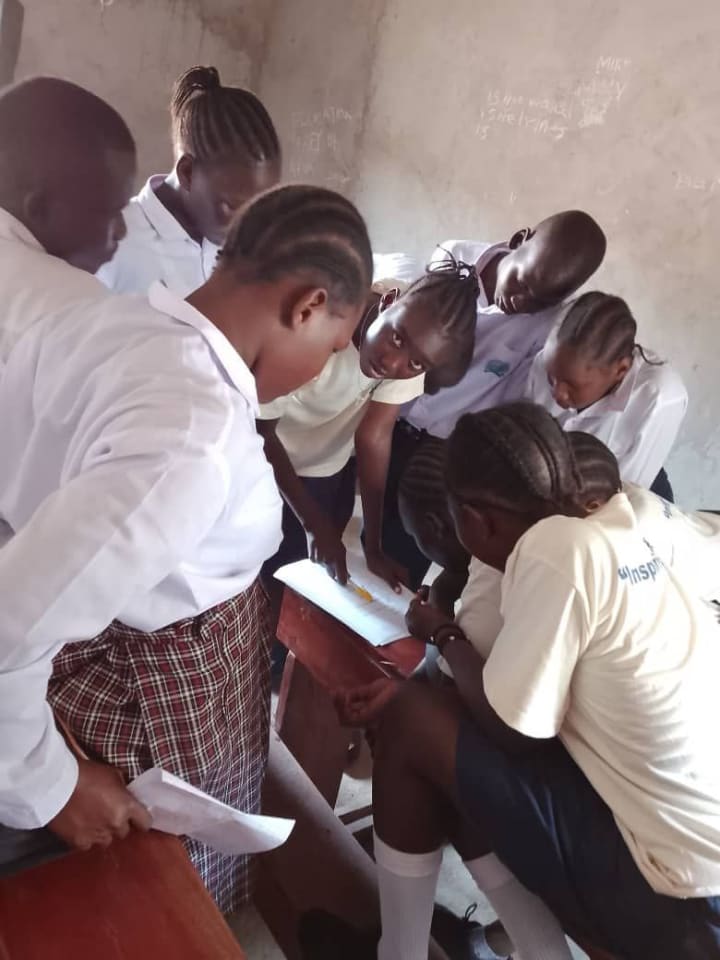
Between 16 and 22 July 2025, learners at Homeland Secondary School, Friendship Primary School, and Bishop Mazzoldi Memorial Primary School took part in interactive health education sessions focused on the causes and prevention of ulcers, the dangers of consuming hot food wrapped in plastic, and the importance of healthy eating. The initiative, implemented in the urban neighbourhoods of Nyakuron and Buluk, represents a timely response to increasing reports of stomach-related health complaints among students in the capital.
The pilot phase of the project, supported by a modest budget and driven by local facilitators, adopted a child-friendly and participatory approach. Learners engaged in storytelling, role-plays, real-life demonstrations, and quizzes—methods that not only delivered key health messages but also ensured active learning and engagement. Each school hosted one intensive session lasting two hours and thirty minutes each, designed to provide practical health information in a format that resonated with young audiences.
“We wanted to reach students where they are, with methods they could relate to and messages that stick,” said Khemis Simon Stephen, Project Manager at Excellence Foundation for South Sudan. “This was not just about lecturing. It was about transforming behaviour through participation, curiosity, and peer-led support.”
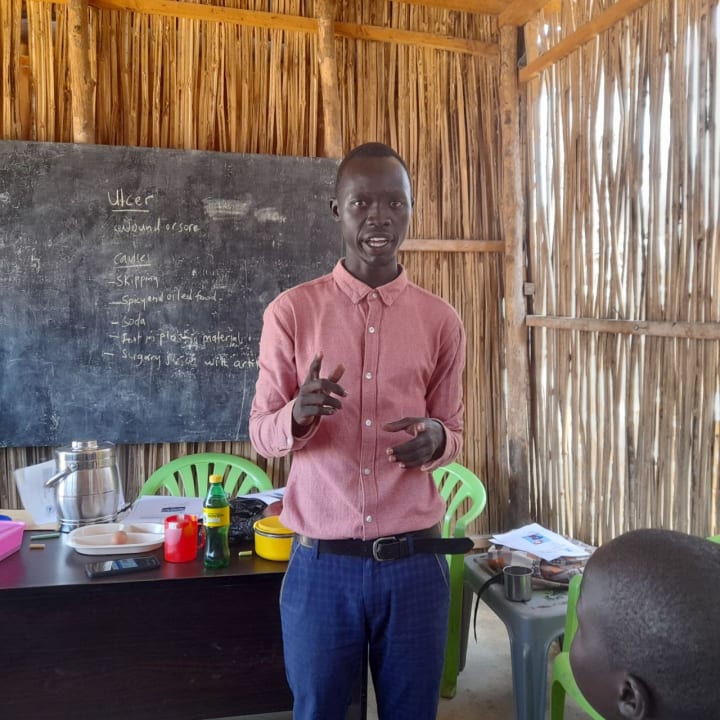
The campaign was initiated in response to growing health concerns raised by both students and teachers in Juba, particularly cases involving stomach pain, suspected ulcers, and poor eating practices among learners. Many students were reported to be skipping meals, consuming hot food served in plastic, and lacking basic balanced diet awareness—conditions that health educators say can lead to long-term complications if left unaddressed.
At Friendship Primary School, facilitators observed a noticeable shift in learner engagement during the question and answer session. Children began asking questions about the food they consume daily and started recognising the risks associated with seemingly harmless habits, such as buying hot snacks in plastic wraps from vendors near school premises. Teachers at Homeland Secondary reported similar reflections, noting that even older students—often difficult to reach with health messaging—showed renewed interest in wellness and hygiene.
Kade Tereziana, a nutritionist, lecturer at the University of Juba and one of the campaign’s lead facilitators, emphasised the need for sustained interventions. “This project revealed just how much misinformation exists and how hungry our young people are for the truth,” she said. “But it also showed that real change is possible when the message is made clear, relatable, and consistent.”
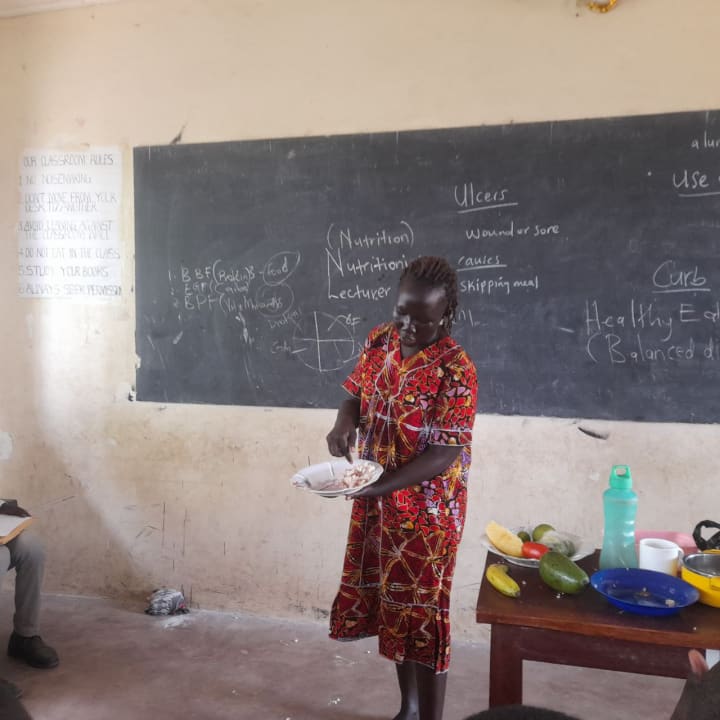
Monitoring and evaluation data collected throughout the sessions indicate that a majority of learners demonstrated improved knowledge on ulcer causes, healthy eating practices, and food safety. Facilitators recorded strong participation in quizzes and hands-on demonstrations, with many students able to correctly identify the dangers of using plastic on hot food and list the key steps in healthy eating habits.
With promising results from this first phase, the Excellence Foundation is now exploring opportunities to scale the campaign to other schools across Central Equatoria State. Plans are also underway to expand engagement to food vendors and parents, building a broader ecosystem of support for student health and safety.
“Improving the health of our students is a foundational step in improving their education outcomes,” Khemis added. “When children feel well, they learn better. This project is just the beginning—we hope to reach more schools in Juba, and eventually beyond.”
About the Creator
Excellence Foundation for South Sudan
We are a volunteer-based national nongovernmental and non-profit organisation championing education support initiatives and socio-economic development.
We visualize a society where everyone has the opportunity for a high-quality life.
Keep reading
More stories from Excellence Foundation for South Sudan and writers in Writers and other communities.
Excellence Foundation for South Sudan launches ‘Build Your Best Self’ fellowship
Author: Emmanuel Bida Juba, South Sudan – July 2025 — The Excellence Foundation for South Sudan (EFSS) has announced the launch of the Build Your Best Self Fellowship 2025, a career readiness initiative aimed at empowering final-year university students, recent graduates, and entry-level professionals in Juba with the skills and confidence to navigate the modern job market.
By Excellence Foundation for South Sudan6 months ago in Writers
It's Winter
Anne Bernays and Pamela Painter — What If? Writing Exercise for Fiction Writers prompts The Exercise —Write a scene involving two characters. Have the point-of-view character presume something entirely different about the situation from what the other character's overt behavior seems to imply. For example, a landlord comes to visit, and the tenant suspects that it isn't a visit but an inspection. Make up several situations in which one character can fantasize or project or suspect or even fear what another character is thinking. The Objective - To show how your characters can use their imaginations to interpret the behavior and dialogue of other characters.
By Denise E Lindquist17 days ago in Writers
Point The Blame At Your Heart
I write some poems, but not as many as others on Vocal. Most of my poems are about love—wanting love, sad love, or feelings of love. I think I am a big softie inside! Here we go. We blame love stuff on our hearts. We say “loving you with all my heart” and “you break my heart.” All love and feelings are linked to our hearts. We blame everything good or bad on hearts.
By Rosalina Jane3 days ago in Writers



Comments
There are no comments for this story
Be the first to respond and start the conversation.