
Hamlet: The Tragedy of a Prince Torn Between Thought and Revenge
A timeless tale of betrayal, madness, and the haunting price of justice in Shakespeare’s most iconic play.

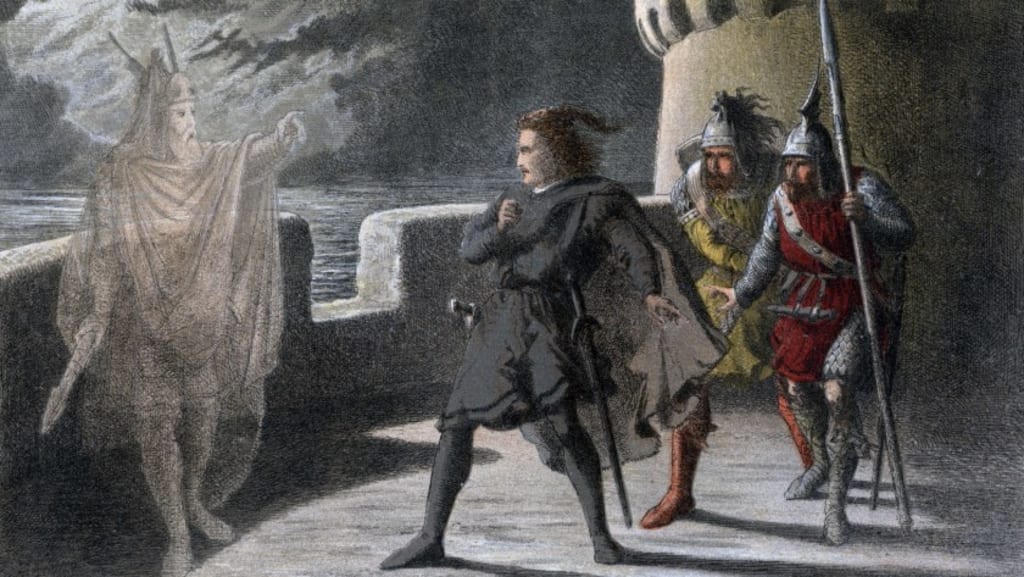
Hamlet: A Tale of Madness, Revenge, and Tragedy
In the cold kingdom of Denmark, a storm brews not just in the skies but within the soul of a young prince. His name is Hamlet, and though born to rule, he finds himself drowning in sorrow. Just weeks ago, his beloved father—the king—died suddenly, and before his mourning clothes could gather dust, his mother Gertrude married his uncle Claudius, who now wears the crown.
The halls of Elsinore Castle echo with whispers. Something doesn’t sit right with Hamlet. He’s haunted by a feeling, a gnawing instinct that his father’s death was not natural. Soon, that suspicion is confirmed in the most chilling way possible.
One night, Hamlet’s loyal friend Horatio and the castle guards see a ghost wandering the battlements. It is the spirit of the late king, pale and armor-clad. They bring Hamlet to meet the ghost, and under the moonlight, his father’s spirit tells a dreadful tale: he was murdered by his own brother, Claudius, who poured poison into his ear as he slept. The ghost demands revenge.
Hamlet is shattered. His world, already unsteady, collapses entirely. He swears to avenge his father but must be cunning—Claudius is now king, and no one would believe the word of a grieving prince against him. To mask his plan, Hamlet begins to feign madness, confusing the court and causing alarm.
Not everyone is convinced he’s truly mad. Polonius, the king’s advisor, believes Hamlet’s madness is due to heartbreak over his daughter Ophelia, with whom Hamlet has had a complicated romance. Claudius and Gertrude send spies—Rosencrantz and Guildenstern, Hamlet’s old friends—to uncover the truth.
But Hamlet is always one step ahead. He distrusts everyone, speaks in riddles, and questions the very meaning of life. His most famous soliloquy—“To be, or not to be”—is not just about death, but about the weight of existence itself. Why suffer life’s pain? Why not end it? But he fears the unknown, the dreams that may come in death. And so he hesitates.
To confirm Claudius’s guilt, Hamlet stages a play called The Mousetrap, mirroring the murder of his father. He watches Claudius’s face closely during the performance. When the scene of the poisoning plays out, Claudius storms away—guilt written across his brow. Now, Hamlet is certain.
Yet still, he hesitates. In a moment alone, he finds Claudius praying. It would be the perfect time to strike. But Hamlet reasons that killing a man at prayer might send his soul to heaven—a reward, not justice. So he waits again, and the bloodshed begins to spiral.
Mistaking Polonius for Claudius hiding behind a curtain, Hamlet stabs him to death. This act unravels what little stability remains. Ophelia, devastated by her father’s death and Hamlet’s erratic behavior, descends into madness. Her grief leads her to a watery death—an apparent suicide.
Meanwhile, Claudius, now afraid for his life, sends Hamlet to England with Rosencrantz and Guildenstern, carrying secret orders for Hamlet’s execution. But the prince outwits them, alters the letters, and returns to Denmark alone, his soul now hardened.
Enter Laertes, Ophelia’s brother, who returns to avenge his family. Claudius manipulates Laertes into a deadly plot: challenge Hamlet to a duel, poison the tip of the sword, and keep a poisoned drink nearby, just in case.
The duel begins before the court. The blades clash. Laertes wounds Hamlet but is cut himself in the chaos. Gertrude, unaware of the poison, drinks the fatal wine and dies. Laertes, dying, reveals the king’s treachery. Enraged and betrayed, Hamlet finally acts: he stabs Claudius and forces him to drink the poison.
As the poison seeps through his own veins, Hamlet’s life slips away. But before dying, he names Horatio the bearer of truth—his voice to tell the tale. Fortinbras, a noble prince from Norway, arrives to find the royal family destroyed. He honors Hamlet as a fallen hero and takes control of Denmark.
Thus ends the tragedy of Hamlet—a story of betrayal, madness, and revenge that spirals into death for nearly all involved. It is not just a tale of vengeance but a deep exploration of the human condition. Hamlet asks questions that still echo today: What is justice? What does it mean to live with purpose? And when is it right to act, or to wait?
In the end, Hamlet is no simple hero. He is flawed, introspective, sometimes cruel, and always caught between thought and action. But perhaps that is what makes his story so enduring. We see ourselves in his doubt, in his pain, and in his search for meaning in a world that often seems senseless.
About the Creator
Soul Drafts
Storyteller of quiet moments and deep emotions. I write to explore love, loss, memory, and the magic hidden in everyday lives. ✉️
Keep reading
More stories from Soul Drafts and writers in Writers and other communities.
Classic & Poetic
The Wanderer Above the Sea of Fog: A Story of Solitude and Soul The fog curled around the mountain peaks like a living thing, soft and silent, veiling the world below in mystery. From the jagged precipice where he stood, the wanderer could see only hints of what lay beneath—black ridges cutting through the pale, sea-like mist, like islands afloat in a spectral ocean.
By Soul Drafts7 months ago in Art
Ludacris and Nelly draw backlash over bookings at MAGA-coded music festival
Ludacris and Nelly headlining a mostly right-wing event is good for them. It’s also great for the genre of hip hop. The two rap veterans have showcased their talents on other stages. Why can’t they perform for mostly MAGA folks and grab that bag?
By Skyler Saunders3 days ago in Beat




Comments
There are no comments for this story
Be the first to respond and start the conversation.