
Governance Structure of Educational Organizations and Businesses
Understanding Roles, Responsibilities, Rules, and Processes


Each organization is guided by a central objective that defines its purpose, supported by a series of services, policies, procedures, and practices designed to help achieve and advance its mission. However, the central goal and supporting events would not be effective if there were not a set of roles, responsibilities, rules, and processes in place within the decision-making process of various projects—known as the “Governance Structure”.
Roles and Responsibilities Within an Organization:
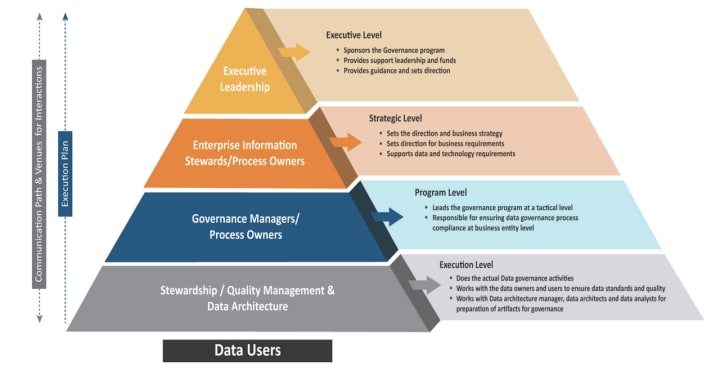
Every role within an organization is interconnected, each contributing uniquely to the organization’s and business’s overall mission and success. Advanced Curriculums for Educational Studies (ACES) is an international organization focused on building students’ resumes through opportunities in business and STEM. Administering chapters worldwide, their governance structure encompasses the roles and responsibilities of Executive Directors, the International Committee, the National Committee, and Regional Branches.
According to sources, at ACES, Executive Directors are responsible for overseeing the general management and strategic direction of the organization. This involves leading the team to fulfill their mission as well as ensuring effective operations and representation.
The International Committee leads ACES's global initiatives and expansion efforts. Executives are responsible for managing international activities, services, marketing initiatives, and various other projects.
The National Committee is tasked with approving and launching organizational activities in specific countries and regions, focusing primarily on areas where ACES has a notable presence, including Canada, United States, Taiwan, and others.
Regional Branches are responsible for organizing local events, offering support resources, and linking regional students to national and international opportunities. These branches typically include multiple schools that contain ACES Chapters.
This structure is similar to that of other organizations such as Distributive Education Clubs of America (DECA), Future Business Leaders of America (FBLA), Target Alpha (TA), and Health Occupations Students of America (HOSA). The variation in the number of levels and roles is based on specific target audiences and organizational objectives.
Rules and Processes in Decision-Making Processes:

A system of rules and processes within the decision-making process is the other half of an organization's governance structure. This framework is similar for all educational organizations. For example, the general process for creating an event is:
1. Identify the goal and purpose.
2. Understanding the audience.
3. Creative input and brainstorming from the team.
4. Evaluate the purpose of each component to the target audience and the organization’s goal.
5. Think about the outcomes, gains, and necessary work involved for both the organization and their audience.
6. Write an event plan including different roles and responsibilities.
7. Run the ideas by all executives.
8. Create an action plan.
All in all, the governance structure establishes how decisions are made, responsibility distributions, and how the organization aligns its goals with its operations. This ensures effective management, accountability, and strategic direction of the business. Effective governance is crucial for maintaining educational quality, ensuring compliance with legal and regulatory requirements, and responding to the evolving needs of students and the community.
About the Creator
Xue Ying
My work delves into educational opportunities and organizational growth, drawing from research in both education and business development. I hope to help students to pursue excellence and businesses to thrive in competitive environments.



Comments
There are no comments for this story
Be the first to respond and start the conversation.