
Generative AI and South Africa’s Future
Beyond Jobs to Human Potential

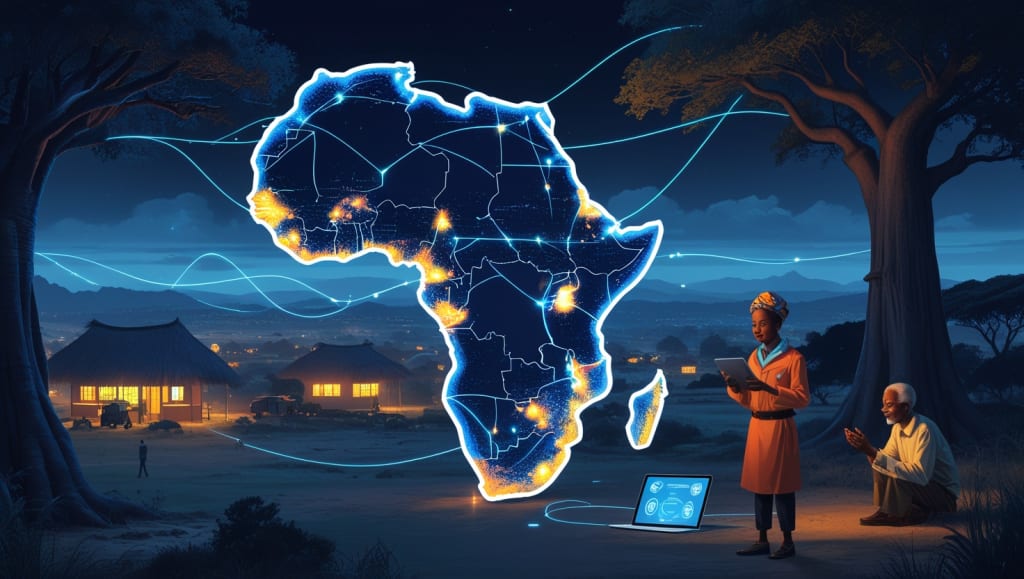
South Africa stands at a crossroads. Our nation carries the weight of deep inequality, unemployment rates above 30%, and a generation of young people whose futures feel deferred. Into this context enters generative AI — a technology many celebrate for its efficiency, but one that also sparks fear: Will it take our jobs? Will it widen inequality?
The truth is more complicated. Generative AI should not only be seen as a tool for productivity or profit. For South Africa, it can be reimagined as a catalyst for human potential, creativity, and dignity.
Beyond the Jobs Debate
Much of the global conversation on AI is framed in the language of the Global North: replacing accountants, automating lawyers, accelerating coders. Yet in South Africa, where unemployment is the daily reality of millions, this framing misses the point.
We do not fear losing jobs we never had. Our challenge is the absence of opportunities in the first place.
Generative AI can help us think differently: not only about work, but about worth. If AI automates repetitive tasks, then it may free us to revalue the uniquely human skills that machines cannot replicate — empathy, imagination, and cultural expression.
Education as the Frontline
South Africa’s education system remains one of the most unequal in the world. Rural schools lack resources, while urban schools often serve only the privileged. Generative AI could act as a bridge, offering:
- Personalized learning: AI tutors in every language, adapting to each child’s pace.
- Content translation: Educational material available in all 11 official languages, breaking the hegemony of English.
- Low-cost resources: AI-generated textbooks, lesson plans, and interactive learning for underfunded schools.
- Generate music, film scripts, or visual art without expensive studios.
- Archive and amplify indigenous languages and oral traditions.
- Create new digital economies where cultural expression is not just passion but livelihood.
Instead of widening inequality, AI could democratize access to knowledge — if implemented ethically and inclusively.
Creativity and Culture
Generative AI also touches on something more profound: the right to create.
Too often, African voices are excluded from the global imagination. Our music, art, and literature are consumed globally, yet Africans are rarely the owners of the platforms or the intellectual property. Generative AI could help South Africans:
This is where theories like Affecta Nullius — which I have developed to describe emotions we feel toward AI-generated realities that do not exist — become critical. South Africans engaging with AI art, music, or storytelling are not merely consuming shadows. They are extending their humanity into new spaces of feeling, imagination, and shared identity.
AI for Dignity, Not Displacement
The danger is real: if AI adoption in South Africa simply mimics Silicon Valley’s logic of profit and automation, it will worsen inequality. But if we root its use in human dignity, AI could become a public good.
Imagine AI-powered clinics in rural areas that help overworked nurses. Imagine a generation of township youth who learn coding, design, and storytelling through free AI platforms. Imagine entrepreneurs who don’t need venture capital to test ideas but can prototype with AI tools.
This is not science fiction. It is a question of political will, ethical design, and social imagination.
A South African AI Ethic
For AI to truly serve South Africa, we need more than regulation. We need a philosophy of technology that speaks to our realities:
- Ubuntu Ethics: AI should be evaluated not only on efficiency but on whether it enhances communal well-being.
- Justice-Centered Design: Systems must be trained to respect African languages, histories, and values — not overwrite them.
- Democratized Access: AI cannot remain in the hands of elites; its benefits must reach villages, townships, and schools alike.
South Africa has the chance to craft an AI future rooted in its own traditions of struggle, resilience, and creativity.
Conclusion
Generative AI is not just about machines making text, images, or code. It is about reimagining what it means to be human in a time of scarcity and possibility. For South Africa, the choice is stark:
- Do we allow AI to become another tool of exclusion, where the powerful benefit and the poor are left behind?
- Or do we seize it as a chance to rewrite the meaning of work, creativity, and dignity?
Generative AI will not save us. But if rooted in our context, our values, and our imagination, it could help us see ourselves anew — and perhaps build a South Africa where potential is not wasted but amplified.
👉 This article is part of my ongoing series exploring philosophy, AI, and South Africa’s future. For more on my Affecta Nullius theory—where I explore how generative AI produces emotions from “non-existent” realities—visit my Medium page, where I publish deeper essays on AI, and ethics: https://medium.com/@mdthusi
About the Creator
David Thusi
✍️ I write about stolen histories, buried brilliance, and the fight to reclaim truth. From colonial legacies to South Africa’s present struggles, I explore power, identity, and the stories they tried to silence.
Keep reading
More stories from David Thusi and writers in Writers and other communities.
Are Foreign Nationals Really to Blame for Our Jobs Crisis?
I remember the first time I heard someone shout, “Go back to your country!” It was at a small taxi rank in Gauteng, Johannesburg. The man targeted wasn’t even arguing — he was just selling bananas, trying to earn enough for the day. The anger in that moment wasn’t just about him. It was about the hunger, the waiting, the years of broken promises.
By David Thusi10 months ago in Writers
Unofficial Challenge: Black History Celebration
Forward: February 28th, 10:53 PM, EST... The final hour of Black History Month, 2026. Hello fellow writers. I've had this challenge waiting in my drafts for most of the month. But I held off on publishing it, until now.
By Sam Spinelli5 days ago in Writers
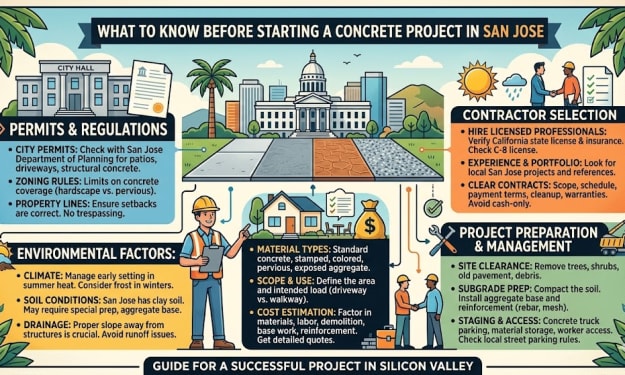
What to Know Before Starting a Concrete Project in San Jose
Concrete is often seen as a simple building material — gray, strong, and permanent. But once you begin planning a driveway, patio, or foundation, you quickly realize that concrete work is far more technical than it appears. In a place like San Jose, where property values are high and curb appeal matters, making informed decisions about your concrete project can significantly impact both durability and long-term value.
By Abbasi Publisher4 days ago in Writers



Comments
There are no comments for this story
Be the first to respond and start the conversation.