
Are Foreign Nationals Really to Blame for Our Jobs Crisis?
A South African reflection on unemployment, injustice, and misplaced blame

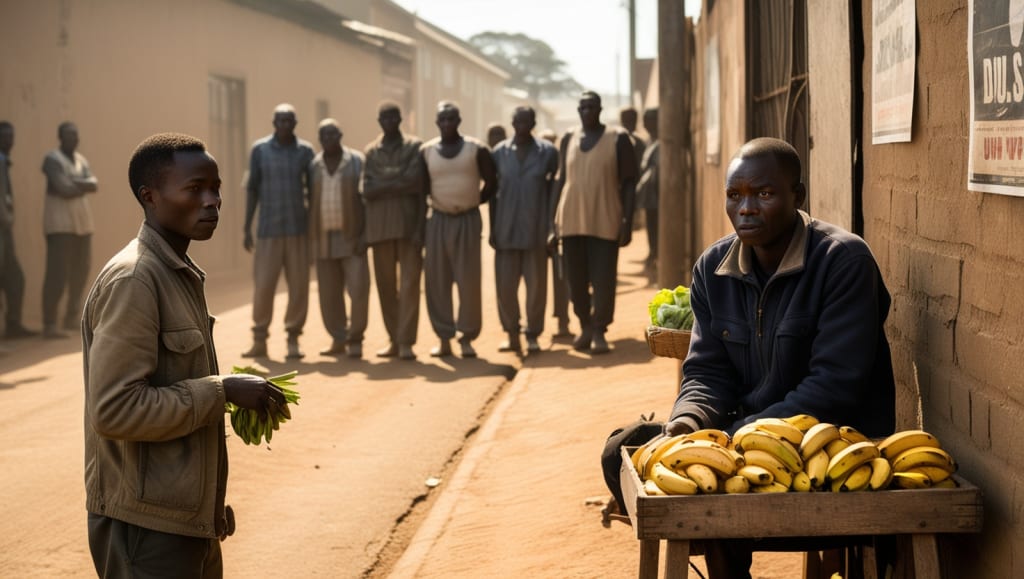
I remember the first time I heard someone shout, “Go back to your country!” It was at a small taxi rank in Gauteng, Johannesburg. The man targeted wasn’t even arguing — he was just selling bananas, trying to earn enough for the day. The anger in that moment wasn’t just about him. It was about the hunger, the waiting, the years of broken promises.
And in that moment, like so many others in South Africa, the blame fell not on government policy, not on failed economic reform — but on someone barely surviving. We’ve all heard it: “Foreigners are stealing our jobs.” It’s a popular belief, especially in townships and cities hit hardest by unemployment. But is it true? Let’s look closer.
The Numbers Tell a Different Story
South Africa’s unemployment rate stands at 32.1%, one of the highest in the world. For youth aged 15–34, that number jumps above 45%, according to Statistics South Africa (2024).
But here’s the catch: migrants make up a small portion of our workforce — between 4% and 7%, depending on the province (StatsSA Labour Force Survey). Most foreign nationals are concentrated in low-paying, informal sectors like domestic work, agriculture, construction, or spaza shop trade.
The International Organization for Migration further notes that migrants often fill jobs that South Africans do not apply for — either because the wages are too low, or the work conditions too poor. And despite the myth, many migrant-run businesses hire locals and contribute to local economies. So why are we blaming them?
The truth is painful: foreigners didn’t break our job market. Corruption, policy failure, and inequality did.
Since 1994, economic growth has remained uneven, heavily dependent on extractive industries and a shrinking formal job sector. Education doesn’t match market needs, and technical skills training — like in TVET colleges — remains underfunded and underutilized.
At the same time, small businesses, which employ over 60% of the working population, are choked by bureaucracy, crime, lack of capital, and zero protection from predatory pricing. It's not just about foreigners “undercutting” prices — it's about survival in a system that leaves all poor people vulnerable.
And while we fixate on street vendors or cleaners, we often forget the role of exploitative employers, many of whom hire foreign nationals precisely because they can be paid less, with no legal contracts or labour protection. That’s not an immigration issue — it’s a labour enforcement crisis.
So What Do We Do?
Blaming migrants might feel good in the moment — it gives us someone to shout at. But it won’t change our reality. If we truly want to solve the jobs crisis, we need to:
- Enforce labour laws for all, ensuring fair pay and decent work regardless of nationality. Exploitation helps no one but the employer.
- Invest in township and rural entrepreneurship. Spaza shops and informal traders aren’t the problem — they’re the future. Let’s fund local food production, agro-processing, and digital services.
- Rebuild vocational and artisan training. From plumbing to coding, South Africa needs jobs that build dignity, not just university degrees.
- Stop the political scapegoating. We must hold our leaders accountable when they use xenophobia to distract from their own failures
I won’t pretend I’ve never felt frustrated. I’ve stood in queues, sent out CVs, and waited months with no reply. I know the quiet humiliation of joblessness. But the truth is, the man next to me in that queue — whether he’s South African or Zimbabwean — isn’t my enemy. We’re in the same struggle.
Until we stop punching down and start demanding better — better policy, better governance, better protection — the real culprits will continue walking free, while we fight each other in the dust.
[David Thusi] is a South African writer focused on economic justice, migration, and ethical technology. Through storytelling and analysis, I explore the human side of policy failure — and what it would take to build a fairer society.
About the Creator
David Thusi
✍️ I write about stolen histories, buried brilliance, and the fight to reclaim truth. From colonial legacies to South Africa’s present struggles, I explore power, identity, and the stories they tried to silence.
Keep reading
More stories from David Thusi and writers in Writers and other communities.
How Generative AI Could Help Transform South African Policing
Introduction: A Crisis of Trust South African policing faces a deep crisis of legitimacy. Too often, communities experience officers not as protectors, but as enforcers of arrogance, superiority, and disrespect. The gap is not simply one of crime control, but of broken relationships of power, communication, and empathy. When police are feared more than they are trusted, democracy itself is weakened.
By David Thusi7 months ago in Writers
March 15, 2026
Merriam Webster - Word of the day: Tranche refers to a division or portion of a whole. World Contact Day is commemorated every year on March 15. It is a unique observance held globally to focus on communicating with extraterrestrial life and exploring the possibility that intelligent beings may exist beyond Earth. World Contact Day inspires people to invoke their curiosity and spend time thinking about the universe and the mysteries surrounding it. What is the “Ides of March”? According to the Roman calendar, the Ides are a monthly occurrence. In March and other months with 31 days, the Ides always falls on the 15th; it falls on the 13th in months with 30 days. The Ides traditionally marked the arrival of the new Moon and was cause for celebration. The word “Ides” is derived from Latin, meaning “to divide.” Mothering Sunday in 2026 falls on Sunday, March 15. Mothering Sunday, celebrated in the United Kingdom and Ireland, occurs on the fourth Sunday of Lent, which is exactly three weeks before Easter. Unlike the fixed-date Mother's Day in countries like the United States, Canada, and Australia, Mothering Sunday’s date changes each year according to the Christian liturgical calendar. On March 15, 2026, several notable observances and events are celebrated: Dumbstruck Day: A day to express frustration. Everything You Think is Wrong Day: A day to challenge and celebrate wrong beliefs. International Day Against Police Brutality: A day to raise awareness and advocate against police violence. My look at today, March 15, 2026 below:
By Denise E Lindquistabout 19 hours ago in Writers


Comments (1)
Good work