
he Amazon rainforest, on December 25, 2021, a journey commenced—one that transcended earthly bounds. The Guiana Space Centre, nestled within the lush tropical expanse, witnessed a momentous liftoff as NASA propelled the James Webb Space Telescope into the cosmic tapestry. This $10 billion marvel embarked on a mission of unparalleled significance, aiming to unravel the universe's deepes
Fast forward to July 11, 2022, nearly six months into its celestial odyssey, the James Webb telescope unveiled its initial revelations. The images captured were nothing short of awe-inspiring—galaxies, the birth of stars, and the elusive realms of black holes brought into focus. This marked a pivotal juncture in our timeless pursuit of answering the age-old question: are we alone in the universe?
Surpassing the iconic images captured by its predecessor, Hubble, decades prior, the James Webb telescope elevated our cosmic gaze to unprecedented heights. The snapshots it delivered were not merely pictures; they were intricate, detailed glimpses into the cosmic ballet. With this advanced technology, the telescope promised to explore further, potentially discovering exoplanets with conditions conducive to intelligent life—a profound step toward answering the enigmatic question of extraterrestrial existence.
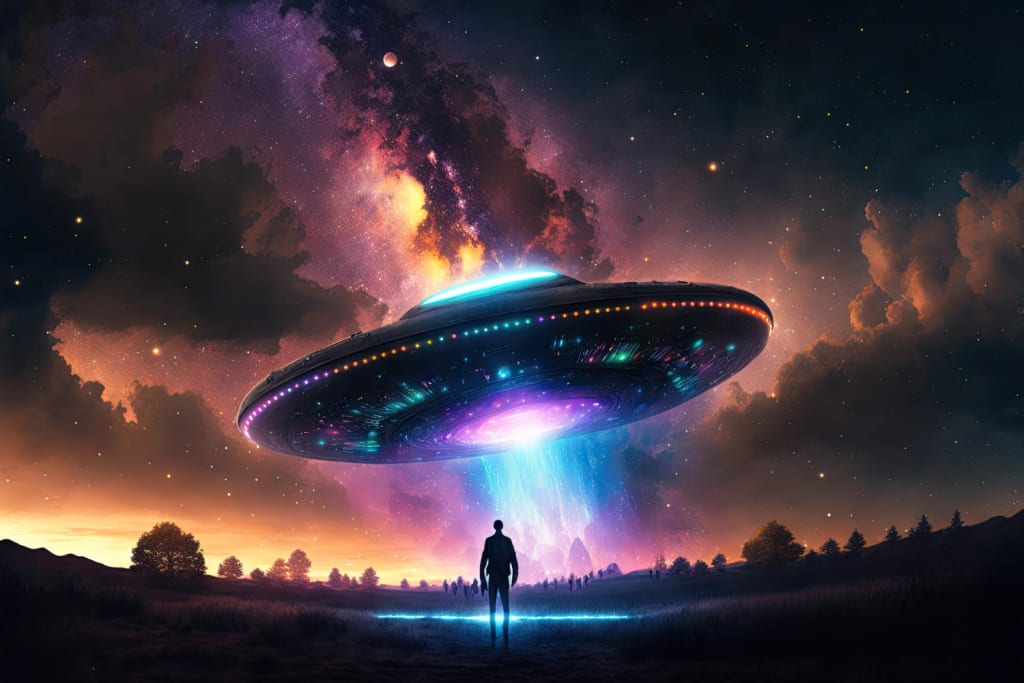
Yet, amid the cosmic euphoria, a curious inquiry emerged. On June 9, 2022, just a month before the James Webb telescope's groundbreaking revelations, NASA announced plans for an independent study on Unidentified Aerial Phenomena (UAPs). This decision fueled speculation among UFO enthusiasts—what if NASA directed its cutting-edge technology toward uncovering evidence of extraterrestrials already traversing Earth's skies?
The rationale behind NASA's involvement in this investigation was apparent. As the custodian of space exploration, with oversight of the space station, deep space satellites, and interstellar missions, NASA positioned itself at the forefront of potential extraterrestrial detection.
Come May 31, 2023, NASA took an unprecedented step by opening its doors to the public for a groundbreaking hearing on UAPs. The emphasis on rigorous scientific scrutiny underscored a collective responsibility deeply ingrained in NASA's DNA—the imperative to explore the unknown.
As NASA delved into the study of UAPs, an intriguing possibility arose: could this foray lead to the long-awaited evidence of extraterrestrial life? Ancient astronaut theorists speculated that NASA might already possess compelling evidence of intelligent beings beyond Earth. From the early Gemini missions to the Apollo moon landings, anecdotes of encounters with UFOs persisted in the annals of space history.
Now, with NASA officially investigating UFOs, a tantalizing question looms large: could definitive evidence of alien presence on Earth be on the horizon? While NASA's formidable resources make it a potent investigator, some argue that ordinary citizens armed with smartphones might be our most effective tool in capturing high-definition footage of inexplicable events around the globe. The pursuit of UFOs, it seems, has taken a captivating turn, with the world's premier space agency at the forefront of the quest for answers.
About the Creator
Keep reading
More stories from writers in Writers and other communities.
Wild Card Weekend Recap: What Happens Now?
I think I figured out why I love Wild Card Weekend so much. It's because it's the first playoff anything of the calendar year. The NFL season starts in the fall, and once upon a time, the champion was crowned either on or slightly before New Year's. The evolution of the NFL schedule has resulted in the playoffs starting just into the New Year, and currently, the final week of the season falls on the first weekend of the New Year, with Wild Card Weekend coming a week after that. So yes, chronologically, the NFL's Wild Card Weekend serves as the first playoff anything of the calendar year.
By Clyde E. Dawkins5 days ago in Unbalanced




Comments
There are no comments for this story
Be the first to respond and start the conversation.