
Exploring Expressive Arts Therapy for Couples
Expressive Arts Therapy
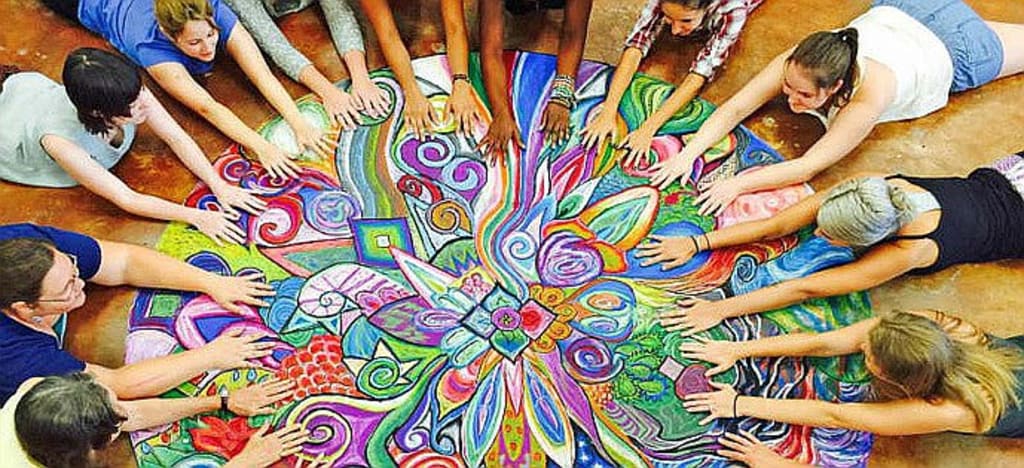
There are always some barriers in the way of relationships; emotional problems, lack of communication, and unsolved conflicts. It is not surprising that at times they appear overwhelming to the involved partners and thus seek help. Counseling, as a discipline, provides a safe environment for learning and recovery, and within the array of models and techniques, one can identify Expressive Arts Therapy (EAT) as an effective creative outlet in work aimed at creating a link to clients, as well as helping them and their counselors grow.
For those who are at a point in their relationship when they want to find a new and interesting approach to deepen their connection with their significant other, take an interest in the sphere of expressive arts therapy. It’s time for your relationship canvas, and let creativity cut the path to healing and love.
What is Expressive Arts Therapy?
Expressive Arts Therapy focuses on art as a tool and a means to treat through a combination of art and therapy, painting, drama, music, writing, and dancing. While EAT employs the fundamentals of regular talk therapy, it is far more effective for those clients or partners who have difficulties with verbal communication since the main focus is put on art as a way to get to the feelings that are difficult to verbalize.
The paradox of expressive arts therapy is that it is an approach that works outside the head. This helps participants to understand themselves through creativity but also enables those involved to let out some emotions that they might not be able to put into words. This is why EAT is such a useful tool for any couple who is experiencing emotional disconnection or conflict over interpretations or histories.
How Expressive Arts Therapy Works in Counseling for Couples
During a typical EAT session, a trained therapist guides the couple through creative exercises tailored to their specific needs. These counseling for couples activities might include:
Visual Arts: Partners might draw or paint their interpretation of their relationship or an emotional experience.
Music: Creating a playlist that represents shared memories or composing a simple melody together.
Movement and Dance: Using body movement to express feelings and break physical and emotional barriers.
Storytelling: Writing a narrative about their relationship, exploring past challenges and future aspirations.
The focus is not on artistic skill but on the process of creation, which can lead to revelations about individual and shared emotional states.
Mutual respect, trust, and teamwork are necessary for collaborative art projects. In addition to strengthening the link between spouses, these shared experiences serve as a concrete reminder of their attempts to improve their relationship.
Conclusion
Expressive Arts Therapy makes it possible for couples to explore other ways and find a way that can help them overcome the wall they have built to create a stronger relationship. As partners create, sing, or paint, the partners can encounter feelings and share and express themselves in ways other than speaking. It is a good choice in partners’ conflict, as it allows caring, trusting, and working together, so important for deepening intimacy. If it is conflict, then challenges become a way of working in the relationship; if it is an overall improvement of the relationship, then conflict creates ways of learning. In a way for couples interested in developing a bond with their significant other, this new approach to therapy offers couples an enriching and powerful experience toward an improved relationship.
About the Creator
Keep reading
More stories from Arcturus Counselling and writers in Writers and other communities.
The Impact Of Counseling On Depression And Anxiety
In order to treat the root cause and foster personal development, mental health management calls for a kind and practical strategy. The scientific techniques and support offered through therapy help people overcome emotional challenges, improve their resilience, and acquire the skills necessary to live a fulfilling and healthy life.
By Arcturus Counsellingabout a year ago in Writers
This Writing Trend Is Making Teenagers Rich in the US
A quiet revolution is happening across the United States. It’s not in Silicon Valley boardrooms or Wall Street trading floors. It’s happening in bedrooms, dorm rooms, and coffee shops, where teenagers are typing on laptops and smartphones and earning money that many adults only dream about.
By Sathish Kumar 2 days ago in Writers


Comments
There are no comments for this story
Be the first to respond and start the conversation.