
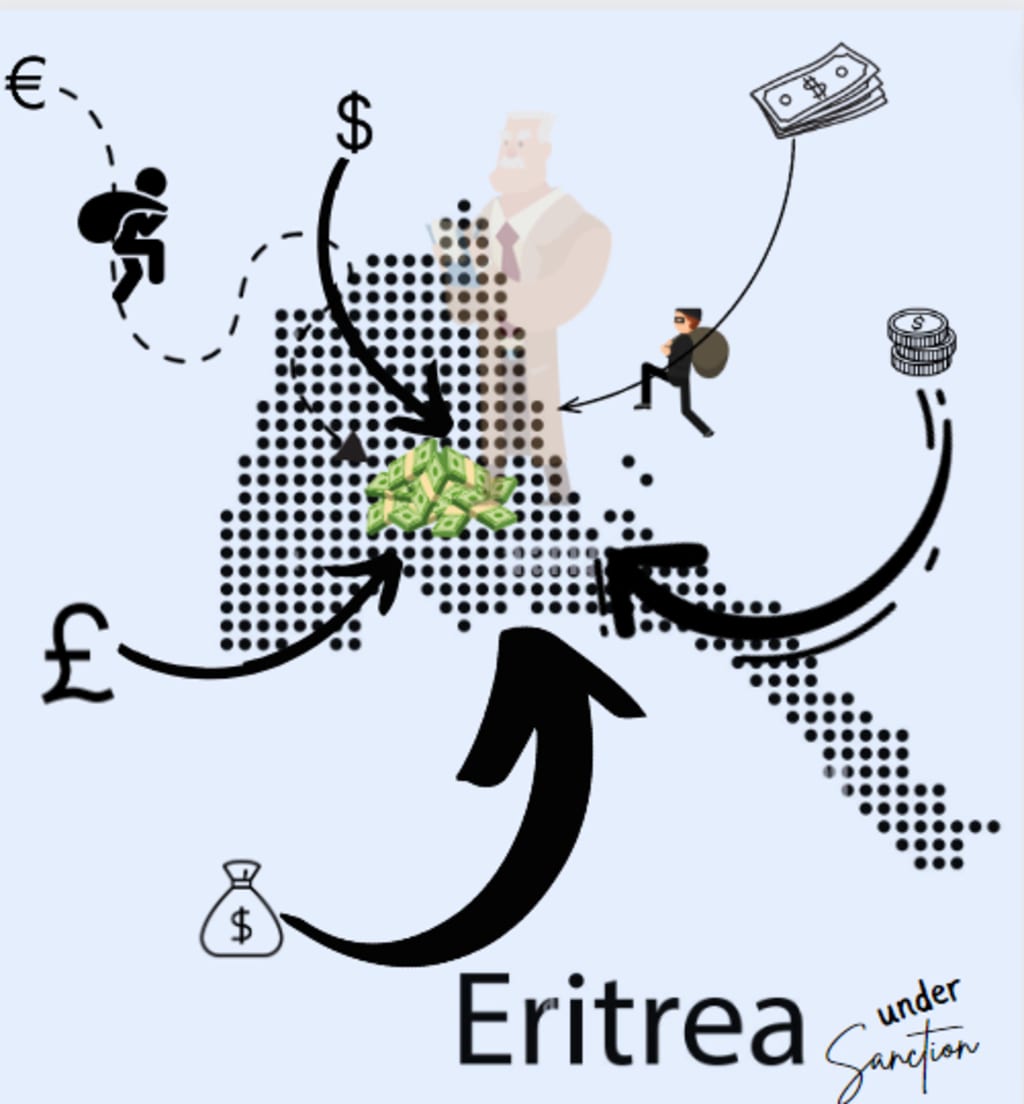
Eritrea has been in the doldrums economically for the last twenty years. One of the reasons for its bad performance is the sanctions that the country has been under. Mainly, it is bad management of the economy, essentially shutting down the country to any foreign direct investment except in the mining sector. The country was stuck in no war, no peace, until 2018, when it signed a peace agreement with its neighbour Ethiopia, with which it has been on a war footing for over 20 years.
The first round of sanctions was imposed because the country was accused of supporting the rebel terrorist group Al Shabaab and refused to withdraw its troops from Djibouti. In fact, the country is accused of fanning the flames of conflict in the region, waring with almost all of its neighbours. The infamous reclusive Eritrean president is also well-known for his anti-democratic and anti-western.
The second round of sanctions was imposed after the country’s involvement in the Ethiopian-Tigray war in 2021. The Eritrean army is still accused of holding some areas under its control in Western Tigray despite the Pretoria Agreement in November 2022. The army was accused of committing wartime atrocities in Tigray.
Shadow economy
How Eritrea is fairing under the previous and current sanctions is worth asking. It is important to note that both sanctions targeted the ruling party, certain entities and some individuals. Analysis of the facts indicates that the regime in Asmara has largely not been impacted by the sanctions. The regime has created a parallel economy that largely escaped the scrutiny and control of the international community.
It is interesting to look at the way the regime went about structuring the parallel economy and ran it. The country's ministries and public administration have been stripped of decision-making and, in some cases, its function. It was led and managed by the military, intelligence and entities like the Red Sea Corporation led by a few individuals. The president’s son is suspected to be among one of them. That is why the US government sanctioned these parties. In addition, some Eritreans in the diaspora were willing participants in this illicit and shadow economy.
These parties set up systems, networks and companies to invest in some African countries, namely South Sudan, Angola, Uganda and Kenya. The financial gains were funneled to Eritrea or used in buying sanctioned goods using these companies. In addition, these parties were instrumental in collecting the hard currency that the country desperately needs and can’t access otherwise, as the internal economy is in a coma except for the export of certain resources it is extracting. The currency is generated through illicit business activities, proceeds of investments, and the monopoly these parties have in sending remittances to Eritrea and Eritreans in neighbouring countries and other parts of the world.
The monopoly of the money transfer business, overtly or in an illicit way, is something the regime relied upon and specialized in the last 20 years. Remittances support many Eritrean families as the economy has been on life support for the last 20 years. The regime has held the Eritreans in the diaspora hostage as a result, as they have no choice but to support their families at home, and it is largely controlled by the regime. As a result, observers believe the regime has a significant sum of foreign currency in reserve, especially US dollars.
The hard currency the regime collects through various ways is transferred through money transfer and other underhanded ways. One of the ways is the regime uses trusted individuals to transport cash out of Western countries to either Eritrea or other Asian and African countries. Therefore, some Eritreans are complicit in this money laundering scheme.
Another nefarious way the regime launders and transports money is through the Eritrean Orthodox churches based in Western and other countries. Church donations are not easy to control and are not taxed. Therefore, the churches are used to launder money collected through different means and transferred to the Eritrean Orthodox church in Eritrea. It is no wonder that the regime has made considerable effort to control the running of churches through its agents. and useful idiots, thereby stocking conflicts in Eritrean churches in the diaspora and the leadership of the Eritrean orthodox church inside the country.
It is evident that the Eritrean regime has designed an intricate and complex way to evade sanctions. It has been quite beneficial to the Eritrean government. Internally, there is a parallel governance structure with the military and security apparatus heavily involved in its running. As a punitive measure, sanctions are ineffective from the evidence of many countries. It no different in Eritrea as well.
About the Creator
Keep reading
More stories from writers in Writers and other communities.
How Local Regulations Impact Mobile Apps in Milwaukee?
Regulations rarely feel urgent during early planning. They surface quietly, usually as footnotes in proposals or brief mentions during discovery calls. Then development begins, real data flows through the system, and suddenly those footnotes become constraints that reshape timelines, architecture, and cost.
By Mike Pichai6 days ago in Writers




Comments
There are no comments for this story
Be the first to respond and start the conversation.