
Do you think that I created you only for play and that you will not be returned to Me?
তোমরা কি মনে করো, আমি তোমাদের শুধু খেলাচ্ছলে সৃষ্টি করেছি এবং তোমরা আমার দিকে প্রত্যাবর্তিত হবে না?


"Do you think that I created you only for play and that you will not be returned to Me?"
— (Al-Quran, Surah Al-Mu'minun: 115)
---
Futility vs. Meaningfulness: The Purpose of Creation and the Position of Man in the Mirror of Self-Inquiry
While walking on the path of life, man suddenly stops at some late night, in a moment of loneliness, or at the sudden news of death—and asks himself: Why am I here? Is this life limited to eating, sleeping, working, and dying? This verse of the Quran seems to honor that self-inquiry, drawing it into a greater thought—Do you really think that I created you only for play and amusement?
This question is like a fundamental impulse from God, a deep call that touches the deepest level of the human heart. The verse tells us that life is not a lifeless game; it is a serious reality, for which every step is accountable.
Playful Creation?
The phrase "playfully"—meaning creating something without purpose, just for fun or in a carefree manner—is an impossible thought for God's creation. When we invent a small device, there is thought, need, purpose behind it; then can this vast universe—which is bound in perfect order from atoms to galaxies—be purposeless?
This verse is a mirror placed in the heart of man. Where he can see himself, sees his existence in a new light. Here the Creator is saying—no matter how busy you are, how confused you are, how much you are immersed in the world's illusions, one day you will return to me.
The deception of human life
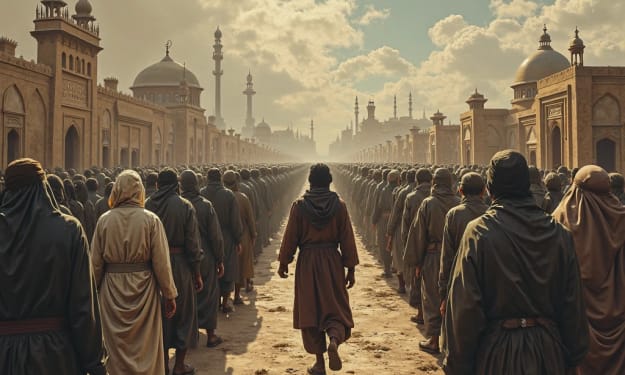
Man forgets that each of his days is actually a day of reckoning, each work is actually part of a test. He thinks that his success, his business, his family—all have fulfilled his life. But the reality is that every breath he takes is leading him towards an inevitable truth—death and resurrection.
The verse seems to shatter all those misconceptions where man thinks he is free, he is not accountable to anyone. Here the Quran declares—"Do you really think that your creation was just a play? You will not have to return to Me?" This question is like a hard yet compassionate shake—you have forgotten, but I have not forgotten.
The identity of a responsible creation
Man is different—because he can think, judge, choose good and evil. This ability has given him responsibility. Just as all other creations obey the will of the Creator, man has been given freedom—to which is added the concept of consequences.
This verse is a reminder of that. It is not only for believers, but for every conscious soul—have you forgotten your responsibility, your reward, your destination?
Philosophy of the Hereafter
The second part of this verse says, "Will you not return to Me?"—it seems to be a simple yet serious question, which contains the idea of the Hereafter. All human actions will have an outcome, and that outcome will be determined in a great judgment. The idea of this judgment not only frightens people, but also purifies them and makes them aware.
When someone knows that his every action is being recorded, his every thought is being calculated, then he cannot live a life of unnecessary play and heedlessness. This verse seems to draw a pledge of self-restraint—life is a testing ground for accountability.
Reflection of the Prophet
The Prophet (peace be upon him) understood the essence of this verse in every step he took. His sleep was worship, his silence was meditation, his laughter was kindness, and his war was an attempt to establish justice. He never spent a single moment in negligence, because he knew—this life is not just a game; it is a carrier of a difficult responsibility.
He taught every person that an eternal world awaits behind the world. He was the guide of the path that pulls people from a life of playfulness to self-purification.
The application of this verse in modern reality
In today's consumerist society, where money, fame, and social media popularity have become the measure of human success—this verse seems to shout—"Your life is not just entertainment." This is the verse that can stop a young person from a rash act, force a rich person to think about the use of his wealth, and remind a leader of his accountability.
This verse is an eternal call, addressed to every misguided soul. It says—you have forgotten the destination, but your Lord is waiting; to Him you must return.
Conclusion: The question that seeks an answer in silence
"Do you think that We created you for play?"—This question is not just a sentence; It is a mirror, a mirror, that sheds light on the darkness within us. It places at the center of our thoughts the eternal truth: We came for one purpose, we will return for one decision.
This is a question whose answer is hidden deep in our deeds, our souls, our wills and our intentions. This verse tells us that life is not a game, life is a trust. And the one who gave this trust will one day have to give an account of it.
About the Creator
Keep reading
More stories from Abdul Barik and writers in Writers and other communities.
Slavery in Islam vs. Modern Slavery: Does Freedom Really Exist?
Slavery is a cruel reality in the pages of history. Humans have been bought, sold, and used as mere objects by humans. Slavery was once legal and normal in almost all civilizations of the world—be it Greece and Rome, India, or China. Islam came into that context. But Islam did not support slavery; rather, it gradually showed the way to its extinction through a new moral and social revolution—through humanity, responsibility, and liberation.
By Abdul Barik9 months ago in Writers
Untitled
I pat my brows with a handkerchief I fancy, and I think about the plight we are in today; it makes me squirm. In all my words you seek to find a formula, but your ledgers are filled with trending tabs (ephemeral tallies). You make me feel like I should be held in a box. It is impossible for someone to grow or be better than they were yesterday; simply by choice, they wish to step back and publish a little slower, less frequently.
By Caitlin Charltonabout a month ago in Writers
What Sets Top Mobile App Development in Atlanta Apart?
On paper, many app development teams in Atlanta look similar. Comparable tech stacks. Similar portfolios. Confident timelines. The difference only becomes visible after work begins, when decisions pile up, trade-offs appear, and pressure replaces planning. That is where top teams quietly separate themselves from the rest.
By Mike Pichai3 days ago in Writers
How to Succeed at the Benson Directory®
Congratulations and welcome to the Benson Directory® employee #22391! As our newest call handler, you will have the privilege of speaking with dozens of unique and interesting people on a daily basis as well as the opportunity to earn bonuses for high performance. Contained within this handbook you will find a set of ease to follow instructions designed to help you settle in to your new role and begin paving the way to success.
By S. A. Crawford2 days ago in Fiction


Comments
There are no comments for this story
Be the first to respond and start the conversation.