
Crossdressers, Drag Queens, Feminine Men, and Trans Women
each walks beyond the boundaries of convention. Are they good or bad? They are neither; they are simply living truths outside the frame of ordinary norms.
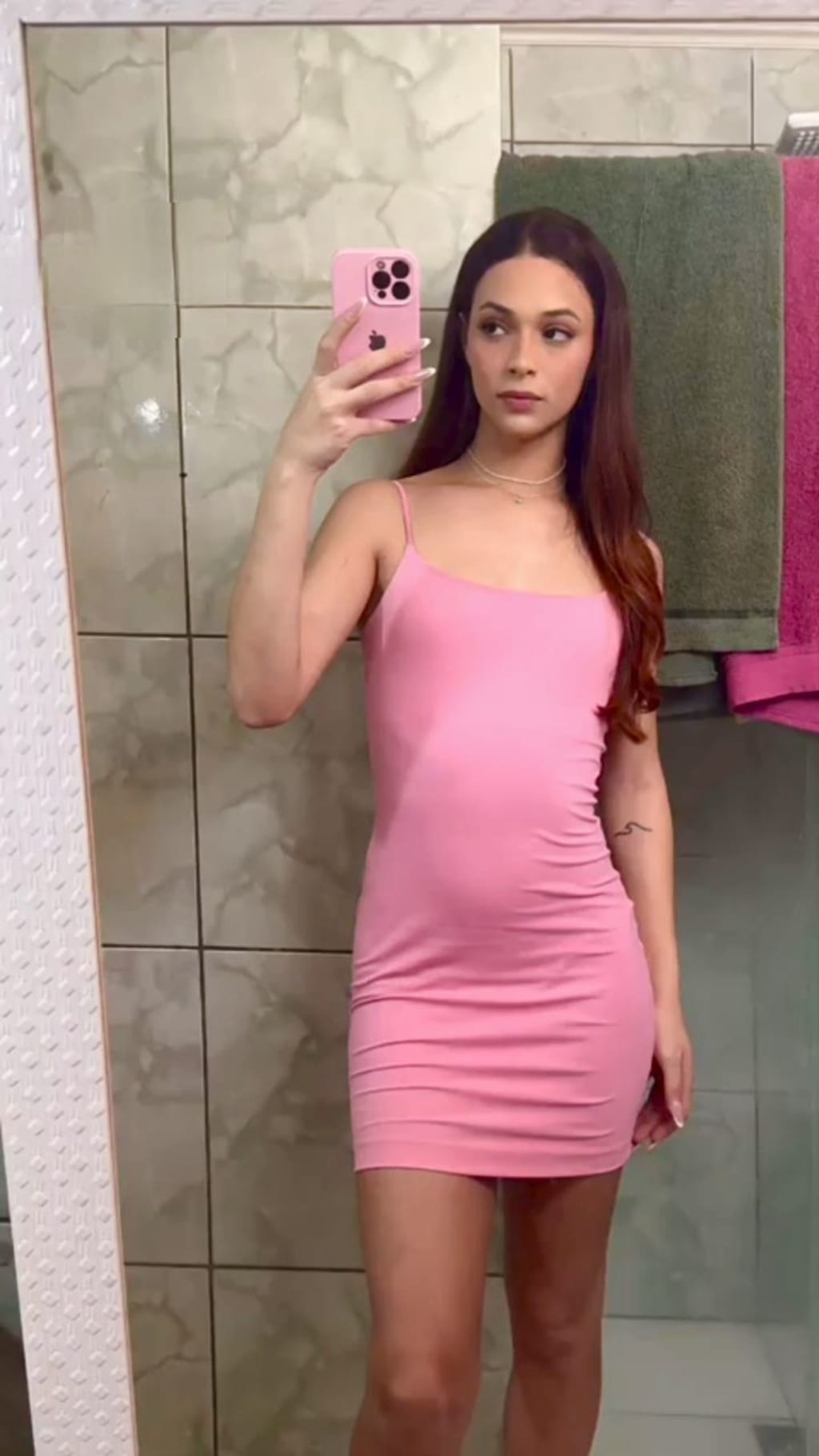
What if a person uses makeup and shaves body hair, who are they? What if they wear a dress and lingerie at home? But what if it is done not at home, but on stage, then what? And what if they take HRT and plan an upcoming gender-affirming surgery? Who are they?
Yes, it can be complicated. Let’s figure this out together.
Most people don’t understand who is who, and for them, we are all “men in dresses.” In some cases, it’s true, and there’s nothing bad about it, but in others, it can be offensive and lead to high distress and anxiety.
I have always advocated for using the right and specific terms when describing things. Before we start, we should know two terms, gender identity and gender expression.
“Gender identity” is your deeply held inner feeling of whether you’re female, male, both, or neither. Your gender identity isn’t seen by others. It may be the same as the sex you were assigned at birth (cisgender) or not (transgender).
“Gender expression” is how a person publicly presents their gender. This can include behavior and outward appearance such as dress, hair, makeup, body language, and voice.
I am a transgender woman, and I identify as one, I feel, think, and perceive myself as a woman. My gender expression is also female. I dress, use makeup, take care of my body, have long hair, undergo cosmetic procedures and gender-affirming surgeries, and sound and behave as women do. So, there’s a match between my gender identity and my gender expression.
But there are people who have those concepts in a mismatch. On top of that, they struggle with identifying themselves and tend to fall into categories to which they don’t belong.
In some cases, it’s necessary to go through stages and explore yourself, just like I started with crossdressing and did it for more than 20 years. But I never felt it was the right thing for me, so I decided to transition, both medically and socially.
Now, let’s talk specifically about these four main categories of people who embrace feminine expression:
Explore the next forbidden whisper: Becoming Femme: Between Secrets and Longing
https://theartoffemme.blogspot.com/2025/08/becoming-femme-between-secrets-and.html
Feminine Men
There are social norms for how men and women should typically look. These norms apply to specific countries and times, and they can differ significantly. For example, the Scottish kilt is an element of traditional male clothing, but in many other countries, it is usually seen as part of a female wardrobe. Manners, gestures, and expressions can also be gendered. Some men feel the need to express not only their male side but also their feminine side.
The key word is, men. They identify as cisgender men, and they fully accept that society sees them exactly like that. But at the same time, they embrace their feminine side and expression. This can be shown in extra care for their bodies, removing body hair, wearing high heels or skirts publicly, using female accessories like handbags or earrings, having smooth gestures, and adopting feminine voice intonations.
Oftentimes, feminine men are part of the gay community, but heterosexual men can also present femininity and accept that society and gender are not just black and white.
Drag Queens
The other category of people I admire, who publicly present femininity, are drag queens.
I should point out one thing, although drag queens are usually gay cisgender men, anyone can be a drag queen: heterosexual, bisexual, cisgender men, cisgender women, transgender, non-binary, gender-fluid, anyone.
They present it as a form of art, a performance. They do amazing makeup, hairstyles, dresses, dance, lip-syncing, and acting, they are talented artists whom I admire. It is done publicly in front of an audience by impersonating and sometimes exaggerating femininity.
What’s the difference from the previous category? Drag queens present as feminine only for an audience. In everyday life, they look like any other person and leave their character for the stage.
Let the art of femme guide you further: Caught Between Shame and Forbidden Desire
https://theartoffemme.blogspot.com/2025/08/caught-between-shame-and-forbidden.html
Crossdressers
A crossdresser is a person, usually a man, who dresses according to another gender. It can be done for many reasons, all of which are valid — enjoyment, exploring gender identity, feeling connected to their feminine side, and oftentimes, it is followed by arousal and pleasure. Hyperfemininity and the sexualization of the female look may be part of crossdressing, often involving wearing high heels, lace lingerie, wigs, applying evening makeup, and wearing cocktail or overly revealing dresses.
Usually, it is done at home or in a safe space like crossdressing meetings and clubs, but it is much rarer in common public places. Another example of a safe space is social media, there’s a big online community where crossdressers easily socialize through shared interests.
In everyday life, crossdressers present according to their sex assigned at birth. They are usually congruent with their bodies and minds. They feel like men, are totally fine with their male anatomy, and have none or minimal symptoms of gender dysphoria. However, from time to time, they impersonate women by wearing female clothes and makeup.
I want to emphasize the word “impersonating.” It means copying another person’s characteristics, in the case of crossdressing, it is copying the female look.
It’s a facade, just the visible top of the iceberg of womanhood. Under the water, there’s much more than appearance, feelings, mindset, socialization. Women face issues like misogyny, female discrimination, and objectification. Crossdressers do not, or should not, have these issues since they identify as men.
Crossdressing may be seen by society as something negative or shameful because it is something men usually don’t do. I agree that it is unusual, but it’s definitely not something to be ashamed of.
In my personal opinion, there should be no judgment or prejudice toward crossdressing. More so, it’s a great way to explore identity, and I highly encourage people questioning their gender to try crossdressing. It’s safe and has no negative impact on anyone. I can hardly imagine finding my gender identity without identifying as a crossdresser for two decades, it was a big part of my journey.
The only thing I want to emphasize is that it should not become an obsession. The healthy way is to perceive it as one part of your personality, but not your whole personality.
Transgender Women
The last category, to which I belong, is transgender women. In this article I am talking only about binary trans women who shifted from one pole of the gender spectrum to the opposite one.
I always advocate for the correct use of terms because it’s one of the main parts of being honest and accepting yourself. The word “transgender” is formed by the prefix “trans-” (“across” or “through”), which can be understood as moving from one point or state to another, and the noun “gender”. In our case, it means moving from male to female gender. Once this process is finished, for the majority of trans women, there’s no way back.
While a trans person may express their gender through clothing, their identity is based on a deep sense of who they are, not just how they dress or look.
If feminine men, drag queens, and crossdressers focus mainly on gender expression, trans women are tightly connected to gender identity. Trans women identify and present as women and have the mentality and mindset of women, despite being born with male bodies and having XY chromosomes.
Some research shows that the brain structure of trans women is more shifted toward female than male, though not 100% matching it. Because of the body and brain mismatch, trans people experience gender dysphoria, which can be diagnosed by a clinical psychologist or psychiatrist. There is only one known and effective treatment, transitioning.
It may include: social transition, like changing name, pronouns, gender marker in documents, socializing as women, voice training, wearing female clothes, etc.; and medical transition, which includes hormone replacement therapy and gender-affirming surgeries.
By medical transition, we can achieve getting secondary sex characteristics and surgically formed genitalia that copy the appearance and some functions of female ones. There have been no successful uterus and ovary transplants performed on transgender women so far, so we can’t give birth, produce enough estrogen, or have periods.
Yes, some trans women have some symptoms that are similar to PMS, but they are not periods in the traditional sense.
Medical and social transition are only available options but not strict requirements to be identified as a transgender person.
I heard many trans women saying that transgender women are completely the same as cisgender women or even better, which by itself sounds weird to me.
I have two main reasons to disagree with it, differences in bodies, which I’ve listed before, and for the vast majority, with rare exceptions, socializing as men before they decided to transition. I was socialized as a man for 30 years, and it was incredibly hard for me because of having a female mindset and feelings. Trans women can’t change this fact, but it doesn’t give the right to pretend to have the same experience as cisgender women have.
First of all, it’s disrespectful to trans women themselves by neglecting their own struggles, living in the wrong bodies, fighting for the right to be themselves, and making enormously hard life decisions.
And my second point, it’s disrespectful to cisgender women by associating with their struggles with misogyny, patriarchy, and discrimination they had since their childhood. We didn’t have them in the past.
But trans women have such struggles now, we are being sexualized and discriminated against like any other woman in the current patriarchal world.
Trans women are women? Yes.
Trans women are trans women? Yes, also true.
We became women by transitioning from male to female.
Discover more you might love: Trans, Crossdresser, or LGBQ?
https://theartoffemme.blogspot.com/2025/08/trans-crossdresser-or-lgbq.html
Falling Out of Norm
All of these four categories we spoke about fall out of social norms. I want to emphasize that I use the word “norm” as a term, but not something that can be offensive. There’s no negative context in it; it is just the fact that the majority of people are cisgender, heterosexual, and present themselves accordingly to their sex assigned at birth. Trans women, crossdressers, drag queens or feminine men don’t belong to this majority.
Is it good or bad? Neither of those. Unless you feel yourself good in the gender identity and expression you have, enjoy it. Don’t try to reach to be in the other category where you don’t belong and if you don’t feel it this way. There shouldn’t be any cult of superiority since all categories are equal and deserve to be seen by society without prejudice.
About the Creator
Keep reading
More stories from writers in Writers and other communities.
Why Australia’s New Psychosocial Safety Laws Are Forcing Employers to Rethink Workplace Risk
Australia has quietly entered a new era of workplace regulation, one where psychological health is no longer treated as a secondary wellbeing concern, but as a formal safety obligation equivalent to physical hazards. This shift represents one of the most significant changes to occupational health and safety governance in decades.
By Abbasi Publisher2 days ago in Writers
The Blue Ridge Stalker
Tom had left the Ford down the way, its spark plugs finally exhausted and no mechanics for a dozen miles back through the foothills to Strossburg. No matter, he had worn his boots—almost as if he planned for this to happen. The puzzle he sought to solve emanated from the woods clinging to the slopes above; the valley behind held no mysteries.
By Stephen A. Roddewig4 days ago in Fiction




Comments
There are no comments for this story
Be the first to respond and start the conversation.