
Cold Weather Linked to Increased Heart Attack Risk, Study Finds
Heart Attack Risk Rises After Cold Weather Exposure Finds Study | The Lifesciences Magazine

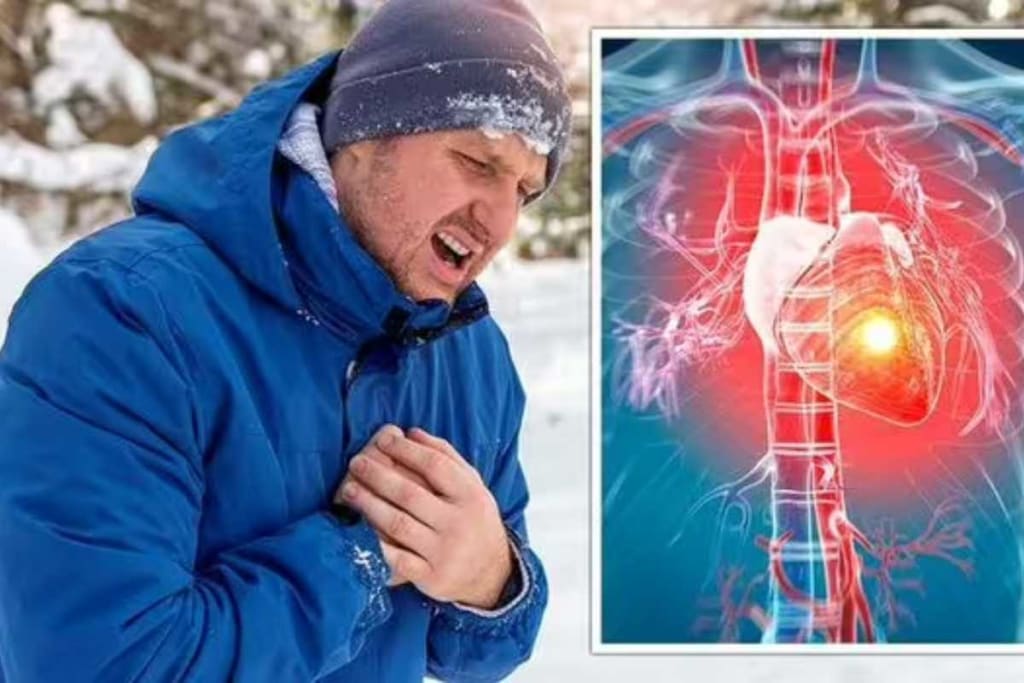
A new study published in the Journal of the American College of Cardiology (JACC) has found a significant increase in hospital admissions for heart attacks following exposure to lower air temperatures and cold spells. The findings, presented at the European Society of Cardiology (ESC) Congress 2024, suggest a delayed effect, with the highest risk occurring two to six days after exposure to cold weather. This study emphasizes the need for a deeper understanding of how global warming contributes to regional cold weather patterns and the associated cardiac risks.
Dr. Wenli Ni, lead author and a postdoctoral research fellow at Harvard University, highlighted the study’s findings: “Short-term exposure to lower temperatures and cold spells is linked to an increased risk of myocardial infarction (MI) hospitalizations, particularly two to six days after the cold exposure.” JACC Editor-in-Chief Dr. Harlan M. Krumholz stressed the importance of these findings, noting the urgent need for interventions to protect vulnerable populations during and after periods of cold stress.
Study Insights and Cold Weather Effects
The study, conducted in Sweden—a country known for its cold climate—analyzed data from 120,380 individuals from the SWEDEHEART registry. The researchers examined the impact of short-term exposure to cold air on heart attack risk from October to March between 2005 and 2019. Cold spells were defined as periods of at least two consecutive days with average temperatures below the 10th percentile recorded during the study period.
Consumer Reports: Winter weather can increase risk of heart attack
The results revealed a clear association between cold exposure and increased heart attack risk, particularly two to six days after exposure. The study found that exposure to lower temperatures led to an elevated risk of different types of heart attacks, including Non-ST Elevation Myocardial Infarction (NSTEMI) and ST-Elevation Myocardial Infarction (STEMI). Interestingly, the data also showed a temporary decrease in heart attack hospitalizations on days zero to one after cold exposure. The researchers suggested this might be due to behavioral changes, such as staying indoors, but noted that these modifications are not
Broader Implications for Cardiovascular Health
The study’s findings have prompted calls for a reevaluation of healthcare approaches to managing cardiovascular health in the context of changing climate patterns. An accompanying editorial by Dr. Kai Chen from the Yale School of Public Health and Dr. Khurram Nasir from the Houston Methodist emphasized the need for healthcare systems to adapt to increasingly unpredictable weather conditions. “Our approaches must be reassessed to ensure our systems are equipped to manage both ends of the temperature spectrum,” they stated.
Overall, the study reveals critical insights into the connection between cold weather exposure and heart attack risk, highlighting the need for targeted preventive strategies. As global climate patterns become more erratic, understanding these environmental impacts on cardiovascular health will be essential for developing effective public health interventions.
About the Creator
The Lifesciences Magazine
The Lifesciences Magazine is a global healthcare solutions platform that paves the way for various healthcare innovations, expert advice, and the success stories of professionals.
Keep reading
More stories from The Lifesciences Magazine and writers in Writers and other communities.
Constipation in Babies: Causes, Signs, and Treatments
Have you ever wondered why your baby seems uncomfortable, fussy or has difficulty passing stool? As a parent, it’s natural to worry when your baby seems to be in distress. One common reason for such discomfort is constipation in babies. But what exactly causes constipation in babies, and how can you tell if your little one is experiencing it and what can you do to help them feel better? Let’s explore the common causes, tell-tale signs, and practical treatments for constipation in babies. With the right knowledge, you can help make sure your baby stays comfortable and happy, even when their tiny tummies are having a hard time.
By The Lifesciences Magazineabout a year ago in Writers
How to Hire a Virtual Assistant for Personal Organisation and Scheduling
If your calendar feels like a battlefield back-to-back meetings, personal errands, rescheduling, missed reminders you’re not alone. In 2025–2026, more professionals and founders are hiring a virtual assistant (VA) not for “extra help,” but to build a system that keeps life and work running smoothly.
By Michael Coplin7 days ago in Writers
Wild Card Weekend Recap: What Happens Now?
I think I figured out why I love Wild Card Weekend so much. It's because it's the first playoff anything of the calendar year. The NFL season starts in the fall, and once upon a time, the champion was crowned either on or slightly before New Year's. The evolution of the NFL schedule has resulted in the playoffs starting just into the New Year, and currently, the final week of the season falls on the first weekend of the New Year, with Wild Card Weekend coming a week after that. So yes, chronologically, the NFL's Wild Card Weekend serves as the first playoff anything of the calendar year.
By Clyde E. Dawkins7 days ago in Unbalanced




Comments
There are no comments for this story
Be the first to respond and start the conversation.