
Choosing The Best Solar Inverter in 2025: A Complete Guide
Best Solar Inverter
DC to AC Conversion
At the heart of each solar inverter is its main purpose: converting direct current (DC) electricity into alternating current (AC). This might seem like a straightforward process, but a great deal is happening behind the scenes.
Solar panels tend to provide DC electricity because it is simpler to generate and store. But practically all domestic appliances and grid systems use AC. That's where your inverter comes in—it's like a translator between your appliances and your solar panels.
As sunbeams shine on your panels, electrons begin to flow, creating DC power. Your electricity is sent to your inverter, which quickly reverses the direction of the current thousands of times per second, converting it to a clean AC signal. This AC power is then sent to your home's electrical panel and distributed wherever it's required.
New inverters accomplish this in impressive efficiency rates, usually higher than 95%. And smart, to boot. They closely watch voltage and current, continually adjusting performance to deliver the most power possible from your panels even through changing conditions like partial shading or temperature shifts.
The inverter also controls the electricity so that it follows the grid frequency and voltage, a requirement of grid-connected systems. This perfect synchronism allows power to flow back and forth between your solar system and the grid without hesitation.
So when you next flick a switch and your lights burst on, be grateful for your solar inverter—it's doing a lot more than you realize.
Role in Grid Connection and Monitoring
Solar inverters not only convert electricity, but they also control how your system behaves on the grid and provide you with precise information about its performance. This dual function is critical, particularly in grid-tied systems where you may wish to sell surplus energy back to the utility company.
Now, let's discuss grid interaction. The inverter ensures that power exported to the grid is safe, stable, and in synchronization with the parameters of the grid. In the event of a grid failure, inverters of today have inherent "anti-islanding" protection that automatically shuts off your system to avoid deadly backfeeding, which can kill utility workers.
Then there's monitoring. Good-quality inverters now have monitoring systems that allow you to monitor how much energy your panels are producing in real-time. You can check data on your phone, tablet, or computer—daily, weekly, monthly, or even hourly summary.
Monitoring benefits:
Detect weak-performing panels.
Monitor trends in energy usage.
Catch maintenance problems early.
Optimize system efficiency.
Some sophisticated systems even provide AI-based analytics that forecast performance based on weather and historical trends.
In essence, your inverter is also the brain and the gatekeeper of your solar installation. It makes everything tick, safely and transparently, so you sit back and watch the sun work its magic.
Key Factors to Consider Before You Purchase the Best Solar Inverter.
Efficiency Ratings
Efficiency is king when it comes to solar inverters. The higher the efficiency, the more usable electricity your system produces, and the greater your savings over time. But what exactly does “inverter efficiency” mean?
In plain language, it's the percentage of your panels' DC power that's efficiently converted to useful AC power. No inverter is 100% efficient—some energy will always be lost as heat. But high-end models now have efficiencies of 97–99%.
Here's what to watch for:
European Efficiency: This measure averages inverter performance under partial loads and changing conditions.
CEC Efficiency: A standardized measure used by the California Energy Commission, which is deemed reliable.
Peak Efficiency: Maximum possible efficiency, but perhaps not under real conditions.
It's easy to try to find the lowest price, but low-efficiency inverters will cost you more in the long term from lost power. A difference of even 1–2% can mean hundreds of dollars over the lifetime of the system.
So when comparing inverters, don’t just look at the price—pay close attention to those efficiency numbers. A slightly higher upfront investment can lead to much bigger savings over time.
Compatibility with Solar Panels
Purchasing an incompatible Best solar inverter is equivalent to attempting to fuel a gas vehicle with diesel—there simply isn't compatibility. Compatibility does not merely imply the connections being made to match, but matching electrical specifications and capability performance as well.
What to look for is:
Voltage range: The inverter has to be capable of handling the DC voltage range of your solar array.
Power capacity: Equate the inverter's wattage to your panel system size. A 6 kW system requires an inverter that can accommodate at least that much output.
Number of MPPTs: More Maximum Power Point Trackers = better performance if your panels face different directions or are shaded.
Certain solar panel models are best used with certain inverters. For instance, Enphase microinverters go hand in hand with Enphase panels, and SolarEdge inverters are meant to be used with their proprietary power optimizers.
Also, think about expansion in the future. Will you be adding panels down the road? If so, choose an inverter that can expand with your system or integrate with others easily.
If unsure, contact your installer or utilize internet compatibility tools that come from the manufacturer. The correct choice will keep you happy and optimize your solar performance.
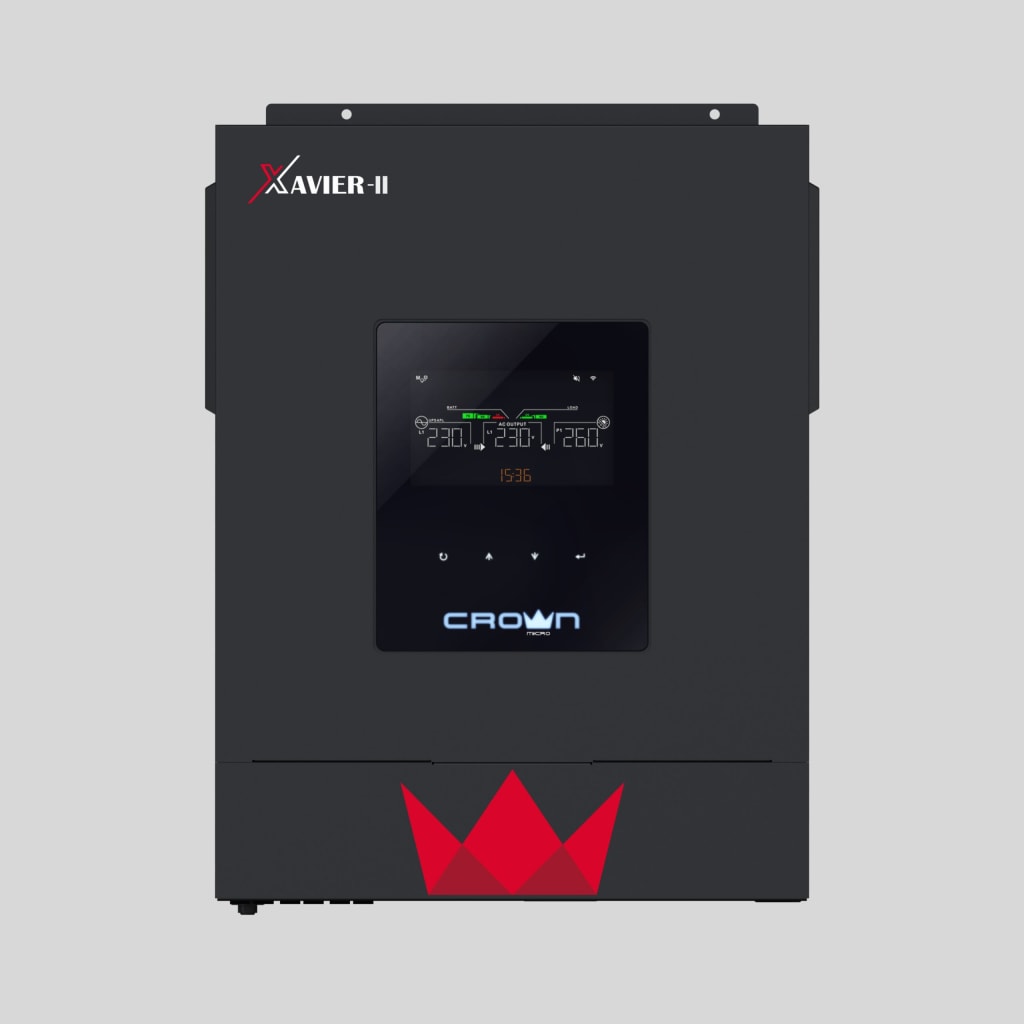
Crown Micro Global is a leading provider of advanced solar energy solutions, renowned for its high-performance inverters. With over 30 years of industry experience and a presence in more than 20 countries, including Pakistan, the UAE, and Nigeria, Crown Micro Global offers a diverse range of solar inverters —on-grid, off-grid, and hybrid—designed to meet various energy needs. Their inverters are equipped with cutting-edge features like MPPT technology, pure sine wave output, and smart monitoring systems, ensuring optimal efficiency and reliability for both residential and commercial applications.
About the Creator
Crown Inverter
At Crown Micro Global, we provide top-notch solar energy solutions with our Best Solar Inverters for effective Canadian solar panel output.
Keep reading
More stories from writers in Writers and other communities.
Why Students Are Turning to a Humanizer AI Instead of Relying on AI Alone
Why Students Are Reconsidering AI-Only Writing in Academic Work Artificial intelligence tools have become deeply embedded in student workflows. From outlining essays to organizing research notes, AI has changed how students approach assignments. However, a noticeable shift is taking place in academic environments. Students who rely exclusively on AI-generated writing are increasingly encountering issues related to grading, feedback, and academic credibility.
By Abbasi Publisher7 days ago in Writers
Rage
Content Warning: Domestic Violence, Assault Rage D. A. Ratliff “Who did this?” My voice echoed through the house. All I wanted was a cup of tea, but one of the twins, running through the house like maniacs, knocked it over. My nerves tingled, and every muscle in my body felt coiled like a spring. Survival seemed out of reach.
By D. A. Ratliff6 days ago in Fiction



Comments
There are no comments for this story
Be the first to respond and start the conversation.