
Character Design 101
Character design is all about getting characters to fit together. It can be hard. but it's easy when you have fun with it.

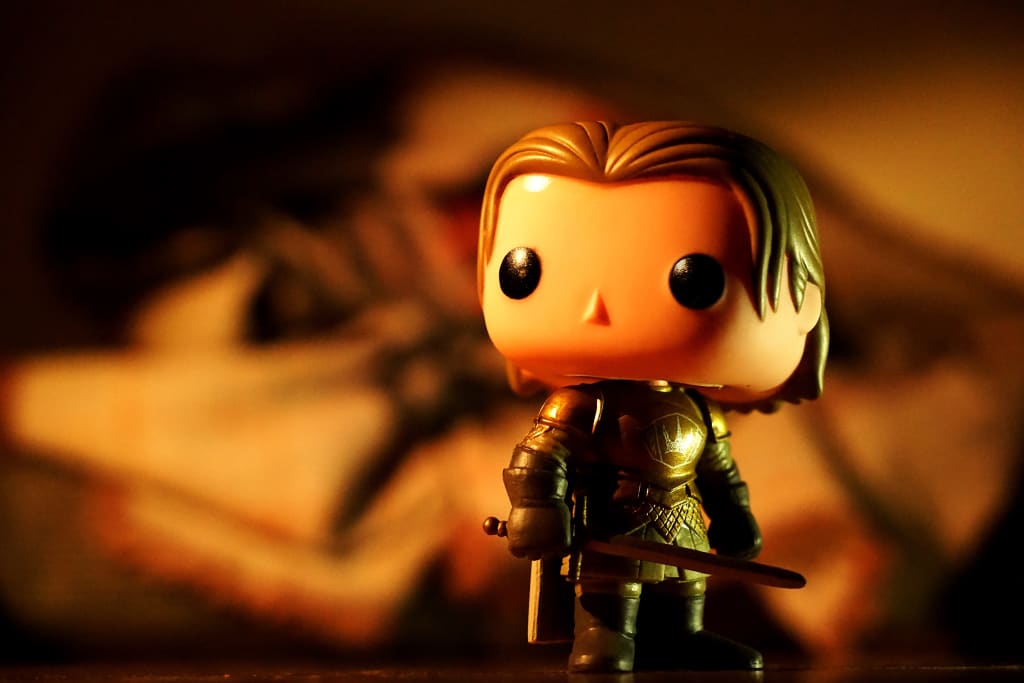
While it's definitely part of creating a comic, every book needs to worry about character design at some point. For our purposes, there "character design" breaks down into two categories:
- Drawn: This is important for not only how you as the writer will visualize the character but also how the illustrator should draw them. This version will be far more detailed than the prose, but it also has to be; after all, the more details you include the fewer questions will be asked and the better the illustrations will be. This means that you will need to include as many details as possible, but you also don't want to get too obsessive; too many details may end up creating chaos when it comes to getting the look right.
- Literary: This is the character prose readers will encounter. Generally, the descriptions are vaguer compared to drawn descriptions; you just can't devote all that space to describing the characters. In a basic way, this is why so many writers use shadows and cloaks to obscure parts of the character; it allows them to reveal bits of the character over time rather than one huge description dump. (Before you go, "Sweet, I need to do that", it's also the hallmark of a hack.)
The problem is that even if you're doing this for a prose story, you're going to want to do a drawn description; the more details you have down the better you know the character. Also, some of these details will help with world-building; as this stage helps define military uniforms, the kind of gear available, and even the basic fashions of the world or just the group that the character belongs to, engaging in some detailed descriptions only helps you get a better feel for the world.
[Note to Pantsers: While you can expect to do a lot of retconning as you make changes, you should nonetheless keep track of character descriptions as you come up with them. This will help you deal with continuity issues when you finally start editing as well as help you solidify things as you go. So while you don't need to start off with a lot of details, keeping track as you go can only help.]
Thus, when you're designing your characters' physical appearances, you're also designing a lot of their psychology and the underlying sociology. This makes this step more than worth the time and effort you put into it.
Debate a Theme
Before you get serious, debate using some sort of theme. This is not the same as uniforms; those are specific outfits used to differentiate groups while this is the overall theme of the descriptions. For example, deciding to go with an astrological theme would mean that the main characters (and their followers) would have their general style dictated by the sign they represent; a Leo would be regal with flowing tassels while a Scorpio would look armored even in bathing trunks, for example. If you decided to go with the classic elements, a fire-based character would tend towards flashy outfits with red highlights while his water counterpart would be more mellow with blue/green highlights.
These differences would show up even if they dressed in the same outfit; the fire guy's uniform would be somehow fancier than his water friend's, which would just be more relaxed. The Leo's uniform would be pressed while the Scorpio's would seem to be able to deflect bullets. Little details, but in a world where details matter it could tell a lot about the character and the organization he is part of or even leads.
If You Do Use a Theme, Figure Out How Characters Ignore It
If you do go with a theme, you may want to show how individualistic the characters are. This can mean a Leo who is a little ragged or a Scorpio who is just a little less than battle-ready. Some characters may emphasize different aspects of the same symbol, such as a regal Leo versus a more barbaric one to show different styles of leadership, for example, or a Scorpio who relies on swords versus one who prefers whips. If two characters have different backgrounds, this is a great time to show it, such as a desert character who wears a kufi versus an arctic character's scarf. A theme is just the beginning; it should not be seen as a limit.
Debate Team Uniforms
While the theme may define a larger group or even a social strata, groups within those groups may be part of organizations that have strict dress codes, such as the military, schools, or even trades, either by design or because it makes sense (such as a farmer's overalls). This allows you to further differentiate those in a conflict (look at how iconic the Northern Blues vs. Southern Grays are when it comes to the American Civil War), even if it's gang warfare. This can also help you define different groups (such as farmers vs. technicians or two different schools).
Of course, you can also individualize uniforms to some degree, even if those modifications are codified (such as insignia). Also, consider that even military uniforms may suffer severe individualization; some soldiers who spent a lot of time in the field had no problem ripping off sleeves while some students may wear their jackets inside-out, especially if there's a bright color inside. Even if two characters wear the same tie, they don't need to wear it the same way; one could wear it tight and straight while the other wears it loose and akimbo. There are always levels of customization to take advantage of, no matter how rigid the uniform is.
Tailor Weapons/Gear to The Individual
Different characters will have different gear, even if they have the same job. Consider that one student may have a laptop, a backpack full of books, and an old model flip phone while his friend's backpack will be mostly empty but he has the latest smartphone. Even if you're talking about two soldiers with the same MOS, they may have different weapon load-outs (such as a different number of magazines, different rifles, and even different ammunition) and carry different equipment (one may carry as much gear as possible while another will carry as little as possible).
This is more than just mere customization; it may serve a tactical need. The student whose job is to know things will carry reference books while the one more worried about social connections will have a credit card and the latest phone. One soldier may carry a rifle with more ammunition than normal while another in the same squad may have a grenade launcher. The gear a character carries defines his role and helps show how he thinks about things, so gear them up accordingly.
Don't Forget About The Base/Vehicles
It's a bit off-topic, but you should also be thinking about the base(s) and vehicle(s). Just as the type of base can say a lot about the characters in general, so can its condition and organization; a big, well-organized, well-maintained military base carries a different weight than a small, ramshackle, generally dirty tent city. The base also defines what sort of resources the group can pull from; a well-stocked space station is going to be vastly different than one that needs to be restocked constantly.
The same applies to vehicles, even if you're just looking at horses or some sort of other animals. A new car that is kept in superior condition is going to carry a different meaning than an old one that's falling apart. Even mecha design can say a lot; consider a group that uses a group of dogs that merges versus ones that are always single units. The vehicles owned by or assigned to characters can say a lot about them and especially the setting.
Remember That Different Characters Have Different Issues
Don't forget that different characters have different weaknesses and that may be part of their gear. The most obvious one is the character who breathes something different than everyone else; he may need a helmet and tanks, and those need to be described, be they sleek and modern or large and engraved. Three characters may each wear glasses, but one wears them just to see, one wears them to look cool, and the other wears a pair of range glasses. Characters with scars, prosthetics, or other physical need to have them described.
Not All Characters Need Armor
While this applies especially if you're dealing with superheroes with thick skin, it can also apply if two characters have vastly different fighting styles or just make different fashion choices. The point here is that different characters will show different levels of skin, and that's perfectly legit; an invulnerable character will run around in far less armor than his squishier teammate. This applies to other choices: a character who needs to move in combat is going to wear less armor than one who has no problem taking whatever is thrown at him.
This applies to other choices as well, such as bathing suits, underwear, and even sleeve- or skirt-length. One boy may wear an undershirt while another doesn't just as one girl prefers to wear sports bras while another wears a more traditional one. These tend to be more subtle choices, granted, but can still say a lot about the character and should be allowed for at some point.
The Flare
Different characters wear different types and amounts of jewelry, make-up, tattoos, etc. Some even wear different lapel and brooch pins or clip their ties differently. Some even collect different belt buckles while others have the same pair of cuff links for every shirt. Some items may even have some sort of practical use, such as the necklace of fireballs a mage always carries while some mix utility and personal importance, such as a watch that's been in the family forever. As these are more than just little touches but define the character, they should be noted.
Then There Are The Other Details
Let's not forget the obvious: Skin color, hair color and style, eye color, even whether or not the character has freckles. Height, weight, and build should also be considered. Even musculature, such as scrawny, athletic, or bulky, should be considered. It may sound obvious, but some writers somehow forget these; while sometimes there can be a good reason (if everyone has the same skin color, for example, you only need to mention it once). Nonetheless, don't forget these little details.
Remember That Characters Are Not Always In Uniform
This is more than just underwear, although that should be a consideration. Even teenagers have time off the clock; the clothes they wear at school are different than what they wear around the house. The same applies to adults and work clothes; even a soldier in the field may have a camo shirt he never wears on the clock and reserves for relaxing. Then there are the clothes they wear to impress, such as to an interview or a party. It can only help to know the different outfits a character wears in different situations.
Don't Forget to Do a Sensitivity Check
This can be the fun part, especially if you're using bits of clothing from different cultures that you're not part of. If you're not sure, find out; you don't want to use something that holds cultural significance for a particular group in the wrong way. There are plenty of online resources, assuming you don't have access to some sort of local cultural center that can help. This is just basic courtesy; you want to get as many details right as you can and don't want to unnecessarily offend readers.
Details are important; it applies just as much to getting the culture right as it does characterization. If you're not going to use something as the real-world group it comes from would, don't use it. It really is that simple.
Will The Characters Be Too Hard to Draw?
You do NOT want to submit a character design to an illustrator that's far more complicated than it needs to be. This is practical on three levels:
- The more complicated the design, the longer it will take to draw and the more the illustrator is justified in charging you. Even if you're the one doing the drawing, you don't want to spend more time drawing than absolutely necessary.
- The more details, the more that can go wrong, especially if there is a lot of coloring to allow for or you're using a lot of culture-specific items. Simplification is your friend.
- This prevents you from overthinking things. Remember to Keep It Simple, Stupid, and your life will be a lot easier.
Yes, you're going to emulate the greats like Jack Kirby who was known for his detailed designs, but keep in mind that Kirby spent a lot of time on the drawing board for a reason. Unless there's a very good reason for that amount of detail, avoid it when possible.
* * * * *
Designing characters is really not that difficult. Just remember that every feature of a character needs to serve some purpose, from eye color to equipment. The idea here is to have fun but not too much; while modern designs are trending towards more complex ones (especially compared to the wresting-based designs of the 1940s), this does not mean that they need to some baroque masterpiece; just design the characters to be what you need them to be, no more no less.
About the Creator
Jamais Jochim
I'm the guy who knows every last fact about Spider-man and if I don't I'll track it down. I love bad movies, enjoy table-top gaming, and probably would drive you crazy if you weren't ready for it.
Keep reading
More stories from Jamais Jochim and writers in Writers and other communities.
Why Your Magic Needs Rules
Don't you hate it when you're reading a story about mages and you're trying to figure out why they don't just use magic to get out of a problem? The apprentice has cast a fireball, used telekinesis to grab keys while in a cell, and took advantage of psychometry to get a clue from the killer's hammer, but then has a problem opening a door; while it's a nice nod to Vox Machina, it brings up a lot of questions about how your magic system works.
By Jamais Jochimabout a year ago in Writers
Unofficial Challenge: Black History Celebration
Forward: February 28th, 10:53 PM, EST... The final hour of Black History Month, 2026. Hello fellow writers. I've had this challenge waiting in my drafts for most of the month. But I held off on publishing it, until now.
By Sam Spinelli6 days ago in Writers



Comments
There are no comments for this story
Be the first to respond and start the conversation.