
Captivating or Cringe: Low-Quality Images Sabotage Your Readership
Creative thinking makes all the difference in gaining readers

This story is about an obvious mistake that some of the best writers make.
Think about this: you spend x amount of time carefully writing a story you believe has real value for readers. You pour in creative thinking, carefully choose the right words to impact a reader, proofread, fine tune, and sigh with satisfaction at the end.
And then it happens.
You’re in a huge rush to hit that publish button. You dash over to Unsplash. Quickly type in a phrase that relates to your perfect story.
Your story is about self-actualization—you advise your readers to really believe in themselves and in understanding that they do not need to be fixed. A valuable message. But you shrug and haphazardly type in, “Being ok.” You feel anxious about browsing a bunch of images. I mean, who really cares about the picture?
So you quickly choose this image because it comes up at the top.
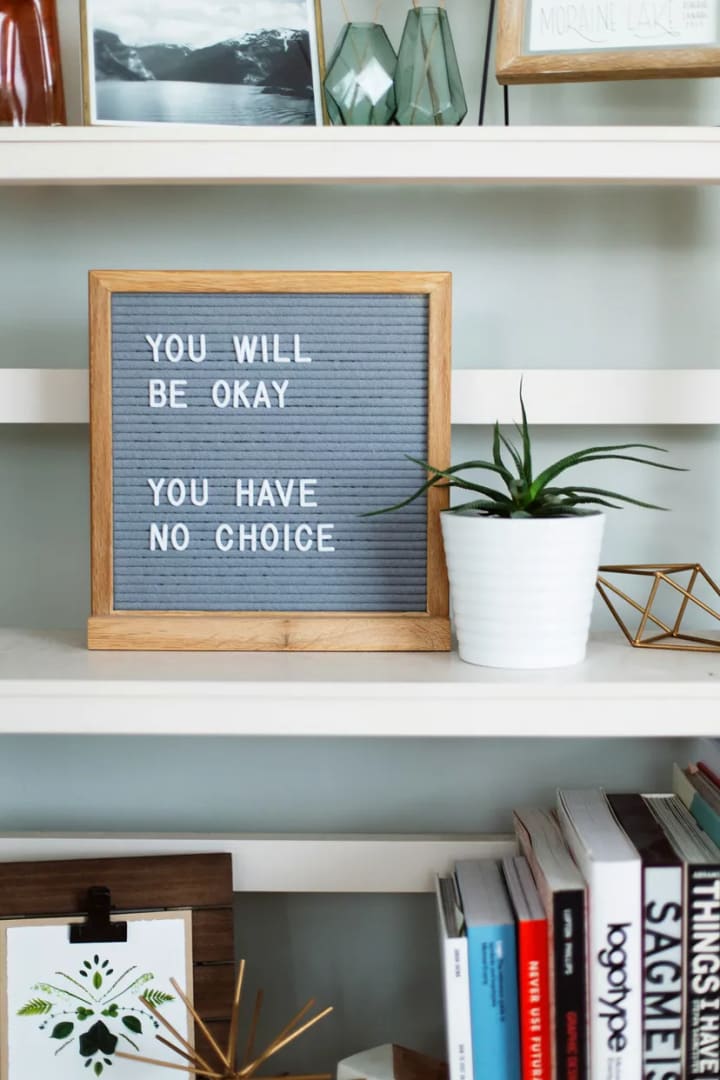
Don’t do that! The image is pointless. It needs cropping. It’s annoyingly big and gives the reader nothing value-added.
Or this:

Does the reader seriously give a rat’s patoot about looking at letter blocks?
Metrics and statistics about online reading and writing clearly demonstrate that images draw readers in—but worthless images can make readers click away from your story.
Consider these reasons to choose images carefully:
- Grabbing attention quickly to encourage a reader to explore further
- Improving comprehension
- Breaking up text for a more relaxed reader experience
- Provide emotional connection
- Boosting engagement—readers often comment on interesting or appealing images.
- Supporting branding—readers learn that you present good-to-look-at-images, so they seek out your stories
- Improving SEO—Optimized images (with proper alt tags, captions, and filenames) truly improve search engine rankings, making you more visible in search engines. That's a fact.
- Increasing dwell time--Outstanding visuals keep readers on the page longer, which is a positive signal to search engines and, again, makes you more visible.
It takes about five minutes, max, to find a great illustration, especially when you type in the right query.
Refine your thinking. Maybe search for “perfect.” Or “feeling great.” Or “self.” Think for a moment about what feeling you want to convey that will draw the reader in because the image is appealing, attractive, or unusual.
Consider searching for another term entirely—I used “self-esteem.” It only took me eight seconds to find my alternative choices to replace the insipid plaques with boring words spelled out.
This one says “I’m okay and satisfied” without using Scrabble tiles.

My point is that the image you choose doesn’t have to literally say, “ending up okay” or whatever your topic is. The image’s job is to offer one more reason for readers to stop clicking or scrolling and stick around on your story for a bit.
Have a look at Kenny Minker ‘s work. Or James Bellerjeau. Or Kristen Stark.
These writers often lure me in with great pictures—the image may not be specifically representative of their thesis, but it catches my eye and attention. So go, thou, and spend a few more minutes letting readers know you care deeply about the details.
My reading ratio is generally around 90%. I pay attention to every aspect of my stories because I respect my readers and want to offer value in every way. Just sayin’. I frequent sites with free-to-use images like Unsplash and Pixabay, and I browse museum sites with free-to-use pictures. Maybe I'll use a painting or drawing. You can, too.
Some sites to get you started
- Metropolitan Museum
- National Gallery of Art
- Art Institute of Chicago
- WikiMedia Commons
- Public Domain Images
If you don't care to invest time in finding a captivating image, then maybe choose to omit the visuals altogether. Better no picture than a repulsive picture. It's your choice.
This week, I saw 11 stories with pictures of words spelled out on wooden blocks. Writers, do better.
About the Creator
Maryan Pelland
A successful, professional writer/editor/publisher/mentor for half a century. Read me now before I throw in the towel. I love to empower other writers. My stories are helpful, funny, unique, and never boring. I write for avid readers.
Reader insights
Nice work
Very well written. Keep up the good work!
Top insights
Expert insights and opinions
Arguments were carefully researched and presented
Eye opening
Niche topic & fresh perspectives
Heartfelt and relatable
The story invoked strong personal emotions
Masterful proofreading
Zero grammar & spelling mistakes
On-point and relevant
Writing reflected the title & theme
Keep reading
More stories from Maryan Pelland and writers in Writers and other communities.
My Truths about Medium, Substack, Vocal, and the Benefits for Writers
I was surprised that of the three platforms, only one felt truly writer-centric. Here’s my in-depth review of the three most popular writing platforms that have a monetization component. I look at how they operate, how responsive they are to inquiries, audience engagement, a brief synopsis of the money part, and overall writer satisfaction.
By Maryan Pelland2 years ago in Writers
Unofficial Challenge: Black History Celebration
Forward: February 28th, 10:53 PM, EST... The final hour of Black History Month, 2026. Hello fellow writers. I've had this challenge waiting in my drafts for most of the month. But I held off on publishing it, until now.
By Sam Spinelli6 days ago in Writers
Mark Twain: The Man Who Lived, Laughed, and Witnessed America’s Transformations
Have you ever wondered what it was like to grow up along the Mississippi River during a time when America was transforming faster than anyone could imagine? Meet Samuel Clemens, better known as Mark Twain—a boy from a small Missouri town who rose from modest beginnings to become one of the greatest storytellers the world has ever known. Twain didn’t just write stories; he captured the soul of a nation, observing both its humor and its heartbreak with a sharp, unforgettable voice.
By Haroon Pasha8 days ago in Writers

Comments (1)
Very true. When I'm editing articles for my day job, probably 75% of the time the authors don't give me a lead image so I have to dig around. Sometimes it's tough to find one and I just do the best I can. Other times, I have an inspired choice which really meshes well with the article, and it can even make a sub-par article suddenly seem better. But, as you say, at the same time a poor picture choice can make a good article seem bad and turn potential readers away.