
Caffeine-Stained Pages
Where the mistakes become part of the art
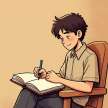
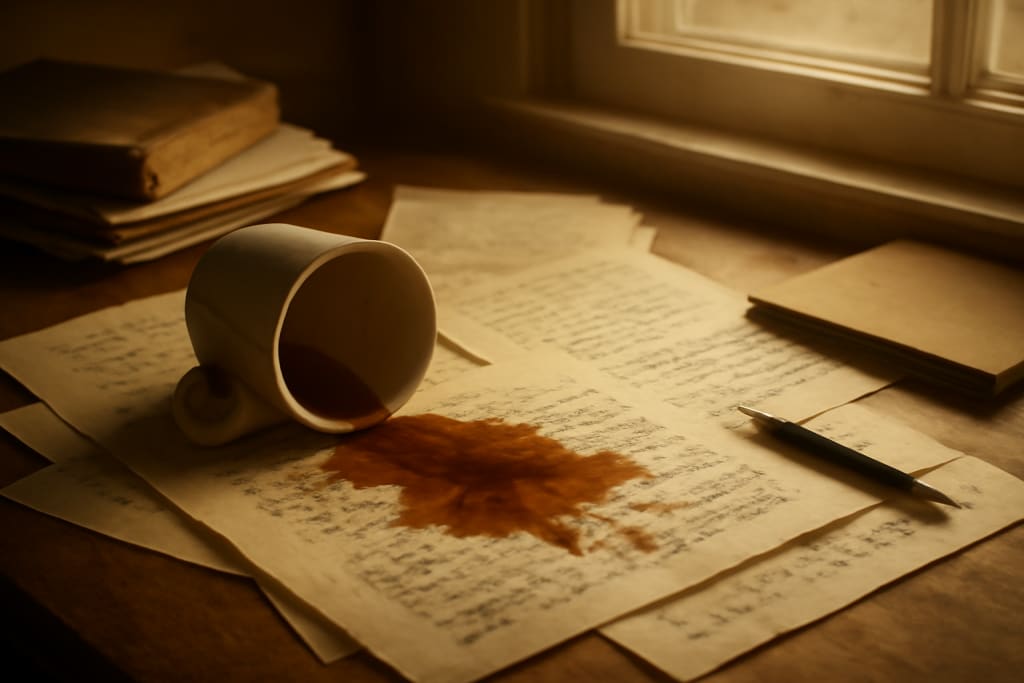
The coffee was too hot when I spilled it, the first time, the second time—so many times, it seemed like the universe was sending me a message: slow down, stop rushing. But I never did, not really. There was always something else, some pressing need to fill the silence with words that didn’t always mean much. The coffee stains, dark and stubborn on my desk, became symbols of a process I couldn’t quite understand—writing, creating, living. It was all a mess, but I couldn’t find it in myself to care.
I’d spent years in the comfort of neatly organized chaos. Pages stacked in piles, half-full notebooks left open to dry out like old leaves forgotten in a corner. The words were meant to be art, to be polished and precise, but they never felt finished, not really.
It’s funny how a small thing—something so inconsequential—could change everything. That morning, it was a stray elbow. I was hunched over my desk, mind busy with an unfinished thought, when my hand knocked the mug of coffee off the edge. The dark liquid spread across the page in slow, deliberate circles, soaking into the corner where I’d written about something—someone—I didn’t fully understand. I stared at it. A messy, impossible stain. Nothing on the page would ever be the same again.
At first, I cursed under my breath, reaching for the napkins and hoping that maybe I could salvage the words, the idea, the morning. But there was no erasing that mark. No scrubbing it away until it disappeared, hidden like a secret that no one should know. I realized, as I dabbed at the paper, that this was not just a stain; it was a signature. It was part of the process.
It felt silly to think it, but I decided to leave it. The pages would remain as they were—imperfect, cracked edges, coffee stains blooming outwards like some sort of strange map leading me to nowhere. And somehow, I felt freed by it.
I had been so afraid of imperfection for so long. The type of fear that makes you discard entire drafts, tear apart paragraphs that don’t fit the mold you’ve made for yourself. I had been taught that in order to create, you needed to control everything. But that morning, in the soft light of early autumn, I realized I had been wrong.
That stain was proof. Proof that the words I was writing, whether they came out perfect or a little rough, were still mine. Still real. Still worth something.
I kept writing. That story, the one about the unknown person I could never quite describe, slowly took shape, stained edges and all. With every coffee spill, with every misspelled word, the narrative became more alive. Each flaw, a brushstroke of authenticity. By the time the sun had risen higher, the story had transformed into something I hadn’t expected, something raw and uncertain but also more honest than anything I had written before.
I began to wonder if the mess was what mattered most. The spilled coffee, the scattered pages, the clutter of ideas that didn’t make sense at first. If I’d let my fear of imperfection keep me from making something real, I would have never seen the beauty in the mess. I would have never experienced the magic that comes from chaos.
The stains on the paper weren’t mistakes—they were part of the art. They weren’t separate from the process of creation; they were embedded in it. And maybe that’s what art really was: not the neat and tidy, polished and finished. Not the things we can predict and control. But the messy spills of our lives—our thoughts, our fears, our joys—and how they bleed out across the blank space, how they leave marks that tell stories of their own.
I thought about that as the days passed, as the stains on the pages became more pronounced, as the ink in my pen ran dry and I reached for another cup of coffee. The stains became part of the story, too. Like a reminder that even the moments that feel like mistakes can lead you somewhere you never expected to go.
I never did finish that story. Not really. But I didn’t mind. There was something freeing about it, knowing that not every page had to be complete, that not every thought had to be wrapped up neatly in a bow. The stains remained, long after the coffee had dried, each one a little memory, a little mark of something imperfect but true.
And that was enough.
About the Creator
Jhon smith
Welcome to my little corner of the internet, where words come alive
Keep reading
More stories from Jhon smith and writers in Writers and other communities.
When We Were Small
When we were small, the world felt enormous—not because it truly was, but because we had not yet learned to measure it with fear. Back then, distances were crossed with bare feet, not hesitation. Walls were climbed, not avoided. People were trusted before we learned the price of doing so.
By Jhon smith3 months ago in Writers


Comments
There are no comments for this story
Be the first to respond and start the conversation.