
Budgeting for Professional Editing Services – Writers and Publishers First Show Your Hand
Strategic Financial Planning for Quality Manuscript Refinement


In most cases, professional editing is vitally important in the process of preparing books, articles, or business documents, etc. Unfortunately, however, many writers and publishers design most budgets for their works, but few account for the cost of professional editing. Here is an easy way to comprehend the costs and plan your finances accordingly, step by step.
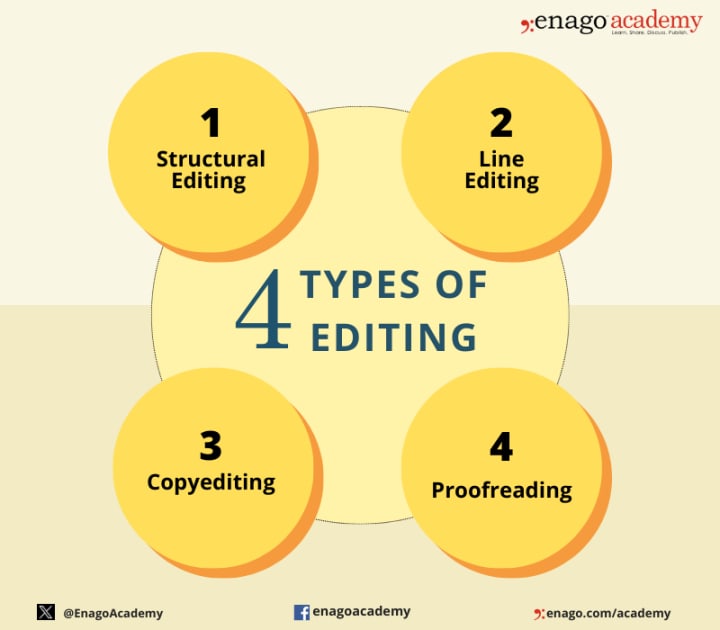
Familiarizing Yourself with the Various Types of Editing Services
Developmental Editing: Here, the editing processes bring in a complete redesign on the organization of contents as well as style of the manuscript. Developmental editors guide your manuscript and its structure prior to proceeding with the copy editing stages.
Copy Editing: The primary concern of the copy editor is fixing grammar, punctuation, syntax and spelling mistakes. Their work is to make sure that the text is error free and is already at the level of a first draft. This service is cheaper than developmental editing, but it is essential in the simple refinement of a manuscript.
Proofreading: Proofreading is the final edit done on a work before it goes to press. It is in its advanced stage and only aims at eliminating errors which most likely are typos or any other overlooked errors from previous editing.
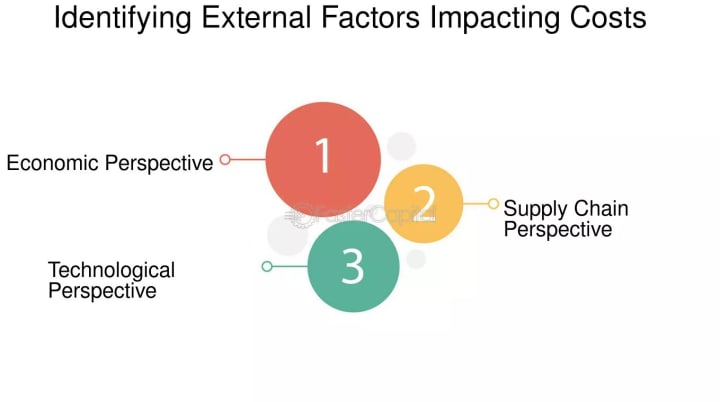
How editing costs are influenced by external factors
Length of the manuscript: Most editors bill on the basis of the words or pages of work done. The more the pages in the manuscript, the more the costs associated.
Complexity of the content: An editor with the required knowledge and skills may need to be hired, and this may increase the cost of the services.
Level of editing needed: As is the case of a basic copy edit or proofreading, a basic developmental edit is less costly than a more intensive involvement in the developmental editing process.
Time, skills, and level of an editor: An experienced or specialized editor in any area of their interest typically expects higher levels of payments.
Estimating the Costs
As preparation, know the type of editing that the manuscript requires to budget well. Write your type of service and then contacts several editors asking them for the charges to inquire about average costs. For example:
Developmental servicing can be charged at rates ranging from between $0.07 to $0.12 per word.
The copy editing price can still go between $0.02 and $0.05 per word.
Proofreading is the cheapest and can be charged between $0.01 and $0.03 at max.
Budgeting Tips
Assess your requirements: The first thing to do is to know your target audience and understand the editing that your manuscript requires- this can be as simple as an evaluation by a professional, or even the use of beta readers.
Try and Seek Other Samples: Quality is surely the most important thing, but so is finding a reasonable rate – in this case, it is good to contact multiple editors.
Worry about more than a one round: It rarely happens that one engages in editing a document only once. When creating your budget, allocate resources for at least two rounds: one in which a major edit is done, and another one which only involves the final proofread.
Keep some extra budget: Additional payments may arise due to unanticipated changes. One is always better off having a 10-15% contingency fund.
Seek Other Options: If one is unable to afford the usual editing rates, one may use the services of a much lower rate editor who is trying to enhance his/her portfolio, or try bartering services if there is something beneficial to the editor that one can offer.
Conclusion
For any serious publication endeavor, editing is an absolute expense that is unavoidable. Working from a position of strength, should there be an understanding of the types of editing service and the cost determinants, this advance planning will lead to more prudent financial management as the final version of the manuscript sent out for publication will be clean and as it should be. Such a strategy helps not only as a way of controlling expenditure but also as a means, in the end, of being able to deliver a quality product that appeals to one’s target market.
This short and brief guide looked at how to plan finances around hiring professional editing services, which are important for improving any written piece of work. Familiarity with the types of editing—developmental, copy editing, and proofreading—and their pricing assists in planning. These factors include, but are not limited to, the number and intricacy of pages, the depth of editing needed, and the editor’s level of experience. To arrive at effective estimates, however, articulate your requirements clearly and get a few prices for the same job to establish the best combination of price and quality. Also bear in mind that in most cases, editing tasks require several rounds of revisions; hence, factor in the cost of the first round of edits and all other rounds. If you run out of money, resort to editing less skilled editors or exchange services so as to cut expenses while retaining quality. Proper budgeting will make sure your manuscript is edited and polished by a professional before printing, and tidies the author’s commitment to quality as well as the readability of the manuscript.
About the Creator
Diane L. Richardson
Author
Keep reading
More stories from Diane L. Richardson and writers in Writers and other communities.
Why Does Your Book Not Sell?
It is a dream come true, time and effort to complete a book where every writer desires his or her book to be on the high end of the sale spectrum. There are, however, books that did not even come close to sales projections. One of the most important things to think about in this situation is how to fix the situation in the future: understand why your book does not sell well. This essay discusses the issues that lead to low book sales and puts forward ways that can help you market your book better.
By Diane L. Richardsonabout a year ago in Writers
Wild Card Weekend Recap: What Happens Now?
I think I figured out why I love Wild Card Weekend so much. It's because it's the first playoff anything of the calendar year. The NFL season starts in the fall, and once upon a time, the champion was crowned either on or slightly before New Year's. The evolution of the NFL schedule has resulted in the playoffs starting just into the New Year, and currently, the final week of the season falls on the first weekend of the New Year, with Wild Card Weekend coming a week after that. So yes, chronologically, the NFL's Wild Card Weekend serves as the first playoff anything of the calendar year.
By Clyde E. Dawkins6 days ago in Unbalanced



Comments
There are no comments for this story
Be the first to respond and start the conversation.