
Books, Belonging, and the Neighborhood Fair
Exploring how book fairs, author visits, and grassroots efforts build literacy and cultural pride in young readers.

Community Events as Literacy Triggers
In neighborhoods where sidewalks double as playgrounds and basketball courts host weekend barbecues, something quieter but equally powerful often unfolds—a child meets a book for the first time. Local community events, especially those centered around storytelling and books, have an underestimated power: they create readers. These moments aren't just about literacy—they're about identity, belonging, and discovery.
As more communities recognize the value of literacy outside the classroom, book-centric events have become cultural cornerstones. Whether it’s a summer reading fest in a public park or a grassroots zine fair in a church basement, these gatherings spark a kind of joy that standardized testing never could. Especially for young readers from underrepresented backgrounds, they offer something even deeper: the thrill of seeing themselves in stories.
Book Fairs, Festivals, and Childhood Memory
Many grown readers can trace their literary beginnings to a moment—maybe a Scholastic Book Fair in the school library or a sun-drenched Saturday at a regional festival where bookmarks and balloons were handed out with equal enthusiasm. These book-focused events, often hosted locally, become milestones in a child’s memory.
For Filipino-American children, particularly those in multigenerational homes, access to culturally relevant stories remains vital. The presence of a Filipino middle grade book at such events can be a revelation. Titles that reference Tagalog phrases, local dishes like sinigang, or sibling dynamics shaped by immigrant parents offer more than entertainment—they validate lived experience. When book fairs curate spaces for Filipino narratives, they offer mirrors as well as windows.
Interactive Encounters and Author Accessibility
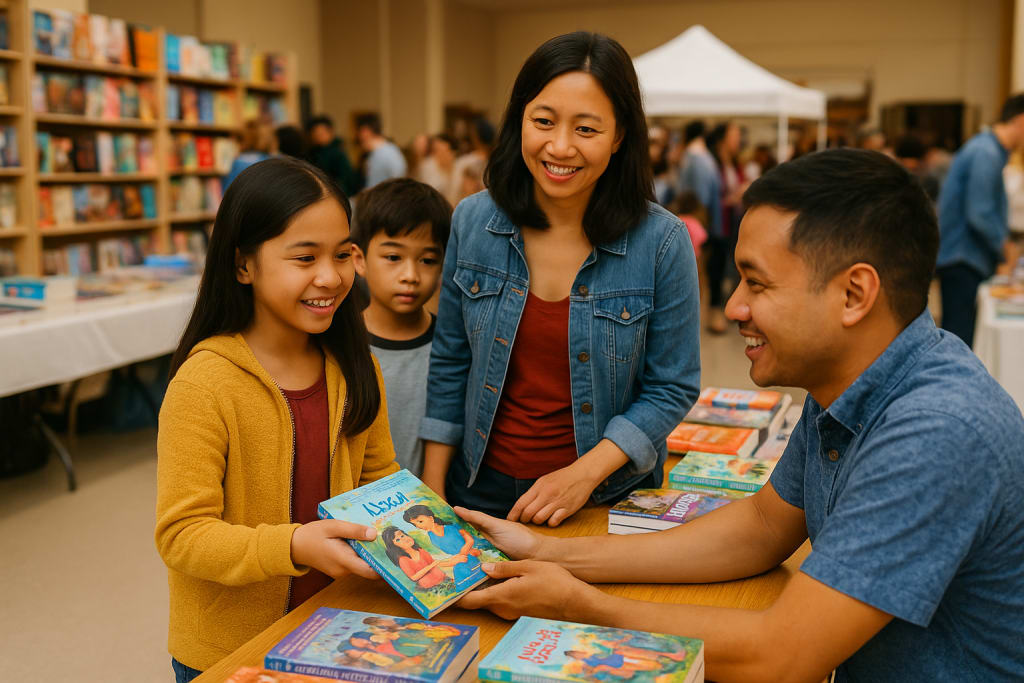
A defining feature of local literary events is their intimacy. While major festivals in cities like Los Angeles or New York attract global names, the smaller scale of community gatherings brings creators and readers eye to eye. At these events, children don't just read about characters—they meet the minds that shaped them.
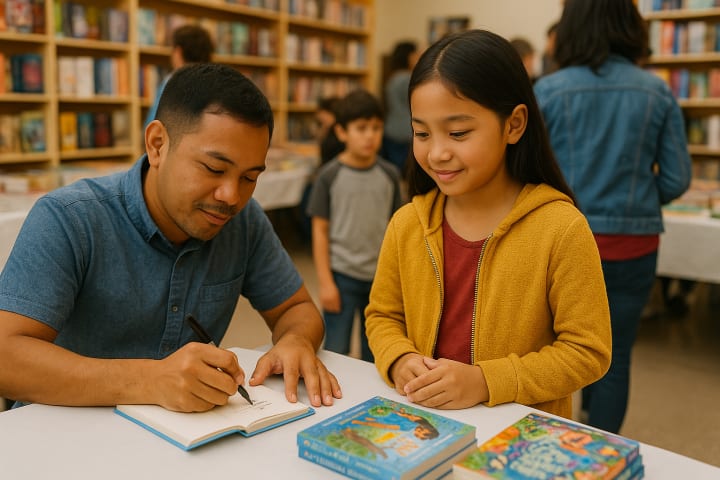
Interactive author events turn books into living experiences. A meet-and-greet with a Filipino middle grade author can have a lasting emotional impact. Hearing an author describe how they built a character who loves lumpia or navigates life between two cultures can resonate deeply. It’s not uncommon for young readers to leave with a new favorite book—and a new role model.
Events like the Filipino Book Festival in San Francisco, or smaller school-based initiatives across the country, reinforce this connection. When authors like Andrew Jalbuena Pasaporte speak about crafting authentic Filipino voices, they remind young readers that their own stories are worth telling, too. His independent publishing journey, rooted in Filipino diaspora themes, exemplifies how indie creators are shaping literary futures.
Examples of Grassroots Literacy Building
While large-scale events draw attention, it’s often local volunteers, educators, and parents who do the quiet work of building literacy at the ground level. In suburban libraries or urban rec centers, bilingual storytimes and pop-up book corners transform spaces into learning hubs.
Organizations led by Filipino educators have also begun mobilizing community-specific book drives, ensuring that a Filipino middle grade book finds its way into family libraries. From themed reading circles during Filipino American History Month to author visits in afterschool programs, these grassroots efforts cultivate reading not as an obligation, but as an invitation.
Importantly, they create space for community input. Children can ask questions in Taglish, parents share their own folktales, and everyone leaves feeling a bit more seen. These moments, though small, can shape how children perceive reading—as a joy, not a chore.
The Lasting Impact of Early Book Culture
The presence of culturally specific books in a child's early environment lays down lifelong roots. Kids who encounter representation in their early reading are more likely to develop empathy, curiosity, and confidence. They are also more likely to keep reading.
For Filipino youth especially, seeing themselves reflected in a Filipino middle grade book helps establish pride in identity. The habit of reading transforms into a habit of understanding—and storytelling becomes a tool of self-definition.
When book culture is nurtured from a young age—through fairs, clubs, or festivals—children carry it with them into adolescence and adulthood. They not only become readers, but also cultural keepers and, eventually, storytellers.
Conclusion: The Power of the Local
Literary movements don’t always start in publishing houses. Often, they begin in school cafeterias repurposed for poetry nights, at folding tables stacked with paperbacks, or in community halls buzzing with excitement. These are the places where young readers are made.
Local events offer more than books—they provide belonging. They celebrate heritage and possibility. And for children encountering their first Filipino middle grade book, these moments might shape a lifetime of reading, storytelling, and self-love.
In a world increasingly curated by algorithms, it’s still the face-to-face connections—between a reader and a writer, a child and a story—that kindle something lasting. And it all starts with a neighborhood event, a shared page, and a little imagination.
About the Creator
Maxine Dela Cruz
Maxine Dela Cruz is a storyteller who writes about culture, events, and youth media. Her work captures how books, traditions, and collaborations influence how we grow up and who we become.
Keep reading
More stories from Maxine Dela Cruz and writers in Writers and other communities.
What a Viral Collab Taught About Reaching Non-Readers
Not All Readers Start with Books Not everyone discovers reading in the aisles of a library or through a beloved bedtime story. For many, especially digital-native youth, the gateway to literature isn’t ink on paper — it’s the scroll of a screen, a short video clip, or a viral meme. And in the age of algorithm-driven attention, some of the most effective storytelling doesn’t begin with a book at all. Instead, it starts where readers are already looking: on their phones.
By Maxine Dela Cruz8 months ago in Writers
It's Winter
Anne Bernays and Pamela Painter — What If? Writing Exercise for Fiction Writers prompts The Exercise —Write a scene involving two characters. Have the point-of-view character presume something entirely different about the situation from what the other character's overt behavior seems to imply. For example, a landlord comes to visit, and the tenant suspects that it isn't a visit but an inspection. Make up several situations in which one character can fantasize or project or suspect or even fear what another character is thinking. The Objective - To show how your characters can use their imaginations to interpret the behavior and dialogue of other characters.
By Denise E Lindquist19 days ago in Writers
Point The Blame At Your Heart
I write some poems, but not as many as others on Vocal. Most of my poems are about love—wanting love, sad love, or feelings of love. I think I am a big softie inside! Here we go. We blame love stuff on our hearts. We say “loving you with all my heart” and “you break my heart.” All love and feelings are linked to our hearts. We blame everything good or bad on hearts.
By Rosalina Jane5 days ago in Writers
Smart phones, Humans and Aliens.
WARNING. I will be tapping into one of your favorite creative tensions: The absurdity of humans worshipping their glowing rectangles as if they were tiny oracles. There’s something deliciously poetic about that contradiction, and it lends itself beautifully to an instructive proviso.
By Novel Allen4 days ago in Poets


Comments
There are no comments for this story
Be the first to respond and start the conversation.