
Black Women- America’s Blueprint, Not Your Backup Plan
It's time to reclaim our space, let's talk about the importance of stepping back to prioritize our well-being.

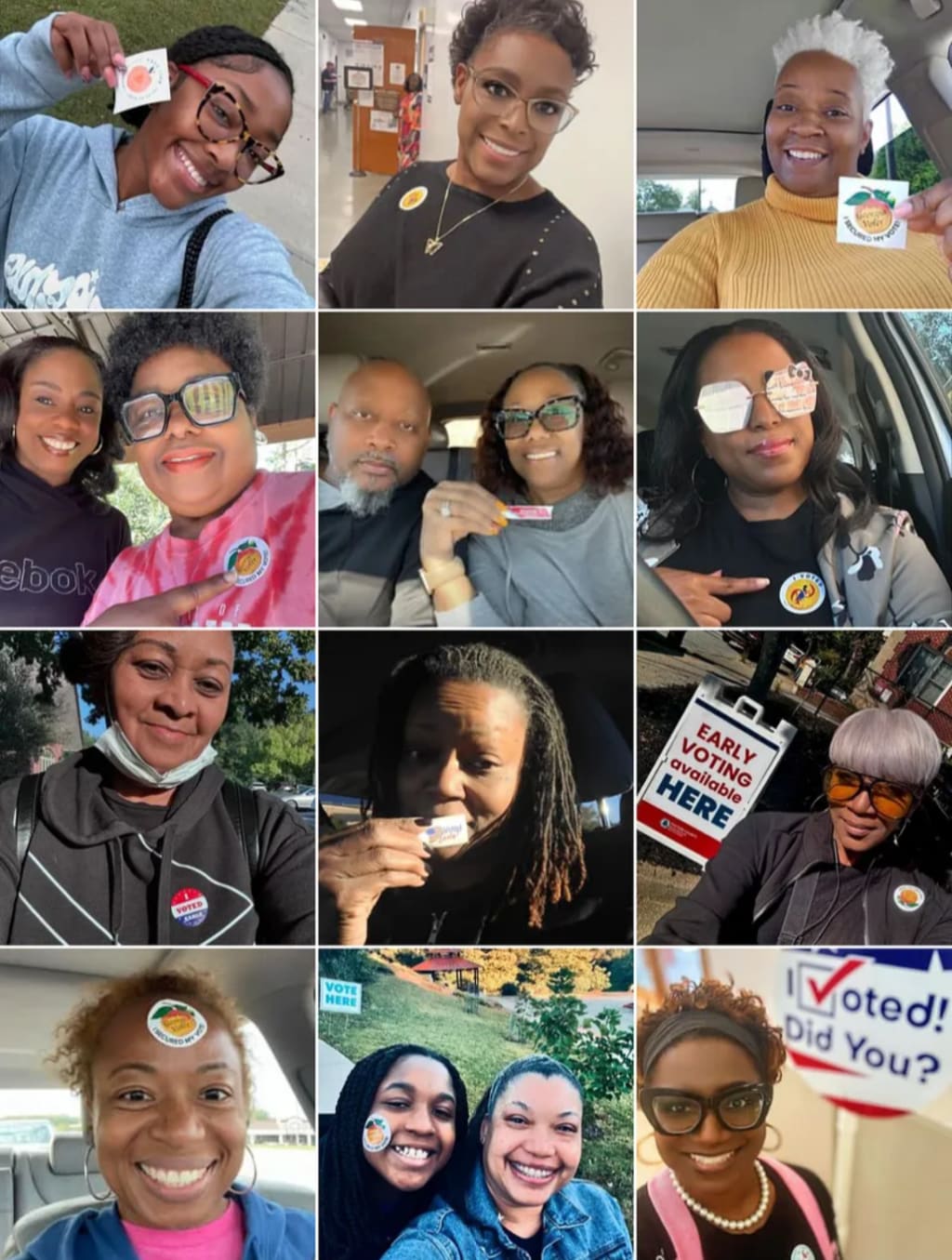
As a black women i find myself reflecting deeply on the recent election results and the undeniable truth they reveal: numbers don't lie. Despite our tireless efforts to drive political change and support communities, many people have voted against their own interests, leaving us to question our role in society. Black women have long been the backbone of movements, shaping the course of history with our resilience and strength. Yet, we continue to face these systemic challenges.
Legacy of Leadership
Throughout history, Black women have been at the forefront of political change, inspiring movements and standing up for the rights of others. From the civil rights movement to the modern-day fight for equality, Black women have consistently led the charge. The Black Lives Matter movement, co-founded by Alicia Garza, Patrisse Cullors, and Opal Tometi, emerged as a response to systemic violence and discrimination, demanding justice and accountability for Black lives. It is necessary because it highlights the ongoing injustices faced by Black communities and calls for systemic change, not division.
Black communities have often stood in solidarity with other marginalized groups, advocating for broader social justice. For instance, during the civil rights era, Black leaders supported the rights of Latino communities, recognizing the shared struggles against oppression. During the fight for LGBTQ+ rights, many Black activists have stood alongside their LGBTQ+ counterparts, understanding that the fight for equality transcends individual identities. Yet, when we find ourselves in times of desperate need, those same people we stand up for often fail to stand with us.
Consider the case of affirmative action, a policy that was designed to ensure equal opportunities for marginalized groups in education and employment. Recently, a group of Asian American students sued Harvard University, claiming they were being discriminated against in admissions because the university was favoring Black and Hispanic applicants over them. Despite their claims, the reality is that even after all that, none of those students gained admission.
In 2023, the U.S. Supreme Court ruled against the use of affirmative action in college admissions, effectively ending the practice at Harvard and other universities. This decision underscores a troubling issue: instead of recognizing the systemic barriers that affect all of us, some individuals within marginalized communities have chosen to align themselves against policies aimed at promoting diversity.
This situation highlights a painful reality: when people of color are pitted against each other, it serves to distract from the systemic issues that impact us all. Instead of standing together to challenge the structures of inequality, some have opted to support systems that do not serve them, hoping for acceptance that remains out of reach. It’s disheartening to see how this dynamic plays out, especially when we know that our struggles are interconnected.
A Moment of Reflection
The recent election has shown us just how much people are willing to vote against their own interests, perhaps in pursuit of acceptance in spaces that have historically excluded us. This raises an important question: why do we continue to fight for those who don't stand with us?
Racism is alive and well, and it’s not just a "card we play"—it’s a reality we’ve lived for generations. The experiences of Black women are often dismissed or minimized, leading to a pervasive sense of isolation. We have been the ones to advocate for justice, to march in solidarity with others, _ to uplift voices that are often silenced. Yet, when it comes time to support our own needs, we find ourselves overlooked.
Reflecting on my own experiences, I remember being one of six African-American students in my middle school in a small Midwestern town. Most of my friends were white, and we had a great time together, even forming clubs to advocate for various causes. I recall a time when attendance awards were taken away; we rallied together, gathered signatures, and successfully restored them.
However, on Black History Month, I was really excited to create a display to celebrate our culture. I approached one of my best friends, eager to share my plans, but she looked at me with a puzzled expression and said, "Oh, that's just for Black people," before closing her locker and walking away. I felt a little confused but brushed it off.
When I turned to some of the other Black students, hoping for support, they laughed and said, "Girl, don't nobody care about that here; they ain't going to listen to us anyway." In that moment, it hit me; they understood something I didn’t—that our voices often went unheard in spaces that should have embraced us. It was a tough lesson for a kid, but it made me see that advocating for our culture and identity was going to be a bigger challenge than I had imagined.
As I reflected on this experience, I recognized that I had been navigating a world with blinders on. I had been so focused on my friendships and the fun we had that I hadn’t fully grasped the complexities of our different backgrounds. Those little changes in how my friends interacted with me started to make sense. I began to understand that while we were friends, there were layers to our experiences that I hadn’t been aware of before.
Cultural Appropriation and Performative Activism
Our sass, strength, resilience—has been borrowed and rebranded, while our voices are often dismissed as 'too loud' or 'too much.' Look at how elements of Black culture have been woven into the fabric of society. Our mannerisms, expressions, and the way we navigate the world have been shaped by generations of Black mothers, sisters, and aunties who had to be strong in a world that often wanted them silent. We're simply more than just a passing trend.
Performative activism is transparent to us; these individuals and organizations make a show of supporting a cause without taking meaningful action. It's the social media posts that lack follow-through, the statements of solidarity that aren't backed by real change.
For instance, during the protests against police brutality following the murder of George Floyd, many people posted black squares on social media as a symbol of support for the Black Lives Matter movement. While the intention may have been to show solidarity, the movement quickly became overshadowed by the trend itself, with many failing to engage in deeper conversations or actions that could lead to real progress. The hashtag #BlackoutTuesday, which accompanied these posts, often drowned out important discussions about systemic racism and police violence, effectively silencing the very voices that needed to be amplified.
Additionally, we see companies and brands that rush to release statements of support during moments of social upheaval, only to revert to business as usual once the spotlight fades. For example, many fashion brands released statements supporting Black Lives Matter, yet continued to profit from cultural appropriation and failed to diversify their leadership teams. This kind of superficial engagement raises questions about their true commitment to the cause.
Another instance is the trend of "diversity training" workshops that some organizations implement as a quick fix to address systemic racism. While these trainings can be beneficial, they often serve as a box-checking exercise rather than a genuine effort to create lasting change. Without follow-up actions and accountability, these initiatives can become performative, leaving marginalized voices unheard and unaddressed.
This kind of activism can be disheartening, as it often feels like our struggles are being used as a backdrop for others' self-promotion. It reinforces the notion that while many may claim to support us, their actions do not always align with their words.
The Weight of Generational Expectations
The caregiving and nurturing that Black women provide is deeply rooted in both cultural heritage and societal expectation. This role is often romanticized as the "strong Black woman" stereotype, a label that suggests an unyielding resilience and capacity to endure hardship without complaint. While this strength is admirable, it often comes at a significant personal cost. Historically, Black women have been the pillars of their families and communities, stepping into roles of leadership and support when needed. During slavery, Black women were forced into caregiving roles, not only for their own families but also for the families of their oppressors. This legacy of caregiving has persisted through generations, manifesting in the expectation that Black women will always be there to support others, often at the expense of their own well-being.
In modern times, this expectation continues to play out in various ways. Black women are often seen as the emotional backbone of their families, expected to provide unwavering support and guidance. In professional settings, they may be relied upon to manage additional responsibilities or to mentor others, often without recognition or compensation. This caregiving extends to social and political movements, where Black women frequently take on leadership roles, organizing and advocating for change.
However, the expectation to be perpetually strong and selfless can lead to burnout and mental health challenges. The pressure to maintain this facade of strength can prevent Black women from seeking help or expressing vulnerability, reinforcing the cycle of silence and endurance.
Reclaiming Our Narrative
It's time for us to step back. We'll be in the foreshadows, watching, but we will no longer be on the front lines. In reclaiming our narrative, it's crucial to recognize the importance of our contributions and demand the respect and recognition we deserve. Many Black women share the sentiment that while we have long been the architects of change, the weight of carrying others' struggles has taken a toll.
This isn't about abandoning the fight for justice but about ensuring that we are strong and healthy enough to continue it. By stepping back, we are choosing to focus on ourselves, nurturing our own dreams and aspirations. This shift is not only necessary but empowering, allowing us to reclaim our space and voice in a world that often seeks to silence us. It's time for society to acknowledge this truth and for us to prioritize our well-being as we continue to shape the future.
As we move forward, consider how you can support the voices of Black women in your own community. What actions can you take to uplift and amplify these narratives? By engaging in these conversations and advocating for change, we can all contribute to a more inclusive and equitable society.
About the Creator
Keep reading
More stories from writers in Writers and other communities.
Raising Kids Is Like Maintaining a Battery: Finding the Right Charge for Growth
Raising children is a lot like maintaining a battery — they need the right balance of energy, discipline, love, and guidance to function at their best. Too much positive charge, and they overheat, becoming overwhelmed or overstimulated. Too much negative charge, and they feel drained, unmotivated, or disconnected. As parents, our role is to keep their battery charged just right so they can grow into resilient, confident individuals.
By Elizabeth Healyabout 15 hours ago in Writers




Comments
There are no comments for this story
Be the first to respond and start the conversation.