
Benazir Bhutto: The Life and Legacy of a Courageous Leader
The story of a woman who defied fear, led a nation, and inspired generations
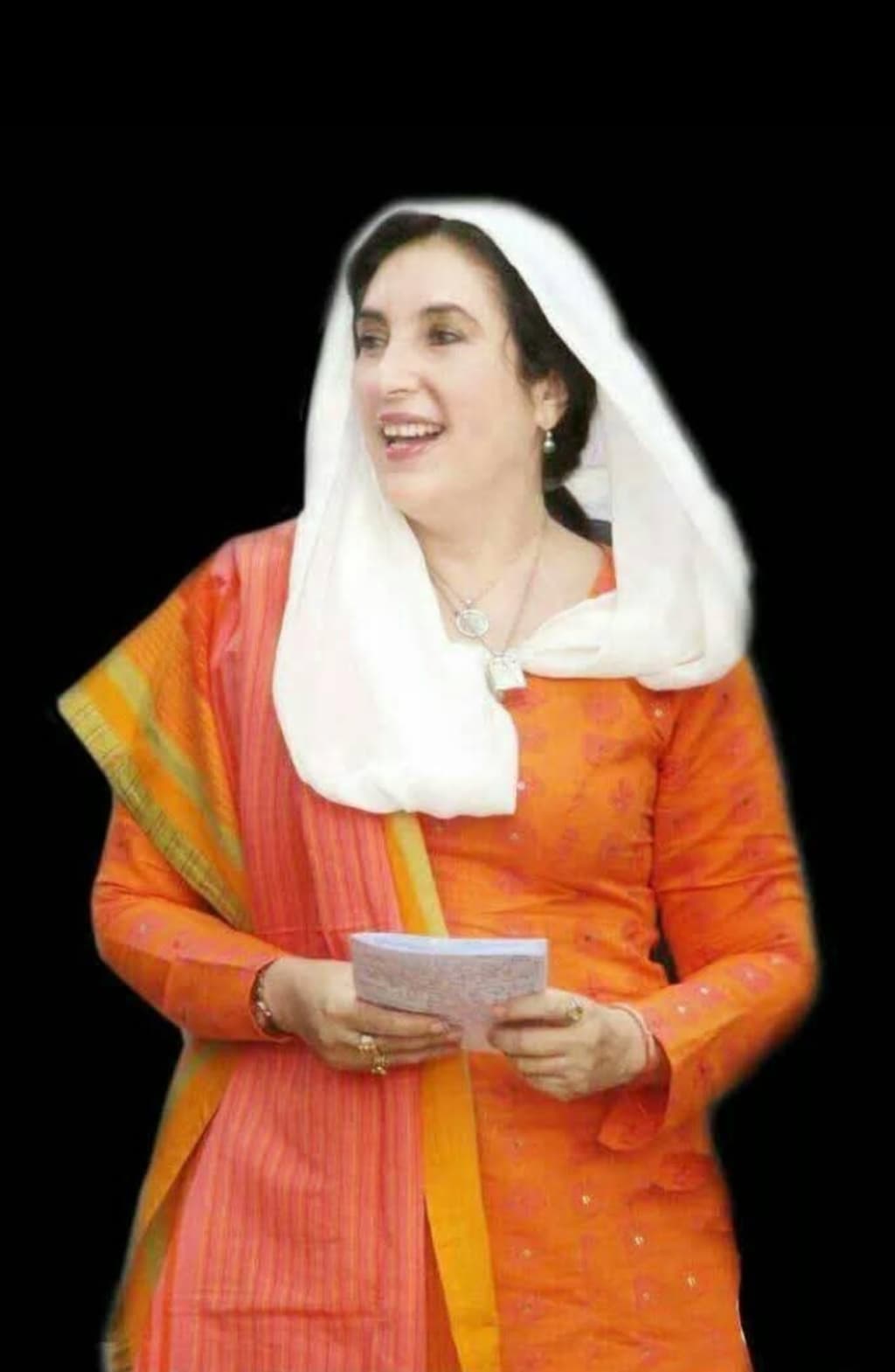
Benazir Bhutto, Pakistan’s first female Prime Minister, remains an icon of courage, vision, and resilience. She was the first woman to lead a Muslim-majority country, navigating a political landscape dominated by men and marked by turmoil. Her life was a journey of struggle, exile, public service, and ultimately, sacrifice.
Bhutto’s story is not just about politics but about principled leadership, determination, and the fight for democracy, demonstrating that vision and courage can reshape history.
Early Life and Education
Born on 21 June 1953 in Karachi, Benazir Bhutto was the daughter of Zulfiqar Ali Bhutto, a prominent political leader and former Prime Minister of Pakistan. From an early age, she was exposed to politics, national issues, and the responsibilities of public life.
She completed her schooling in Karachi and went on to attend Harvard University, followed by Oxford University, where she became actively involved in student politics. These formative years shaped her vision for Pakistan:
> “I want to see Pakistan as a modern, democratic, and developed nation.”
Her education abroad also instilled in her a sense of global perspective, which she later applied to governance and diplomacy.
Political Beginnings and Challenges
Benazir’s political journey was shaped profoundly by tragedy. In 1979, her father, Zulfiqar Ali Bhutto, was executed following a controversial trial. This marked a turning point in her life. Determined to continue her father’s legacy, she took charge of the Pakistan Peoples Party (PPP).
Her activism and leadership during a period of military rule in Pakistan were not without risks. She faced frequent arrests, imprisonment, and political suppression, eventually going into exile in 1984. Yet, even while abroad, she organized her party and maintained public support, becoming the symbol of resistance and democracy in Pakistan.
Prime Ministership: Breaking Barriers
In 1988, after the death of General Zia-ul-Haq, Pakistan held elections, and Benazir Bhutto’s PPP emerged victorious. She became the first female Prime Minister of a Muslim-majority nation, at the age of 35.
During her first term:
She eased restrictions on the press,
Increased opportunities for women’s education and employment,
Promoted a moderate image of Pakistan internationally.
Although her government was dismissed in 1990, she returned to power in 1993, continuing her reform efforts and emphasizing governance, social development, and women’s empowerment.
Championing Women’s Rights
Benazir Bhutto was a strong advocate for women. She introduced initiatives such as:
Women’s police stations,
Lady Health Worker programs,
Education and vocational training programs for women.
She believed that women’s empowerment was essential not only socially but also for national progress. Her vision encouraged women to participate actively in political, economic, and social spheres.
> “When a woman is empowered, an entire family becomes stronger.”
Exile, Return, and Assassination
Benazir’s life was marked by courage in the face of danger. In 2007, despite serious threats to her life, she returned to Pakistan to contest elections. She famously said:
> “I do not fear death; I fear a Pakistan without democracy.”
Tragically, on 27 December 2007, she was assassinated during an election rally in Rawalpindi. Her death shocked Pakistan and the world, yet her vision of democracy and equality continued to inspire millions.
Her martyrdom made her a global symbol of the struggle for democracy, justice, and female leadership.
Legacy and Impact
Benazir Bhutto’s legacy is enduring. She broke barriers for women, inspired future generations, and left an indelible mark on Pakistan’s political history. Her courage, determination, and commitment to democracy continue to be studied and admired worldwide.
Through her family, including her son Bilawal Bhutto Zardari, and the PPP, her mission of promoting social justice, political participation, and women’s rights continues to shape Pakistan.
Benazir’s life also sends a powerful message globally: that leadership knows no gender, and women can rise to the highest offices with courage and integrity.
Conclusion
Benazir Bhutto’s life teaches that vision, courage, and principles can overcome adversity. She proved that even in a challenging political environment, one person can become a beacon of hope for millio
Her contributions to democracy, women’s empowerment, and national progress remain unmatched. Benazir Bhutto continues to inspire leaders, activists, and ordinary citizens, making her legacy
About the Creator
Keep reading
More stories from Zahid Hussain and writers in Writers and other communities.
Trump Urges Xi to Free Hong Kong’s Jimmy Lai in Major Diplomatic Appeal
Introduction Former U.S. President Donald Trump has urged Chinese President Xi Jinping to release jailed Hong Kong media tycoon Jimmy Lai, making the case one of the most high-profile diplomatic appeals involving Hong Kong in recent years. Trump’s statement has once again pushed the issue of press freedom and political repression in Hong Kong into the international spotlight.
By Zahid Hussain3 months ago in The Swamp
March 15, 2026
Merriam Webster - Word of the day: Tranche refers to a division or portion of a whole. World Contact Day is commemorated every year on March 15. It is a unique observance held globally to focus on communicating with extraterrestrial life and exploring the possibility that intelligent beings may exist beyond Earth. World Contact Day inspires people to invoke their curiosity and spend time thinking about the universe and the mysteries surrounding it. What is the “Ides of March”? According to the Roman calendar, the Ides are a monthly occurrence. In March and other months with 31 days, the Ides always falls on the 15th; it falls on the 13th in months with 30 days. The Ides traditionally marked the arrival of the new Moon and was cause for celebration. The word “Ides” is derived from Latin, meaning “to divide.” Mothering Sunday in 2026 falls on Sunday, March 15. Mothering Sunday, celebrated in the United Kingdom and Ireland, occurs on the fourth Sunday of Lent, which is exactly three weeks before Easter. Unlike the fixed-date Mother's Day in countries like the United States, Canada, and Australia, Mothering Sunday’s date changes each year according to the Christian liturgical calendar. On March 15, 2026, several notable observances and events are celebrated: Dumbstruck Day: A day to express frustration. Everything You Think is Wrong Day: A day to challenge and celebrate wrong beliefs. International Day Against Police Brutality: A day to raise awareness and advocate against police violence. My look at today, March 15, 2026 below:
By Denise E Lindquistabout 18 hours ago in Writers
John and Paul's Three-Word Haiku/Senryu Unofficial Challenge - The Results!
Well, fuck. That was every bit as impressive as I was sure it would be when we set this devious challenge. From this point forward it is worth noting that all the bracketed bits will be John's words, and the non-bracketed are mine.
By Paul Stewartabout 23 hours ago in Writers
Hottest in the Office
Dear Rafi, You’re very distracting to work around. For the first second I saw you the other day, I thought you were some type of executive. It took a moment to realize no, you were just the new guy, dressed up for the job he wants. Be still, my heart.
By Gabriel Shames6 days ago in Pride



Comments
There are no comments for this story
Be the first to respond and start the conversation.