
Battery Recycling in Vietnam: Building a Circular Economy for a Sustainable Future
Advancing Clean Energy With Battery Recycling

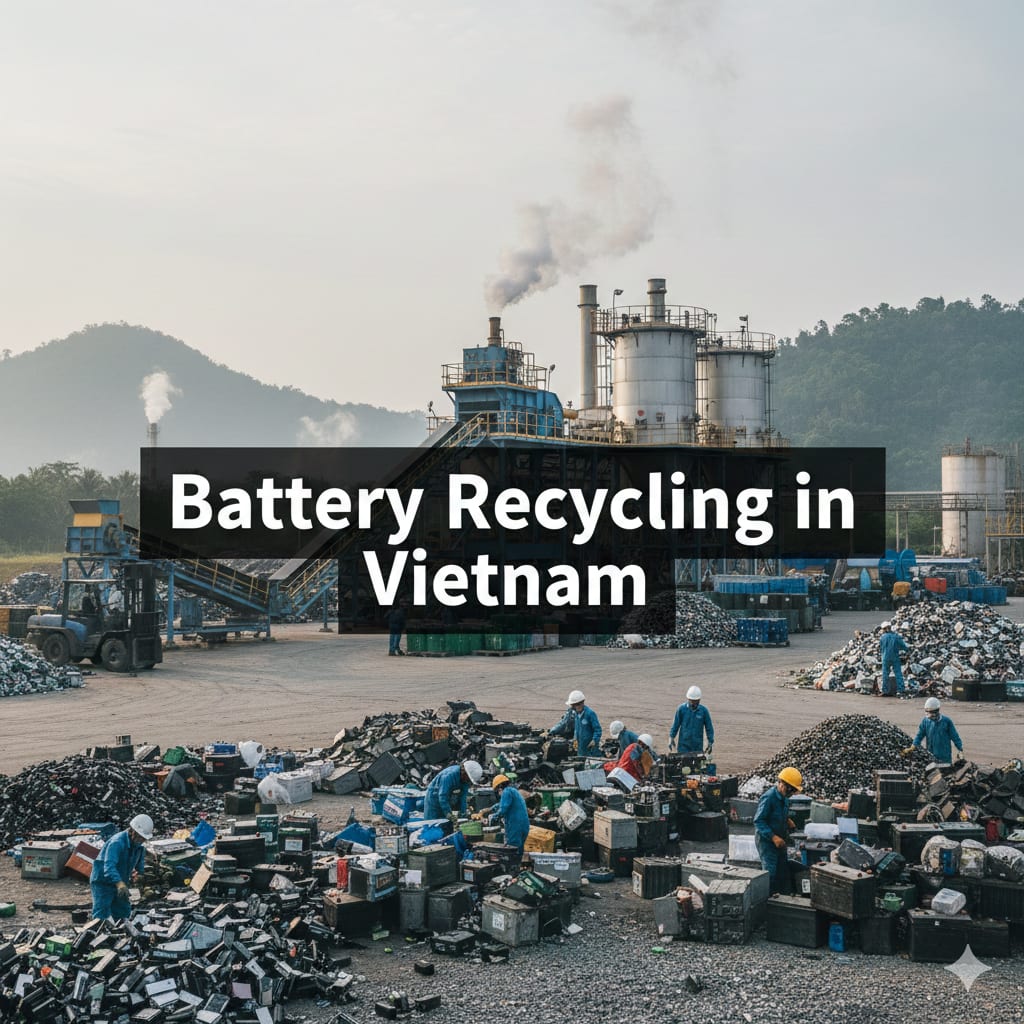
Battery recycling is a critical component in sustainable industrialization through electrification, renewable energy, and electrified transport. As one of Southeast Asia's fastest growing manufacturing and consuming markets, Vietnam has also seen a similar rapid increase in battery cell use in vehicles, electronics, renewable energy storage systems, and consumer electronics. The growing proliferation of battery applications in the country has highlighted the urgent need for battery recycling in Vietnam, which can help reduce environmental issues while also providing local economic benefits. With increasing urbanization, electric vehicle adoption and renewable energy sector growth, effective battery recycling practices could considerably improve the sustainability landscape in Vietnam.
With the rapid growth of electric motorcycles, electric cars, solar energy storage systems, and portable electronic devices in Vietnam battery sales have been increasing considerably. The most commonly used batteries in Vietnam are lithium-ion batteries, lead-acid batteries, and nickel-based batteries. These batteries pollute the environment if not disposed of properly. Lead-acid batteries are used in most vehicles and backup power systems. Heavy metals can contaminate soil and ground water. Lithium-ion batteries have a higher energy density and longer cycle life than lead-acid, but they require more complicated recycling to extract the metals such as lithium, cobalt and nickel. Battery recycling has thus been an important part of reducing environmental damage and dependence on imported materials in Vietnam.
Vietnam's legislation has progressed in recent years. Extended Producer Responsibility (EPR) schemes, a set of regulatory approaches that make producers and importers responsible for collecting and treating used batteries, have also developed in the country. These policies also aim to standardize the rules around recycling, thus preventing informal recycling, which often does not have the same environmental or health protections. Informal battery recycling has historically produced pollution and health hazards in some regions, especially with lead-acid batteries. To comply with international environmental and safety standards, greater enforcement measures and investment in modern recycling infrastructure in Vietnam are required.
Advancements in technology play a meaningful role in battery recycling. Newer recycling plants use a combination of mechanical separation and hydrometallurgical and pyrometallurgical processes to recover reusable materials. Advanced recycling technologies are increasingly being adopted in Vietnam, supported by foreign direct investments and joint ventures with international recycling companies. Such partnerships ease technology transfer, improve processing efficiency, and assist domestic companies in achieving compliance with international standards. Vietnam's integration into global electric vehicle supply chains and energy storage systems could benefit from recycled material, improving resilience and cost-competitiveness.
Economic factors will further drive the need for battery recycling, as critical metals that can be recycled from used batteries will cost less than mining and extracting the metals in raw materials, which is both capital and energy-intensive and environmentally harmful. For Vietnam, a properly developed battery recycling ecosystem can reduce imports needs for many of the critical minerals and create new job opportunities in battery collection, processing and logistics. In addition, recycled materials can allow Vietnam to be a more attractive manufacturing destination for companies around the world interested in more responsible supply chains. Those involved in this outlook note that battery recycling in Vietnam is more than a waste management strategy. It is an industrial and circular economy opportunity.
Consumers and businesses play a role as well: households and small businesses are often oblivious to the need to recycle batteries. Public education campaigns and convenient collection points for public drop-off can ensure that they pass their batteries to an authorized recycling facility for treatment. Retailers, electronics manufacturers, and automotive service providers are all potential collection points for consumers to drop off batteries. Corporate sustainability efforts, including battery take-back schemes and sustainability reporting, are also helping to advance the case for incorporating responsible consumption into business practice and driving the evolution of battery recycling in Vietnam.
High initial capital costs of advanced recycling facilities may also prevent small and medium enterprises from entering the advanced recycling industry. Finally, complex supply chains make battery waste streams less appealing for recyclers and may affect their ability to establish a steady supply of battery materials. Issues in these areas require collaboration among policymakers, industry, and finance. Policy support in the form of tax credits, subsidies, green finance, clear legislation, and reduced and simplified licensing can encourage private sector participation throughout the recycling value chain and stimulate expansion and technology upgrading.
The future of battery recycling in Vietnam is closely linked with Vietnam's clean energy and electric mobility development ambitions. As these develop in Vietnam over the next decade, waste volumes are expected to grow dramatically. Policy interventions and recycling infrastructure established today will shape whether Vietnam experiences inefficient resource use and negative environmental impacts, or whether it enjoys more circular resource recovery in the future. The efficiency and transparency of recycling systems can be improved by digital tracking systems, standardized recycling protocols, and cross-border cooperation.
To conclude, battery recycling in Vietnam is a matter of environmental, economic, industrial, and technological importance, and the potential of this industry could be unlocked by improving regulations, advancing recycling technologies, and forming calculated alliances within the battery recycling value chain. A well-established battery recycling framework will protect the environment and public health while assisting Vietnam's transition to a circular, low-carbon economy. In an era where the world's economies are focused on attaining sustainable supply chains, battery recycling investments will be critical for Vietnam's long-term competitiveness and environmental impact.
About the Creator
Tim David
Creator Blog and Analysis delivers concise, data-driven insights, trend analysis, and expert perspectives, helping readers understand markets, technologies, and opportunities through clear, actionable, and research-backed content.
SharedEasy Guide on How to Buy Residential Property Without Stress
Purchasing a home belongs to life's most significant financial decisions. For many first time buyers, the process appears intimidating because of its maze of paperwork, inspections and negotiations. Industry experts agree that with solid preparation plus knowledge, anyone moves through the home buying journey successfully. This is what prospective homeowners need to know to decide with confidence.
By Ausfab Groupabout 7 hours ago in Writers




Comments
There are no comments for this story
Be the first to respond and start the conversation.