
AI in Coaching: Redefining Playbooks and Player Performance
How artificial intelligence is transforming decision-making, training, and on-field execution in modern sports

For decades, the most valuable tools a coach had were instinct, experience, and a clipboard. Game strategy relied heavily on human judgment—watching tape, memorizing plays, analyzing stats manually. But in the last few years, a quiet revolution has been brewing on the sidelines. One that doesn’t wear a whistle or call timeouts—but processes millions of data points in seconds.
Enter artificial intelligence—the new assistant coach changing the game, quite literally.
🧠 Coaching Gets Smart
AI in sports isn't science fiction anymore. From the NFL to European football clubs, professional teams are integrating machine learning models and predictive algorithms to gain competitive advantages. These systems don’t just collect data—they learn from it. They analyze patterns in player movement, track performance trends, and even forecast injury risk based on workload and biomechanical data.
Coaches today aren’t just drawing plays; they’re consulting dashboards. A playbook is no longer just paper and ink—it's a living, breathing system that adapts based on real-time inputs. AI allows coaches to simulate different scenarios, tweak formations, and predict an opponent’s tendencies with more precision than ever before.
Take for instance how some basketball teams now use AI to determine optimal shot selection based on player fatigue, court position, and historical shooting percentages. Or how football teams use video data analysis tools like Second Spectrum to track every player’s movement and generate heatmaps, giving coaches a bird’s-eye view of what actually happened—not just what it looked like from the bench.
🏃♂️ Players Get Personalized
Player performance is also undergoing a major transformation. AI allows for highly individualized training by creating detailed profiles of each athlete. These systems measure everything from sprint speed to heart rate variability, sleep cycles to muscle fatigue.
Let’s say a wide receiver is consistently slowing down in the fourth quarter. A traditional coach might chalk it up to conditioning. An AI system might reveal that his deceleration is due to a subtle imbalance in stride length, possibly signaling an oncoming hamstring strain. That’s not just insight—it’s prevention.
AI tools like Catapult and Zebra Technologies are already being used by teams to monitor training intensity, recovery needs, and potential risk factors. The result? Smarter workouts, fewer injuries, and optimized performance when it matters most.
This isn’t about replacing coaches or trainers—it’s about enhancing their intuition with intelligent data. Coaches still lead. AI simply sharpens their focus.
🎯 Game Planning Reimagined
Imagine being able to run 10,000 simulations of next Sunday’s game against your toughest rival. What if you could predict how your defense would hold up against their new offensive scheme? That’s what AI allows.
Teams now use predictive analytics to model outcomes, test formations, and optimize strategy in ways that were impossible just a decade ago. It’s like having a chess engine—but for live sports.
Even in-game decisions are starting to lean on data. Some NFL teams now use real-time analytics to decide whether to go for it on 4th down, punt, or kick a field goal. AI provides risk-reward calculations on the fly, turning gut decisions into statistically grounded calls.
The best part? These tools don’t just help you win—they help you learn. Every game feeds more data into the system, making the insights smarter, sharper, and more tailored to your team.
🤖 Resistance and Responsibility
Of course, not everyone is quick to embrace the algorithm. Some critics worry that too much reliance on AI could reduce the human element of coaching—the passion, the unpredictability, the “feel” of the game.
And they’re not wrong to be cautious. AI is only as good as the data it's fed. Biases in data collection, overfitting models, or misinterpreting trends can lead to flawed strategies. There’s also the question of data privacy—especially when dealing with players' health and biometric information.
That’s why the future of AI in coaching requires balance. The goal isn’t to automate leadership—it’s to augment it. Human experience and emotional intelligence still play an irreplaceable role. But when paired with the right tools, coaching can reach new heights of precision, personalization, and performance.
🏆 The Future Sideline
In the end, AI isn’t here to steal the game—it’s here to evolve it.
Picture a locker room where post-game reviews aren’t just film sessions, but immersive breakdowns powered by smart visualizations. Or a world where young athletes receive real-time feedback on their form via wearable sensors, long before a coach even sees it. Or a playbook that updates itself every week, learning from every snap, sprint, and slip.
This is the new frontier of sports. And we’re only just beginning to tap into what’s possible.
Coaches who embrace AI aren’t replacing the soul of the game—they’re reimagining how it's played, taught, and won.
And that’s a play worth running.
About the Creator
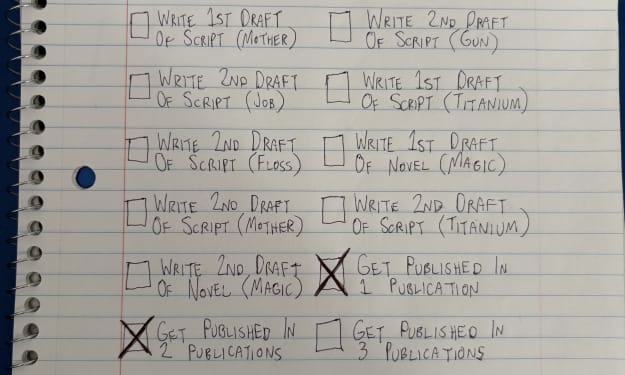
Early March 2026: 4 Goals Accomplished
It's early March and I've now accomplished my 4th writing goal for the year of 2026. Before diving into the behind-the-scenes of it... why not tell you up front what that accomplishment was? I was published in a 2nd publication for this year. Published in Helix Literary Magazine out of Central Connecticut State University. You can read it for free right now!
By Stephen Kramer Avitabile4 days ago in Writers
What I Wish I'd Known About Book Categories Before I Published
I picked my Amazon categories for my self-published book in about three minutes. "Literature & Fiction > Women's Fiction" seemed like the obvious choice. My book focused on relationships, personal growth, and the emotional journey of its main character, so placing it under "Literature & Fiction > Contemporary Women" felt like a natural fit as well.
By Ellen Frances6 days ago in Writers
Guard Your Battery
Why are some people so attractive just by standing there? It’s not because they are "likable," but because they don’t need everyone to like them. I realized later that truly charismatic people allow themselves to be criticized, but they never criticize themselves. They never try to please the world; instead, the world stops to watch them.
By Emily Chan - Life and love sharing6 days ago in Poets



Comments
There are no comments for this story
Be the first to respond and start the conversation.