
AI and Automation in Cybersecurity: Trends and Use Cases
AI and Automation in Cybersecurity
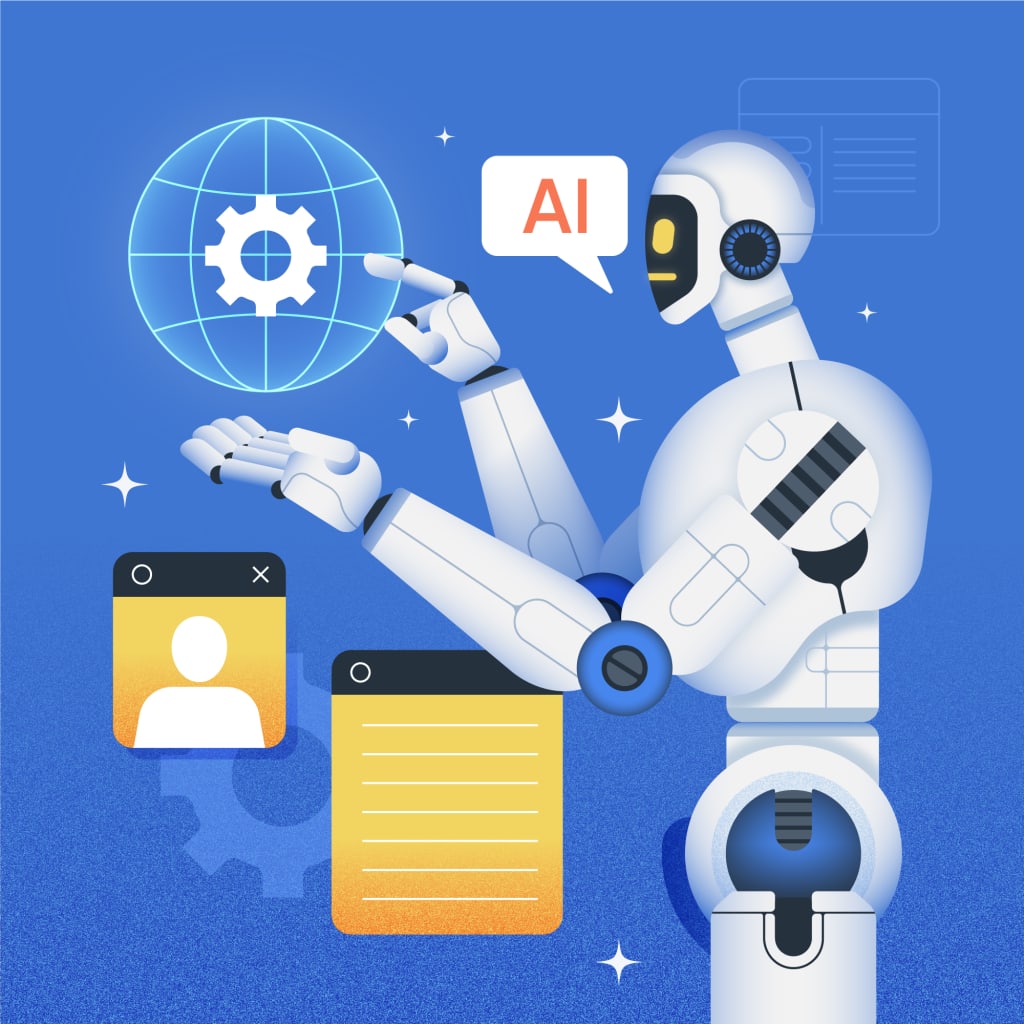
How is cybersecurity AI being improved? The numbers tell a compelling story. With projections showing growth from $30 billion in 2024 to approximately $134 billion by 2030, AI-powered security solutions are rapidly transforming how we protect digital assets. Significantly, these technologies can accelerate alert investigation and triage by 55% while reducing fraud costs by up to 90%.
The use of AI in cyber security has evolved beyond basic automation. Today, we're seeing sophisticated applications across threat detection, response, and prevention systems. AI in cybersecurity examples include automated malware analysis that can identify previously unknown threats by recognizing malicious behavior patterns.
Meanwhile, how AI is used in cybersecurity continues to expand, with systems now aggregating threat intelligence from multiple organizations to provide comprehensive views of global threat landscapes. As a result, approximately 77% of organizations expect to increase their cybersecurity budgets by 6%-10% by the end of 2025.
In this article, we'll explore the latest trends and practical use cases showing how AI is revolutionizing cybersecurity operations and what this means for your security strategy.
AI Capabilities in Modern Cybersecurity
Modern cybersecurity defenses have evolved beyond basic protection methods. AI systems now excel at processing vast datasets at speeds impossible for human analysts, identifying subtle patterns that traditional approaches miss.
Threat detection beyond signature-based methods
Traditional security relied heavily on signature-based detection, which struggles with zero-day threats and sophisticated attacks. In contrast, AI-powered systems analyze network traffic, system logs, and user behavior to identify anomalies that indicate potential breaches. These systems employ machine learning to detect patterns and make informed decisions without explicit programming.
Microsoft Defender for Cloud exemplifies this advancement by using advanced analytics to correlate information from multiple sources, identifying threats that signature-based approaches would miss. Furthermore, its anomaly detection establishes personalized baselines for your deployments, using machine learning to define outlier conditions that could represent security events.
Real-time malware analysis and response
AI has dramatically improved malware detection and response speeds. Deep Instinct's solution can predict and prevent known, unknown, and zero-day threats in under 20 milliseconds—750 times faster than the fastest ransomware encryption.
Google's Gemini 1.5 Pro represents another breakthrough, capable of processing up to 1 million tokens. This allows it to analyze entire code samples in a single pass, often in about 30-40 seconds, without dividing code into chunks that might affect analysis quality. Notably, it can:
- Interpret code intent and purpose beyond pattern matching
- Generate detailed reports in human-readable language
- Identify never-before-seen threats with zero detections on VirusTotal
- Behavioral pattern recognition using machine learning
Behavioral analytics has become essential for modern threat detection. Instead of looking for known signatures, AI establishes baselines of normal behavior and flags deviations.
User and Entity Behavior Analytics (UEBA) monitors activities across multiple dimensions, including login patterns, data access, and application usage. For instance, if an employee typically accesses files from one location but suddenly downloads large amounts of data from a different region, the system flags this as suspicious.
CrowdStrike pioneered this approach with indicators of attack (IOAs), examining sequences of behavior against adversary patterns to identify subtle signs of malicious activity. This provides a more adaptable defense that can detect even unknown threats by generalizing behavioral patterns.
Automation in Cybersecurity Operations
Security teams today face a growing deluge of alerts, with automation emerging as the essential solution. According to research, 52% of organizations experienced data breaches in the past two years, with average breach costs hitting $4.88 million in 2024—a 10% increase from the previous year. This reality has made automation essential for modern cybersecurity operations.
Automated incident response and remediation
Automation dramatically transforms incident response by swiftly identifying, containing, and mitigating security threats in near real-time. AI-driven remediation doesn't just make responses faster—it makes them smarter and more precise. When security incidents occur, automated systems can immediately isolate affected systems, block malicious traffic, or even roll back compromised systems to secure states. Consequently, organizations using automation to respond to incidents can handle data breaches approximately 30% faster than those without automation.
Reducing manual tasks and human error
By automating repetitive tasks like log analysis, vulnerability scanning, and initial incident triage, security teams can focus on complex threat analysis and strategic decision-making. This shift enhances productivity by cutting mean-time-to-patch (MTTP) and mean-time-to-respond (MTTR). Additionally, automation provides remarkable time savings—one study revealed response time reduction from 60 minutes to 20 minutes for threat detection and from 30 minutes to 10 minutes for response after implementing automation.
AI in compliance and security questionnaires
Perhaps one of the most unexpected applications of AI lies in automating compliance processes. AI now streamlines compliance monitoring by continuously checking systems for adherence to security policies and regulatory standards like GDPR, PCI DSS, HIPAA, and NIST. Furthermore, AI has revolutionized security questionnaire responses—traditionally a time-consuming process. Advanced AI tools can generate answers to security questionnaires with 95%+ accuracy on the first pass, reducing completion time from 2-3 hours to just 15-20 minutes. These tools automatically parse questions, analyze relevant documents, and generate accurate responses, freeing security professionals to focus on more strategic work.
Key Use Cases of AI in Cybersecurity
AI technologies are now embedded across multiple cybersecurity domains, delivering specialized protection in these key areas:
Identity and access management
AI transforms identity management by establishing behavioral baselines for users and systems. Through continuous monitoring of authentication patterns, AI detects subtle anomalies that might indicate unauthorized access attempts. Moreover, AI-powered systems analyze user behavior to prevent breaches caused by compromised credentials or insider threats. These systems can detect unusual login attempts or irregular data transfers that traditional monitoring would miss. Essentially, AI enables dynamic, context-aware access controls that adjust in real-time based on risk levels, considering factors like location, device type, and behavioral biometrics.
Endpoint and network protection
On the endpoint front, AI provides continuous vigilance by monitoring activity on devices like computers and smartphones. Through dynamic analysis of endpoint data, AI identifies suspicious behavior patterns, helping to thwart potential breaches before they occur. Next-generation endpoint protection incorporates real-time behavioral analysis to detect fileless "zero day" threats prior to and during execution. Additionally, these systems block suspicious actions before execution and can isolate affected endpoints during incidents. Tools like CrowdStrike deliver AI-powered protection that automatically detects and responds to threats in real-time, cutting response time from hours to minutes.
Cloud and data security
For cloud environments, AI introduces adaptive access controls that enhance security without compromising user experience. During cloud migrations, AI helps prevent misconfigurations—the cause of 99% of cloud breaches expected by 2025. AI-driven systems continuously scan cloud configurations and data flows to ensure alignment with regulatory requirements like GDPR. Furthermore, AI helps maintain compliance through continuous controls monitoring that can adapt to misconfiguration drift as it occurs.
Incident investigation and root cause analysis
When incidents occur, AI dramatically accelerates investigation processes. AI-powered security investigation assistants help analysts interact with complex data using natural language. In fact, platforms like Intezer automatically resolve 97% of false positives and triage alerts in about two minutes, with one client reportedly saving over 2,500 hours annually. AI can also identify probable root causes even with limited data granularity, joining disparate data sources to pinpoint problematic components. This capability has reduced breach detection time from an industry average of 207 days to just a few hours.
Best Practices for Implementing AI in Cybersecurity
Successful AI implementation in cybersecurity depends entirely on following proven best practices. Organizations that get these fundamentals right transform AI from a potential risk into a powerful defensive ally.
Ensuring data quality and privacy
AI models can only be as effective as the data they're trained on. Poor quality or insufficient data directly leads to inaccurate threat detection and suboptimal performance. Organizations must ensure their training data is diverse, accurate, and up-to-date. This requires establishing robust data governance policies covering data anonymization, encryption, and privacy protection early in the adoption process. Additionally, security teams should implement stringent measures to protect sensitive training data, as any breaches could compromise AI effectiveness or introduce vulnerabilities.
Integrating AI with existing systems
The initial step involves integrating AI with current security tools to enhance their capabilities without causing disruptions. This often requires developing middleware solutions, APIs, and system upgrades that facilitate seamless integration with legacy systems. Many organizations find integration challenging, particularly with older industrial control systems that may be 5-10 years old. Nevertheless, numerous AI tools can be configured in passive mode to only monitor network traffic, ensuring minimal operational risk.
Balancing human oversight with AI automation
AI should complement, not replace, human expertise. Organizations should integrate AI into existing cybersecurity workflows, allowing AI to handle routine tasks while human analysts focus on strategic decision-making. This collaborative approach leverages the strengths of both. Regular audits remain essential, with security professionals reviewing and validating AI outputs to catch potential biases, false positives, or manipulated results. For high-stakes operational environments, expert verification provides an added layer of assurance.
Regular testing and model updates
Conducting frequent security testing of AI models helps identify weaknesses attackers might exploit. Given the rapid evolution of AI technology and emerging threats like prompt injection and data poisoning, organizations should conduct regular penetration testing quarterly or semi-annually, depending on data sensitivity. AI models require continuous training and refinement to stay effective. Cybersecurity experts play a vital role by providing feedback, validating AI-generated insights, and updating algorithms with new threat intelligence. This collaborative effort ensures AI systems remain accurate and relevant against evolving threats.
Conclusion
AI and automation have fundamentally transformed the cybersecurity landscape. Throughout this article, we've seen how these technologies detect threats beyond traditional signature-based methods, analyze malware in real-time, and recognize behavioral patterns that human analysts might miss. Undoubtedly, the projected growth from $30 billion to $134 billion by 2030 reflects the increasing confidence in AI-powered security solutions.
The automation capabilities discussed earlier provide compelling evidence for their adoption. Security teams can now handle data breaches approximately 30% faster while reducing fraud costs by up to 90%. Additionally, AI streamlines compliance processes and questionnaire responses, cutting completion time from hours to minutes with remarkable accuracy.
Use cases across identity management, endpoint protection, cloud security, and incident investigation demonstrate AI's versatility. For instance, tools like Intezer have saved organizations thousands of hours annually through automated alert triage. Similarly, next-generation endpoint protection now detects zero-day threats before execution, significantly reducing response times.
Though AI offers powerful capabilities, we must remember that effective implementation depends on best practices. First, quality data serves as the foundation for accurate AI models. Second, successful integration with existing systems ensures operational continuity. Above all, human oversight remains essential—AI should enhance rather than replace security professionals.
The future of cybersecurity will likely depend on this partnership between AI systems and human expertise. Organizations that strike the right balance between automation and human judgment will develop the most resilient security postures. As threat actors continue to evolve their tactics, this collaborative approach offers our best defense against increasingly sophisticated cyber attacks.
Read Also:
Infrastructure Monitoring for Network Performance: Ensuring Connectivity and Reliability
Kubernetes Monitoring in 2025: The Complete Guide to Cluster Visibility
The Importance of Asset Disposal for asset management: Maximizing Value and Reducing Risks
About the Creator
Andrew Vereen
My name is Andrew Vereen, I am a digital marketer and technical writer. I am passionate about writing content on Cyber Security, Digital Marketing, Web Security, Cloud Computing, and SEO.
Keep reading
More stories from Andrew Vereen and writers in Writers and other communities.
Role of IT Asset Management in Digital Age Cybersecurity
As data transits at exponential rates and the dynamics of business activities through digital platforms intensify, the role of asset data security cannot be overemphasized. Cyber risks are rising since companies heavily depend on digital resources instead of physical assets to run their businesses. Organizations must embrace the IT Asset Management system (ITAM) to protect such assets and strengthen the IT infrastructures.
By Andrew Vereenabout a year ago in Writers



Comments
There are no comments for this story
Be the first to respond and start the conversation.