
Achieving 100 Tons Per Hour with Less Than 5mm Output: A Comprehensive Guide to Choosing Crushers and Grinders
A Comprehensive Guide to Choosing Crushers Achieving 100 Tons Per Hour

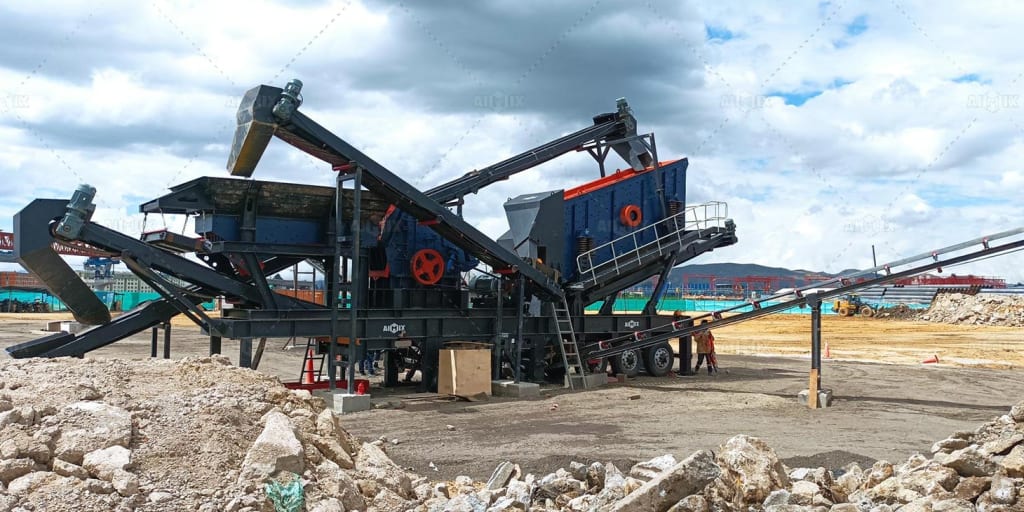
Achieving 100 tons per hour with less than 5mm output is a challenging yet achievable goal in the crushing and grinding industry. The production of finely crushed materials, particularly those under 5mm in size, requires the right combination of crushers and grinders. To meet this target efficiently, selecting equipment that aligns with specific material properties and production goals is essential. While crushers focus on reducing the raw material to a manageable size, grinders refine this further to achieve the fine, uniform consistency necessary for high-performance applications. Below is a comprehensive guide on how to make informed choices regarding aggregate crushers and grinders to meet the desired output.
Understanding the Requirements: 100 Tons Per Hour with Less Than 5mm Output
The first step in achieving a consistent 100 tons per hour output with less than 5mm material is to understand the specifications of both the raw material and the desired end-product. High throughput demands robust machinery capable of processing large quantities of material within a short period. The output material must be finely crushed, with little to no oversized particles, making the choice of equipment critical.
When working with high-capacity systems, the size reduction process becomes a balancing act between power, speed, and efficiency. The machine must handle the throughput without sacrificing the desired material size, so crushers capable of adjusting output settings are crucial. The ability to create uniform material sizes while achieving the required quantity ensures that production targets are met without compromising quality.
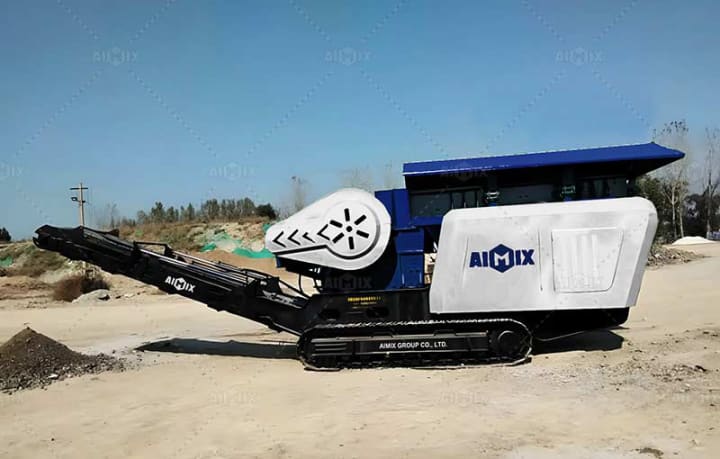
Selecting the Right Crushers for High-Output and Fine Material Production
To achieve an output of 100 tons per hour while reducing material to less than 5mm, the selection of the crusher is paramount. Crushers come in several types, each suited for different applications. Jaw crushers, impact crushers, and cone crushers all have different benefits and drawbacks when dealing with high throughput and fine material production.
Jaw Crushers: Ideal for initial reduction, jaw crushers excel in breaking large, tough materials into smaller, more manageable sizes. However, for fine material output, jaw crushers typically need to be paired with secondary crushers.
Impact Crushers: With high-speed rotations, impact crushers break down material into smaller pieces, making them ideal for producing finer outputs. Their ability to create fine aggregates in one stage without secondary processing makes them a popular choice for this application.
Cone Crushers: Known for their superior fine material production, cone crushers excel at achieving consistent particle size. They are effective when dealing with hard materials and can be fine-tuned to produce material as small as 5mm, making them suitable for high-output, fine material applications.
Selecting the right type of crusher depends on factors like the material's hardness, abrasiveness, and moisture content. The primary goal is to choose a machine that provides efficient size reduction without unnecessary power consumption or wear and tear. Check different kinds of crusher here: https://aimixgroup.com/stone-crusher-plants/crusher/.
Choosing the Right Grinder for Final Processing
After the material is initially reduced in size, grinders come into play to refine it further, achieving the final output of less than 5mm. Grinders are designed to achieve finer material sizes, and selecting the right one is critical in meeting the stringent output specifications.
Vertical Shaft Impact (VSI) Grinders: These grinders are particularly effective for fine material production. By using high-speed rotors, VSI grinders break down material further to produce high-quality, uniformly sized material. They are a strong choice when precision is needed to achieve the desired size.
Roller Mills: Offering high precision, roller mills work effectively with crushers to grind materials down to finer sizes. Their ability to process large volumes of material while maintaining a consistent output size makes them highly valuable in high-capacity operations.
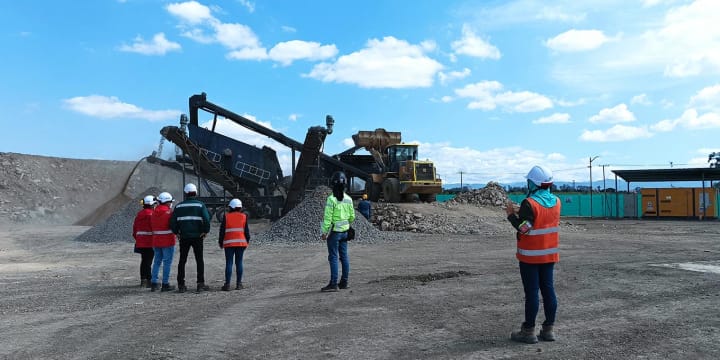
Ball Mills: Though commonly used for finer grinding, ball mills require more space and energy to operate. However, they can be adapted for large-scale fine material production when necessary.
Matching grinder capabilities with the performance of the selected crusher is essential for ensuring a smooth, continuous production line. The grinder must be capable of processing the material size reduction from the crusher without causing delays or inefficiencies.
In conclusion, achieving 100 tons per hour with less than 5mm output demands a careful selection of both crushers and grinders. Each piece of equipment must be chosen based on its ability to handle large quantities of material while achieving fine, consistent particle size. By understanding the material's properties and matching the equipment’s capabilities to meet production targets, operations can successfully achieve the desired output and maintain high efficiency throughout the process.
About the Creator
Aimixmachine
AIMIX is a customer-center-oriented heavy equipment manufacturer and supplier, devoted to production, innovation, combination, one-stop solution, etc.
Keep reading
More stories from Aimixmachine and writers in Writers and other communities.
How to Source the Best Rock Crusher for Your Granite Quarry
Selecting the optimal rock crusher for a granite quarry is a multifaceted endeavor that demands rigorous consideration of various factors. As the cornerstone of your operation, the rock crusher must not only meet the demands of efficiency and durability but also align with the specific geological characteristics of your quarry. This article elucidates the critical aspects to contemplate when sourcing the best rock crusher for sale, ensuring that your investment yields substantial returns.
By Aimixmachineabout a year ago in Writers
Published in Portrait of New England
My quest to find many publications with prestige to submit to has worked out even better than I thought. I was searching for more publications with more prestige in order to bolster my resume. I truly thought I'd try this for a year and not get published anywhere... maybe if I was lucky... in one of them. And I was OK with that... I was just going to try again the following year, and the year after that, and so on.
By Stephen Kramer Avitabile28 days ago in Writers
Silent Struggle
No one noticed the moment his life began to feel heavy. There was no single disaster, no dramatic fall. Everything happened slowly—quietly—like dust settling on furniture no one cared to clean. From the outside, his life looked normal. He woke up, went to work, smiled when needed, and returned home exhausted. But inside, a silent struggle was growing every single day. His name was Hamza. Hamza used to believe effort was always rewarded. As a child, he was told that if you worked hard, life would eventually open its doors for you. For a long time, he held onto that belief. He studied late into the night, sacrificed weekends, and stayed disciplined when others took shortcuts. But as years passed, reality felt cruelly different. People with less effort moved ahead. Opportunities passed him by. Promises turned into excuses. At work, Hamza was dependable—but invisible. When projects succeeded, others were praised. When mistakes happened, eyes quietly turned toward him. He never complained. He didn’t want to be seen as weak or ungrateful. Instead, he stayed silent. That silence slowly became his habit. At home, expectations followed him like a shadow. Everyone assumed he was “doing fine” because he never spoke about his struggles. Friends stopped asking how he was. Conversations became shallow. No one knew how many nights he lay awake staring at the ceiling, wondering if something was wrong with him. The hardest part wasn’t failure. It was feeling unseen. One night, after another exhausting day, Hamza sat alone in his room. The city outside was loud, full of people chasing dreams, celebrating small wins, living loudly. Inside his room, everything felt still. He picked up his phone and scrolled through social media. Success stories. Smiling faces. Motivational quotes. Each post felt like a reminder of how far behind he was. His chest tightened. A thought crept into his mind—soft, dangerous, and persistent. “Maybe I’m not meant for more.” That thought scared him. Not because it hurt—but because it felt believable. For the first time, Hamza considered giving up. Not dramatically. Not by quitting everything. Just… stopping the effort. Doing the bare minimum. Accepting an ordinary life without expectations. No one would notice anyway. But something held him back. It wasn’t hope. It wasn’t motivation. It was stubbornness. A quiet refusal to completely let go. The next morning, nothing changed externally. The same routine. The same people. The same silence. But inside Hamza made a small decision: “I’ll keep going—even if nothing changes.” He stopped waiting for encouragement. He stopped seeking validation. He focused only on improving himself, one small step at a time. He learned after work when others relaxed. He practiced skills no one asked him to learn. He failed quietly and corrected himself without announcing it. Some days, he felt strong. Most days, he felt tired. But he showed up anyway. Weeks turned into months. There were still no rewards. No applause. No sudden success. But something subtle was happening—something Hamza didn’t notice at first. He was becoming resilient. Things that once broke his confidence no longer shook him as much. Rejection still hurt, but it didn’t stop him. Criticism no longer crushed him; it taught him. Silence, once painful, became his training ground. One evening, a major issue arose at his workplace. A complicated problem that others avoided because failure would be visible. Managers were tense. Deadlines were tight. Blame was already being prepared. Hamza didn’t speak up immediately. He simply started working. He stayed late. He researched. He tested ideas. He made mistakes and fixed them. There were moments he doubted himself. Moments when fear whispered, “You’re not good enough for this.” But he answered back with action. Days later, the problem was solved—not perfectly, but effectively. This time, people noticed. Not with applause. Not with excitement. But with curiosity. “Who handled this?” “When did he learn that?” “Why didn’t we see this before?” Hamza didn’t feel proud in the way he expected. Instead, he felt calm. Grounded. Secure in a way that didn’t depend on others. When his manager finally called him in and acknowledged his work, Hamza thanked him politely. But inside, he knew the truth: This moment wasn’t built overnight. It was built during silent nights. Unseen effort. Unrecognized discipline. Life hadn’t ignored him. Life had been watching. Testing whether he would keep going without praise. Years later, Hamza looked back at the version of himself who almost quit. The man who felt invisible. The man who believed silence meant failure. He wished he could tell him one thing: “Your struggle wasn’t wasted. It was shaping you.” Not everyone’s journey is loud. Not every victory is celebrated. Some people are built quietly—strong enough to stand when others fall. If you are struggling silently today, know this: You are not behind. You are not invisible. You are not weak. You are being prepared. And one day, without warning, life will notice. Final Line (Powerful Ending): The strongest people are often the ones no one sees fighting—but they keep going anyway.
By Inayat khan3 days ago in Writers




Comments