
Absurdist Awakening: Embracing Life’s Absurdity
Curious about an absurdist awakening? Learn how absurdism can help you find meaning in a meaningless world and live authentically with this fun, easy guide.

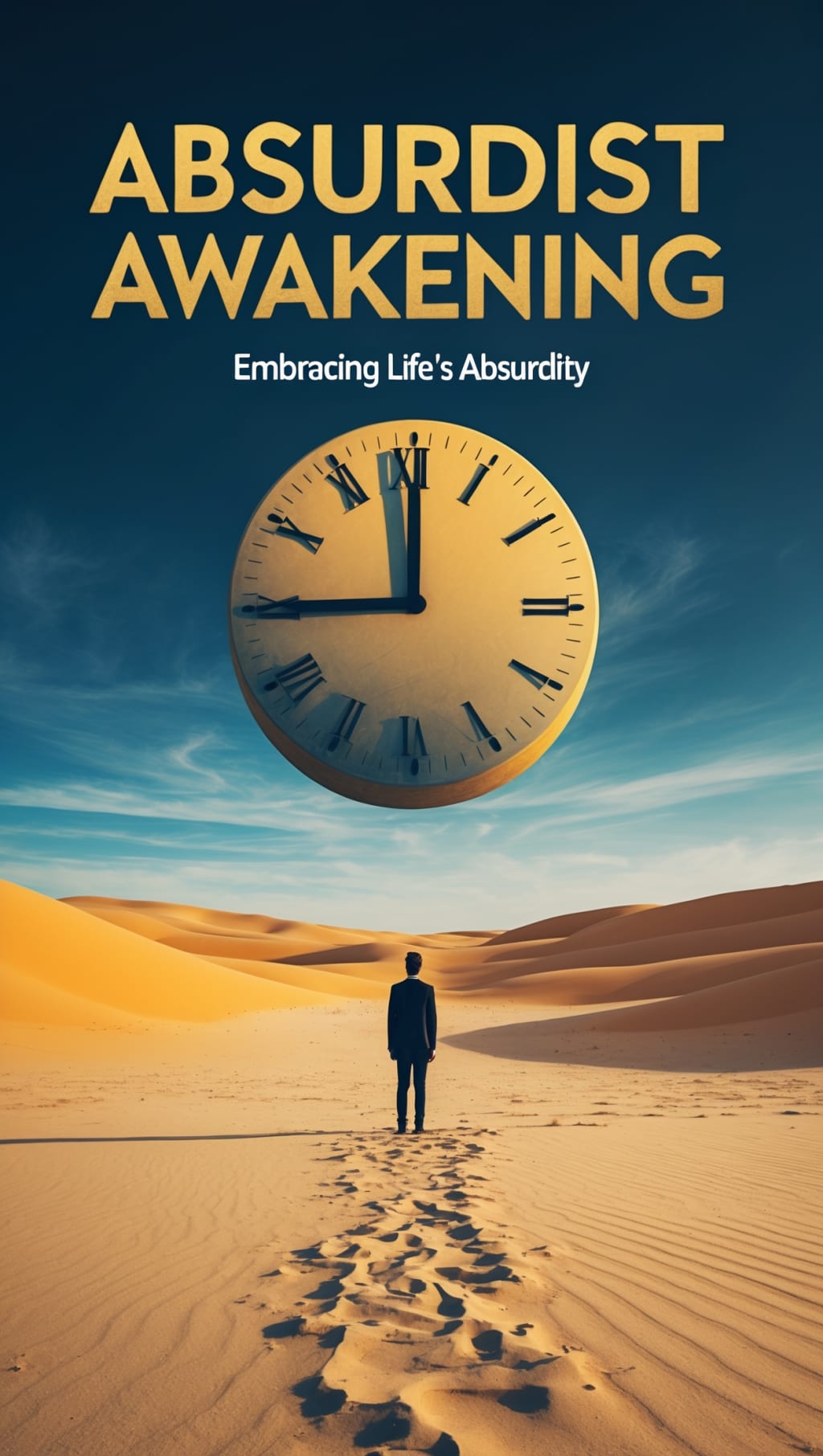
Hey there, it’s Ashley Scott! Have you ever felt like life is just a chaotic jumble of events with no real rhyme or reason? Like, no matter how hard you try, it all seems kind of pointless in the grand scheme of things? If that sounds familiar, you’re not alone—and you might be brushing up against a philosophy called absurdism. Even better, you could be on the verge of an absurdist awakening, that moment when you realize life’s absurdity and decide to roll with it anyway. In this article, I’m going to walk you through what absurdist awakening means, how it ties into absurdism, and how it can shake up your perspective in the best way possible. So, grab a snack, get comfy, and let’s dive into the wonderfully weird world of the absurd!
What is Absurdism?
Let’s start with the basics. Absurdism is a philosophy that says the universe doesn’t have any built-in meaning. We humans are wired to look for purpose—like why we’re here or what it all means—but the universe? It’s just chilling, totally indifferent to our big questions. That clash between our search for meaning and the universe’s big “meh” is what philosophers call “the absurd.”
One of the rockstars of absurdism is Albert Camus. In his essay The Myth of Sisyphus, he tells the story of Sisyphus, a guy from Greek mythology doomed to push a boulder up a hill forever, only for it to roll back down every time. Sounds exhausting, right? But Camus flips the script: he says Sisyphus is a hero because he keeps going, even knowing it’s pointless. And here’s the kicker—Camus imagines him happy. Why? Because Sisyphus owns the absurdity of his situation and finds joy in the act of pushing that rock.
So, absurdism isn’t about throwing your hands up in despair. It’s about staring into the void, shrugging, and saying, “Alright, I’ll make my own meaning.” It’s a quiet kind of rebellion against a universe that doesn’t care.
“In the face of the absurd, we must imagine Sisyphus happy.” – Albert Camus
Absurdism vs. Nihilism: What’s the Difference?
Now, you might be thinking, “Wait, isn’t this just nihilism?” I get that—they sound similar, but there’s a big difference. Nihilism says life is meaningless, period, and leaves it there. It’s kind of a downer because it doesn’t give you anywhere to go. Absurdism, though, takes it a step further. It agrees life has no inherent meaning but says, “That’s cool, I’ll create my own.” Instead of sinking into despair, absurdism hands you the keys to your own freedom.
Think of it like this: nihilism is staring at an empty canvas and walking away; absurdism is grabbing some paint and making your own masterpiece. One’s about giving up, the other’s about taking charge.
What is an Absurdist Awakening?
So, what’s an absurdist awakening? It’s that lightbulb moment when you see the absurdity of life for what it is and decide to embrace it. It’s like waking up from a nap where you thought everything had to fit together perfectly, only to realize it doesn’t—and that’s totally fine.
For some people, this hits during tough times—like losing a job or going through a breakup. For others, it sneaks up more slowly, maybe while reading some deep philosophy or watching a weird play. Whenever it happens, an absurdist awakening shifts how you see things. You stop chasing after some cosmic “why” or waiting for the world to hand you a purpose. Instead, you start soaking up the little joys—like a good laugh with friends or a sunny afternoon—and you take the wheel to steer your own life.
It’s freeing. Suddenly, you’re not weighed down by society’s rulebook for happiness. You get to write your own.
My Own Absurdist Awakening
Let me tell you about mine. Back in college, I was all about the hustle—straight A’s, killer internships, the whole “perfect life” checklist. But then I bombed an exam. Big time. It felt like my whole future was unraveling, and I spiraled. Why was I even doing this? What was the point if one slip-up could tank everything?
That’s when I stumbled across Camus in a philosophy class. Reading about Sisyphus and absurdism hit me like a ton of bricks. I realized all those goals I was chasing? They were just made-up rules I didn’t have to follow. I could decide what mattered to me—like learning stuff I actually cared about instead of obsessing over my GPA. It wasn’t some dramatic movie moment, but it was my absurdist awakening. And honestly? It felt like I could breathe again.
How Can You Experience an Absurdist Awakening?
Good news: you don’t need a fancy degree or a midlife crisis to have your own absurdist awakening. Here’s how you can get started:
Question Everything: Why do you do what you do? Are you chasing someone else’s dream, or does it actually light you up?
Embrace Uncertainty: Life’s a mess, and that’s okay. Stop stressing about having all the answers.
Find Joy in the Mundane: Like Sisyphus with his boulder, enjoy the little things—the smell of coffee, a goofy text from a friend.
Create Your Own Meaning: What gets you out of bed? Maybe it’s art, helping people, or just making the best tacos ever. You decide.
Dive into Absurdist Art: Check out books like Camus’ The Stranger or plays like Beckett’s Waiting for Godot. They’re weird, sure, but they’ll get your brain buzzing about the absurd.
It’s less about forcing it and more about letting go of the stuff that doesn’t serve you.
Why Bother? The Benefits of an Absurdist Awakening
So, what’s in it for you? An absurdist awakening can seriously shake up your life—in a good way. Here’s how:
Freedom: You’re not stuck following someone else’s script anymore.
Authenticity: You live true to yourself, not what the world expects.
Resilience: When life throws curveballs, you roll with them because you know chaos is just part of the deal.
Living in the Now: You start appreciating the moment instead of always chasing “what’s next.”
It’s not about ditching goals or responsibilities—it’s about choosing ones that actually mean something to you.
Absurdism in Literature and Art
Absurdism isn’t just some dusty philosophy—it’s all over art and literature too. Ever heard of the Theater of the Absurd? It’s a style of play that shows how bizarre life can be. Samuel Beckett’s Waiting for Godot is a big one—two guys waiting forever for someone who never shows up. It’s strange, but it nails that feeling of searching for meaning in a world that doesn’t give it to you.
Then there’s Camus’ The Stranger, where the main character just doesn’t play by society’s rules. And don’t get me started on surrealist art—those wild paintings mess with your head in the best way, pushing you to see reality differently.
Want to dig deeper? Check out the Internet Encyclopedia of Philosophy for more on how absurdism pops up in creative stuff.
Busting Myths About Absurdism
Let’s clear up a couple of things. Some folks think absurdism means you just stop caring—“Nothing matters, so why try?” Nope. It’s not about apathy; it’s about doing stuff because you want to, not because the universe promised you a gold star.
Another one I hear is that absurdism is depressing. Sure, it starts with a tough truth—life’s got no built-in meaning—but it doesn’t end there. It’s about finding joy anyway, which is pretty darn uplifting if you ask me.
A Nod to Other Thinkers
While Camus is the absurdism MVP, others like Jean-Paul Sartre tie into this too. Sartre was more about existentialism, focusing on total freedom and responsibility, but he danced around similar ideas. Camus, though, zeroed in on that clash between us and the universe’s indifference—and how we can rebel against it by living fully anyway.
Absurdism in Everyday Life
Here’s the cool part: you can bring absurdism into your day-to-day. Maybe it’s laughing at how ridiculous traffic jams are instead of stressing. Or maybe it’s picking up a hobby like painting, not to be the next Picasso, but just because it feels good. It’s all about self-discovery and crafting a life that’s yours, no cosmic permission needed.
Conclusion: Your Turn to Wake Up
An absurdist awakening is like hitting the reset button on how you see the world. It’s realizing life’s a little nuts, accepting it, and choosing to live it your way anyway. Whether it’s through philosophy, literature, or just staring out your window thinking deep thoughts, you’ve got the power to find your own purpose. And like Sisyphus with his boulder, you can find happiness in the ride.
So, next time life feels overwhelming, take a breath. Imagine Sisyphus smiling up there on that hill. Maybe you can too.
About the Creator
Ashley Scott
Ashley Scott here! 🌿 I share tips, DIY projects, and inspiration for creating beautiful gardens. From beginner guides to expert advice on growing vegetables, herbs, and flowers, you'll find everything to make your garden thrive.
Keep reading
More stories from Ashley Scott and writers in Writers and other communities.
Madagascar Palm (Pachypodium) Care: A Complete Guide for Thriving Growth
🌵 Want a unique, low-maintenance plant that adds a tropical vibe to your home or garden? The Madagascar Palm (Pachypodium) is a striking succulent that thrives with minimal care. Though it looks like a palm, it’s actually a hardy succulent that can tolerate drought and requires little attention.
By Ashley Scott12 months ago in Writers
Early March 2026: 4 Goals Accomplished
It's early March and I've now accomplished my 4th writing goal for the year of 2026. Before diving into the behind-the-scenes of it... why not tell you up front what that accomplishment was? I was published in a 2nd publication for this year. Published in Helix Literary Magazine out of Central Connecticut State University. You can read it for free right now!
By Stephen Kramer Avitabile5 days ago in Writers




Comments
There are no comments for this story
Be the first to respond and start the conversation.