
A Society Without Rules
A Utopia or an Inevitability?

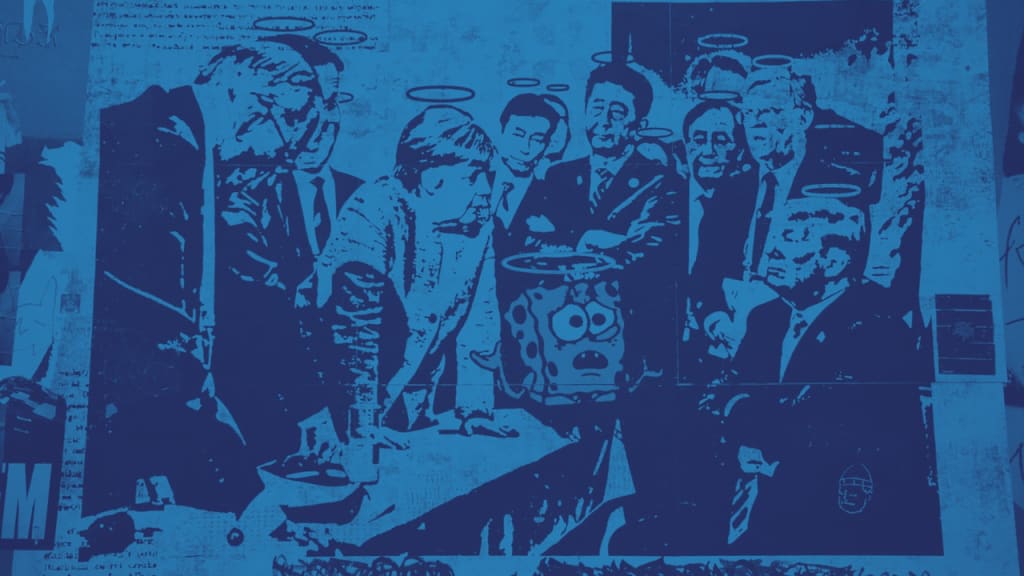
When first hearing the idea of a society without rules, many immediately envision it as an anarchic state—a chaotic existence without laws. However, historically, this phenomenon is not merely a far-fetched concept. In the 5th century, for instance, Germanic tribes that overthrew the Roman Empire lived without a centralized legal system. At that time, societies relied more on flexible communal norms rather than binding written laws. This demonstrates that formal rules are not the only means of maintaining social order (Heather, The Fall of the Roman Empire, 2005).
In postmodern sociological thought, figures like Michel Foucault argue that rules and laws are not merely neutral instruments but mechanisms of control that create discipline and surveillance. In Discipline and Punish (1975), Foucault explains how power permeates rules applied in daily life, shaping a society that submits to a subtle yet effective system of oversight. Thus, standardized rules do not merely generate order but also mold individuals into compliance, often without them realizing they are being controlled.
Jean Baudrillard, in Simulacra and Simulation (1981), highlights how rules created by governments often do not represent reality but rather construct simulations that benefit certain groups. This is evident in legal systems worldwide, where high-value corruption cases receive lenient sentences, while minor infractions committed by lower-class individuals are harshly punished. This aligns with Zygmunt Bauman’s analysis in Modernity and the Holocaust (1989), where modern legal systems are driven by bureaucratic logic that obscures ethical and just considerations.
Lyotard, in The Postmodern Condition (1979), asserts that grand narratives, including laws and state regulations, frequently lose legitimacy as they fail to represent the plurality of social realities. In this context, a return to a society with fewer rigid rules would not signify chaos but rather an opportunity for communities to establish more just and contextually relevant systems based on their own values.
This idea resonates with Pramoedya Ananta Toer’s concept of the "reverse current," which suggests that history is cyclical, meaning that a form of social order can return to its original state. Therefore, it is not impossible that, in the future, societies will revert to a more autonomous structure, where social groups have the freedom to determine their own rules according to their values and needs.
Perhaps, a society without rigid, state-imposed regulations will become an inevitability. Not as an anarchic disorder, but as a fairer social structure, where every community has the right to determine its way of life without being subjected to a biased system favoring dominant groups. History has repeatedly shown that everything eventually comes full circle in human civilization.
About the Creator
Haikal Akmal Ajikontea
Social and Political Researcher
Keep reading
More stories from Haikal Akmal Ajikontea and writers in Writers and other communities.
Differences in Interests and the Impossibility of a Unified Perspective
In social life, achieving an absolute unified perspective is nearly impossible. This is due to the diverse interests inherent in individuals and groups within society. Sociology, as a discipline that studies social structures and human interactions, has long highlighted how differences in interests shape social dynamics and prevent the formation of a homogeneous perspective.
By Haikal Akmal Ajikontea11 months ago in Writers
Why Is Clean, Structured Data Essential for AI-Driven Business Decisions in 2025?
In the world of AI and machine learning, data quality has become a board-level concern. From predictive analytics to real-time decision-making, businesses now rely on AI models to power everything from customer recommendations to supply chain optimizations. However, there’s one crucial piece of the puzzle—structured data.
By Retail Gators7 days ago in Writers




Comments
There are no comments for this story
Be the first to respond and start the conversation.