
A Guide to Customer Service Roles: What to Expect as a Customer Service Executive (CSE)
Essential Skills and Challenges for Aspiring Customer Service Executives
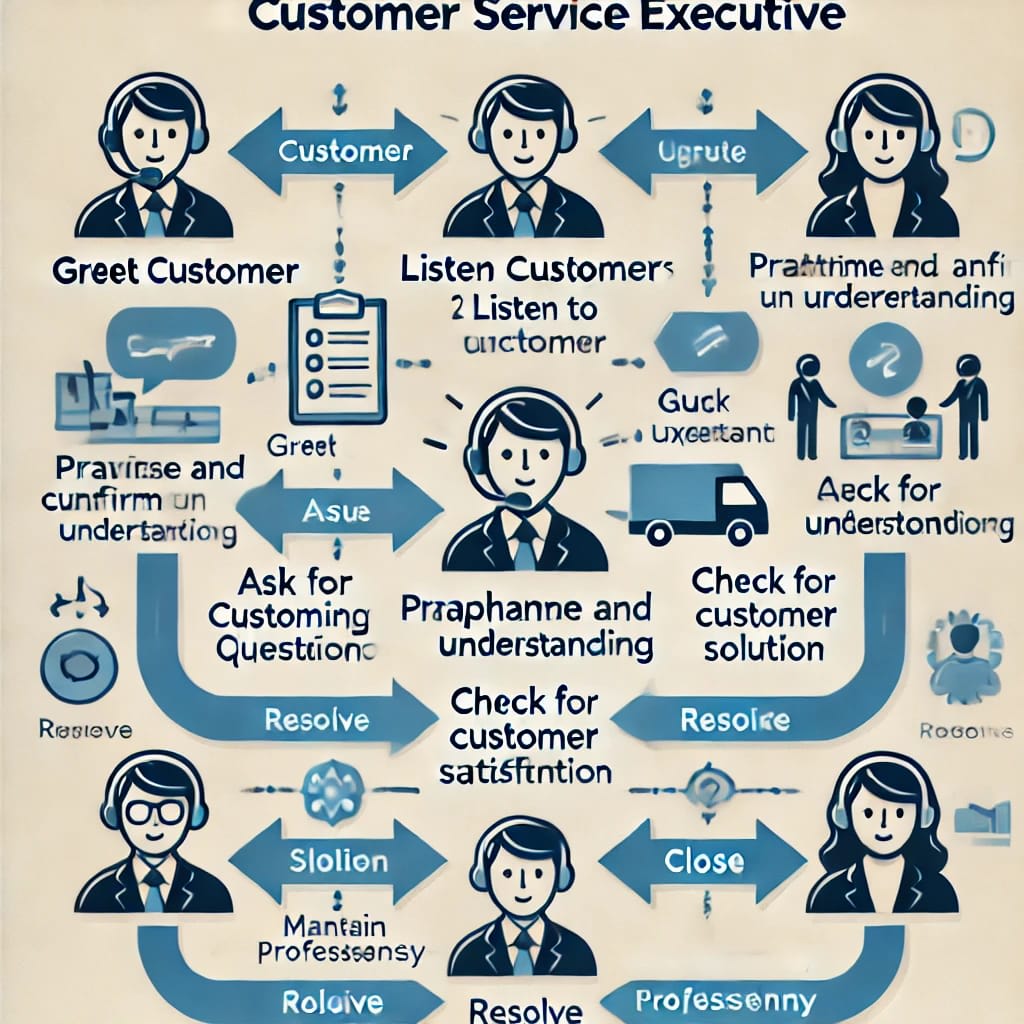
Customer service is, at its core, the responsibility of resolving client issues through various channels such as email, chat, and phone calls. In this role, Customer Service Executives (CSEs) act as representatives of their company’s support team, handling inquiries related to orders, payments, and other concerns.
This work can be quite challenging. While the primary goal is to resolve problems, customer frustration can often arise due to service delays or issues with applications. When this happens, it’s important for CSEs to manage these situations with patience, listening carefully to the customer’s concerns and responding with empathy. If a customer becomes upset or speaks indignantly, it's crucial to remain calm and work towards diffusing the situation.
The first step in providing good customer service is to actively listen to the customer’s issue. After they finish explaining, you should communicate with them clearly, working to resolve their problem and apologizing where necessary. However, it’s important not to over-apologize. Repeated apologies can give the impression that the CSE is unable to fix the issue, so use them only when appropriate.
There are specific stages to follow when handling calls and chats. For example, when a customer initiates a conversation, you should first greet them, listen to their issue, and then paraphrase it back to confirm your understanding. If the customer has additional information, allow them to share it before you start asking questions to clarify details such as product name, order number, or other relevant information. Once you've gathered all the necessary information, provide a resolution.
It’s also important to confirm with the customer that the solution meets their expectations. If they agree, you can proceed as usual. If they don't, you should ask follow-up questions to further clarify their needs. Once the issue is resolved, you can close the interaction politely and professionally.
While there is a process to follow, the most crucial aspect of customer service is how you handle the customer themselves. Customers may arrive feeling angry, frustrated, or even vengeful, and in some cases, they may use inappropriate language. In such situations, maintaining patience and composure is essential.
Always provide honest and accurate solutions. Avoid making false promises, such as saying, "Your order is on the way, but it might be delayed due to traffic," unless that is truly the case. Earning customer trust is key, and if the customer is satisfied with your service, they may leave a positive rating or review, which can be rewarding for both the CSE and the company.
In conclusion, customer service is not just about solving problems—it’s about managing emotions, maintaining professionalism, and building trust. I hope this gives you a better understanding of the role and why it can be a fulfilling job.
About the Creator
Keep reading
More stories from writers in Writers and other communities.
It's Winter
Anne Bernays and Pamela Painter — What If? Writing Exercise for Fiction Writers prompts The Exercise —Write a scene involving two characters. Have the point-of-view character presume something entirely different about the situation from what the other character's overt behavior seems to imply. For example, a landlord comes to visit, and the tenant suspects that it isn't a visit but an inspection. Make up several situations in which one character can fantasize or project or suspect or even fear what another character is thinking. The Objective - To show how your characters can use their imaginations to interpret the behavior and dialogue of other characters.
By Denise E Lindquist18 days ago in Writers
When a Request for Evidence Changes the Direction of an Immigration Case
For many people navigating the United States immigration system, a Request for Evidence can arrive unexpectedly. The notice often brings worry, even when the application has been prepared carefully. In reality, an RFE is a pause in the review process, not a rejection. It signals that an officer needs more clarity before moving forward.
By Sheila Danzig5 days ago in Writers
The Devil's Cut
“Comrade, finally you’re awake.” The voice was smooth, sensual. A flickering incandescent bar was all that lit the white, sterile room. All Vladimir remembered was everything going black. He tried to move his arms and found them strapped to the gurney.
By Matthew J. Fromm6 days ago in Fiction


Comments
There are no comments for this story
Be the first to respond and start the conversation.