
A Deep Dive into Comprehensive SEO Audits (By: Streak Ranker)
A Deep Dive into Comprehensive SEO Audits

A comprehensive SEO audit is a critical undertaking for any website aiming to improve its visibility and performance in search engine results. It's a systematic review that uncovers opportunities for optimization, ranging from foundational technical elements to the quality of your content and external factors like backlinks. By identifying and rectifying issues, you can significantly enhance your website's organic traffic, user experience, and overall compliance with search engine guidelines.
Key Insights into SEO Audits
Holistic Analysis: A complete SEO audit meticulously examines technical, on-page, off-page, and content aspects of your website to identify performance bottlenecks.
Strategic Tool Utilization: Leveraging powerful SEO tools like Semrush, Ahrefs, and Google's suite (PageSpeed Insights, Search Console) is crucial for efficient and effective auditing.
Continuous Improvement: SEO is an ongoing process; regular audits (quarterly or bi-annually) are essential to adapt to algorithm changes and maintain optimal performance.
The Pillars of a Thorough SEO Audit
A complete SEO audit can be broken down into several interconnected components, each vital for a healthy and high-ranking website. Understanding these pillars is the first step toward a successful optimization strategy.
Technical SEO: The Foundation of Discoverability
Technical SEO focuses on the underlying infrastructure of your website, ensuring that search engines can efficiently crawl, index, and render your pages. Without a solid technical foundation, even the most compelling content may go unnoticed.
Crawlability and Indexability: Ensuring Search Engine Access
One of the initial steps involves ensuring search engine crawlers can access and understand your site's content. This means checking for and resolving issues like broken links (404 errors), incorrect redirects (like redirect chains that can dilute link equity), and proper robots.txt and meta robots tag configurations. Tools like Semrush Site Audit, Ahrefs Site Audit, and Screaming Frog are invaluable for identifying these issues by simulating how a search engine bot navigates your site.

An example of a Screaming Frog crawl, a crucial first step in any technical SEO audit.
Site Speed and Core Web Vitals: Enhancing User Experience
Page load speed and responsiveness are crucial for both user experience and search engine rankings. Google's Core Web Vitals (Largest Contentful Paint, First Input Delay, Cumulative Layout Shift) are key metrics. Tools like Google PageSpeed Insights help evaluate these, providing actionable recommendations to optimize images, leverage browser caching, and minimize server response times. Websites that load quickly and offer a smooth interactive experience are favored by search engines.
Mobile-Friendliness and Security: Modern Web Standards
With the prevalence of mobile browsing, ensuring your website is fully responsive and mobile-friendly is non-negotiable. Google's Mobile-Friendly Test can help verify this. Additionally, securing your website with HTTPS and a valid SSL certificate is vital; non-secure sites may face ranking penalties and user distrust.

XML Sitemaps and Canonicalization: Guiding Search Engines
An up-to-date XML sitemap submitted to Google Search Console guides search engines to all important pages on your site. Canonical tags are equally important to prevent duplicate content issues, ensuring that search engines understand the preferred version of a page when similar content exists.
On-Page SEO: Optimizing Content for Relevancy
On-page SEO involves optimizing individual web pages to rank higher and attract more relevant traffic. This focuses on elements directly within your control on each page.
Title Tags and Meta Descriptions: Your First Impression
Each page's title tag and meta description are critical for attracting clicks from search results. They should be unique, keyword-rich, and compelling, providing a clear summary of the page's content while adhering to character limits for optimal display.
Header Tags and Content Structure: Organizing for Readability and SEO
Proper use of H1, H2, H3, and other header tags creates a logical content hierarchy, improving readability for users and helping search engines understand the main topics and subtopics of your page. Content should be valuable, original, and align with user intent, naturally incorporating relevant keywords, including long-tail variations.
Internal Linking and Media Optimization: Connecting Content and Enhancing Accessibility
A robust internal linking structure helps distribute "link equity" across your site, guiding users and crawlers to related content. Anchor text should be descriptive. Furthermore, optimizing images and other media with descriptive alt text improves accessibility and provides additional context for search engines.
Off-Page SEO: Building Authority and Trust
Off-page SEO encompasses factors outside your website that influence its ranking, primarily focusing on building authority, trustworthiness, and reputation through external signals.
Backlink Profile Analysis: The Currency of the Web
Backlinks from other reputable websites are a strong signal of authority. Tools like Ahrefs and Semrush are indispensable for analyzing your backlink profile, identifying high-quality links, and detecting potentially toxic or spammy links that could harm your rankings. Disavowing harmful links is a necessary step when such issues are found.
Brand Mentions and Citations: Beyond Direct Links
Monitoring brand mentions and ensuring consistent business information across various online directories and social media platforms contribute to your online reputation and can indirectly influence SEO.
Content and Keyword Strategy: The Heart of User Engagement
This aspect of the audit reviews the effectiveness of your content in attracting and engaging your target audience, as well as its alignment with current search trends.
Keyword Research and Content Gaps: Staying Relevant
Updating your keyword lists with new long-tail and semantic keywords ensures your content remains relevant. Identifying content gaps—topics or questions your audience is searching for but your site doesn't yet cover—provides opportunities for new content creation.

Content Auditing and Updates: Maintaining Freshness and Accuracy
Periodically auditing existing content to ensure its accuracy, relevance, and freshness is crucial. Outdated or thin content should be updated, expanded, or even removed if it no longer serves a purpose.
User Experience (UX) Integration: An Indirect SEO Factor
While not a direct ranking factor, a positive user experience is increasingly intertwined with SEO. If users have a poor experience, they're likely to bounce quickly, sending negative signals to search engines.
This includes intuitive site navigation, clear calls to action, and the absence of disruptive elements like excessive pop-ups. Ensuring users can easily find what they need on your site contributes to longer dwell times and lower bounce rates, which are positive indicators for search engines.
Visualizing SEO Audit Priorities
Understanding where to focus your efforts after an audit is crucial. The following charts illustrate typical priority levels across various SEO audit categories and the comparative strength of different SEO tools in these areas, based on opinionated analyses of their general capabilities.
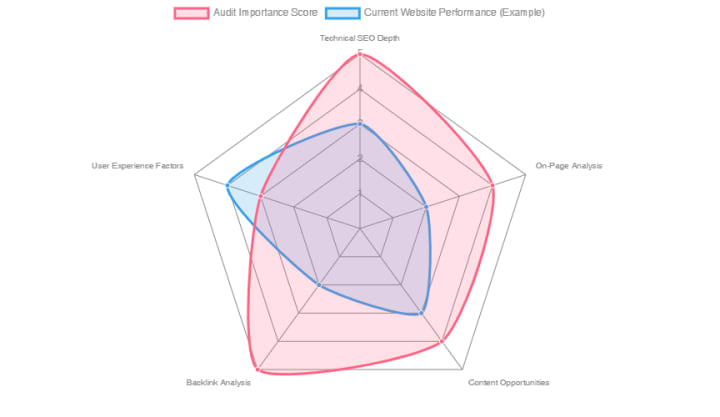
The radar chart above illustrates the relative importance of different SEO audit categories and provides an example of a hypothetical website's current performance in those areas. This helps to visualize where the most critical gaps or opportunities lie, guiding prioritization during the audit process. A lower "Current Website Performance" score compared to "Audit Importance Score" indicates a significant area for improvement.
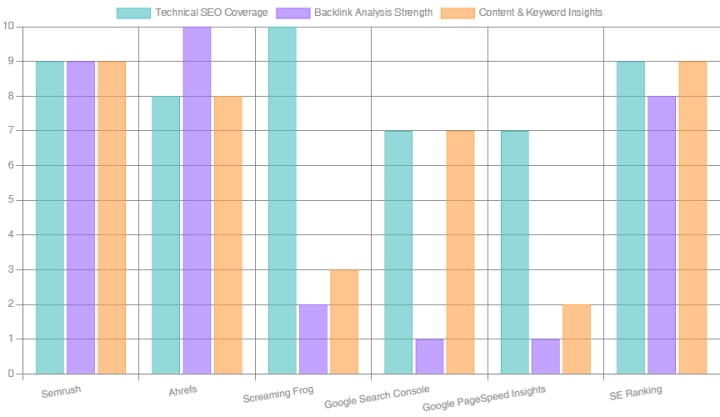
The bar chart above provides an opinionated comparison of various SEO tools' strengths across different audit aspects. While some tools excel in specific areas (e.g., Screaming Frog for technical crawling, Ahrefs for backlink analysis), others like Semrush offer a more balanced, comprehensive suite of features. This visual helps in selecting the right tools for your specific auditing needs, ensuring you cover all critical bases effectively.
Strategic Implementation: From Audit to Action
An audit is only valuable if it leads to actionable improvements. The final phase involves reporting, prioritization, and continuous monitoring.
The Continuous Nature of SEO Audits
SEO is not a one-time fix but an ongoing process. Search engine algorithms evolve, user behaviors change, and your website content expands. Therefore, scheduling regular audits—quarterly or bi-annually—is crucial to ensure your website remains optimized, maintains its visibility, and adapts to the ever-changing digital landscape. Consistent monitoring with tools like Google Search Console is vital to track the impact of your changes and identify new areas for improvement.
Conclusion
A complete SEO audit is an indispensable practice for anyone serious about improving their website's performance in search engine results. By meticulously examining technical infrastructure, optimizing on-page content, strengthening off-page signals, and continually refining content strategy, you can unlock significant growth in organic traffic and user engagement. Leveraging the right tools and committing to a cycle of regular audits and improvements will ensure your website remains competitive and aligned with evolving search engine standards.
About the Creator
Streak Ranker
Grow Faster with the Top-Rated Digital Marketing Agency (Streak Ranker) – Trusted for Real Results and Expert Support.
Keep reading
More stories from Streak Ranker and writers in Writers and other communities.
The Power of Right Way Representation in Marketing (By: Streak Ranker)
In today's dynamic marketplace, representation in marketing is no longer a mere buzzword but a fundamental pillar of brand success and societal responsibility. It's about authentically portraying diverse groups in advertising, content, and branding in ways that resonate deeply with consumers. When executed correctly, representation validates consumer experiences, builds trust, and fosters enduring loyalty. This comprehensive guide explores how to navigate the complexities of inclusive marketing, focusing on strategies that genuinely connect with diverse audiences and leverage powerful consumer perspectives.
By Streak Ranker7 months ago in Writers
It's Winter
Anne Bernays and Pamela Painter — What If? Writing Exercise for Fiction Writers prompts The Exercise —Write a scene involving two characters. Have the point-of-view character presume something entirely different about the situation from what the other character's overt behavior seems to imply. For example, a landlord comes to visit, and the tenant suspects that it isn't a visit but an inspection. Make up several situations in which one character can fantasize or project or suspect or even fear what another character is thinking. The Objective - To show how your characters can use their imaginations to interpret the behavior and dialogue of other characters.
By Denise E Lindquist19 days ago in Writers
Where Dreams Loved Me Back
chapter 1 Chapter One: The Quiet I Learned to Carry Matthew’s perspective, I don’t remember when life started feeling heavy. It wasn’t sudden — it was gradual, like carrying a bag that someone kept adding weight to until one day I realized I couldn’t put it down anymore.
By Anshu Giri5 days ago in Writers
How, Too
Many people wonder how, too. You are not alone, and I am an expert. I will teach you how, too! First, you need to remit a small application fee and fill out an application describing the nature of your financial situation and how often payments will be made, as this will have great bearing on how well I teach you how, too.
By Harper Lewis4 days ago in Fiction



Comments
There are no comments for this story
Be the first to respond and start the conversation.