
A Comprehensive Guide to Launching Your Business (By: Streak Ranker)
Guide to Launching Your Business


Key Insights for Aspiring Entrepreneurs
Strategic Planning is Paramount: A well-crafted business plan, informed by thorough market research, serves as the foundational blueprint for success, guiding every decision from funding to operations.
Legal & Financial Foundations are Crucial: Selecting the correct legal structure, meticulously registering your business, and securing appropriate funding are non-negotiable steps that impact your liability, taxes, and long-term viability.
Continuous Adaptation and Growth: Successful businesses are not static; they require ongoing marketing efforts, operational management, and a willingness to adapt to market feedback for sustainable growth.
From Vision to Venture: The Entrepreneurial Roadmap
Starting a business is a multi-faceted journey that begins with a compelling idea and progresses through meticulous planning, legal establishment, financial securing, and strategic market engagement. This comprehensive guide synthesizes expert advice to provide a clear pathway for aspiring entrepreneurs in 2025.
Phase 1: Conceptualization and Validation
The initial phase focuses on defining your business's core purpose and validating its potential in the market. This involves more than just having an idea; it requires rigorous investigation and strategic positioning.
Developing Your Core Business Idea
Every successful business begins with identifying a problem and offering a unique, effective solution. This could involve an innovative product, a distinct service, or a novel approach to an existing market need. Consider leveraging your personal skills, passions, and insights into underserved niches to create a truly viable concept. The more specific and impactful your solution, the stronger your foundation will be.
Conducting Thorough Market Research
Once you have an idea, validating its market viability is critical. This involves gathering extensive information about your potential customers, understanding their needs, pain points, and purchasing behaviors. Equally important is analyzing your competitors: what are their strengths and weaknesses? How can your offering differentiate itself and establish a competitive advantage? This research helps refine your value proposition and target audience.
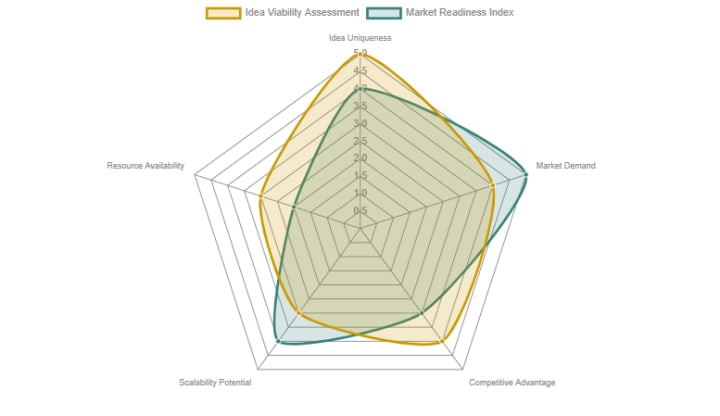
This radar chart illustrates the typical assessment of a business idea's viability and market readiness, scoring key attributes on a scale of 1 to 5.
Crafting a Comprehensive Business Plan
A well-structured business plan is your venture's roadmap. It should detail every aspect of your business, including its mission, objectives, strategies, market analysis, organizational structure, and financial projections. This document is essential not only for guiding your internal operations but also for attracting potential investors, lenders, and partners. It forces you to think through challenges and opportunities, ensuring a more resilient start.
Phase 2: Legal and Financial Foundations
With a solid idea and plan in place, the next crucial steps involve establishing your business legally and securing the necessary financial resources.
Choosing Your Business Name and Legal Structure
Selecting a memorable and relevant business name is important for branding. Concurrently, you must decide on your business's legal structure, such as a sole proprietorship, limited liability company (LLC), partnership, or corporation. Each structure has distinct implications for liability, taxation, administrative burden, and future growth potential. This decision should be made carefully, often with legal and financial counsel, as it dictates many subsequent registration and operational requirements.
For instance, an LLC offers personal liability protection while maintaining flexible tax options, whereas a sole proprietorship is simpler to set up but provides no liability shield for the owner. Partnerships involve shared ownership and liability, while corporations offer the strongest liability protection but are subject to more complex regulations and double taxation in some cases.
Navigating Business Registration and Licensing
After determining your legal structure, formal registration is required. This typically involves registering your business name with state and local governments. A critical step for most businesses is obtaining an Employer Identification Number (EIN) from the IRS, which functions as a federal tax ID, similar to a social security number for individuals. This is essential for tax purposes, opening bank accounts, and hiring employees.
Beyond the EIN, you will likely need to secure various federal, state, and local licenses and permits specific to your industry and location. These can range from general business licenses to specialized permits for health, environmental, or professional services. The requirements vary significantly by jurisdiction; for example, registering a business in New York or California will involve specific state agencies and processes. Consulting official government resources like the Small Business Administration (SBA) and state business registration websites is highly recommended.
Securing Essential Funding
Determining your startup costs and securing adequate funding are vital. Funding sources can include personal savings, loans from financial institutions, venture capital, angel investors, or specific government-backed programs. While direct federal grants for starting a business are rare, the SBA offers various loan programs, guarantees, and support resources, some of which are tailored for specific demographics like women, minorities, veterans, or rural businesses. Financial planning involves not just securing initial capital but also forecasting operational expenses and revenue streams to ensure long-term solvency.
Phase 3: Operational Launch and Growth
Once the legal and financial foundations are laid, the focus shifts to bringing your business to life and ensuring its sustainable growth.
Setting Up Your Operational Hub
Whether your business operates from a physical location or entirely online, choosing the right operational setup is crucial. A physical storefront or office space requires consideration of zoning laws, accessibility, and community fit. For online business, selecting the right e-commerce platform, website hosting, ecommerce growth strategy and digital tools is paramount. Your chosen location or platform must align with your business model, customer base, and operational needs.
Establishing Your Brand and Digital Presence
Developing a strong brand identity is key to standing out in a crowded market. This includes your logo, color palette, messaging, and overall brand voice. Concurrently, establishing a robust online presence is non-negotiable in today's digital landscape. This typically involves launching a professional business website, setting up social media profiles, and potentially engaging in content marketing or search engine optimization (SEO) to reach and engage your target audience effectively.
Phase 4: Sustaining and Scaling Operations
Starting a business is just the beginning. Long-term success hinges on effective management and continuous adaptation.
Operational Management and Compliance
Ongoing business management includes daily operations, financial oversight, and adherence to legal and tax obligations. This involves meticulous record-keeping, understanding tax requirements (e.g., sales tax, income tax), and navigating hiring laws if you plan to expand your team. Staying compliant with regulations at all levels (federal, state, local) is critical to avoid penalties and ensure smooth operations.
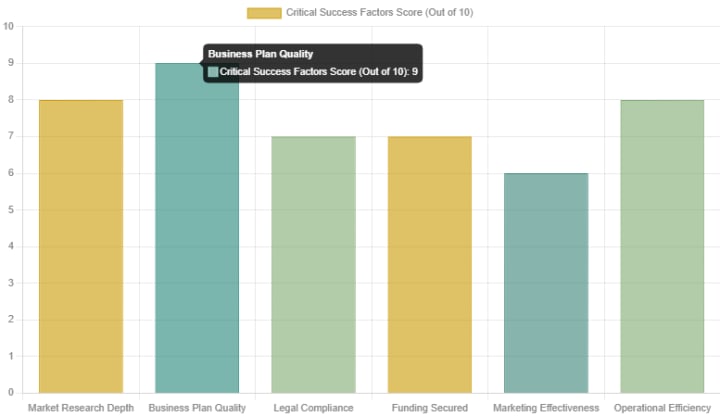
This bar chart evaluates the relative importance and typical initial strength of various critical success factors for a new business, scored out of 10.
Conclusion: A Journey of Strategic Growth
Starting a business in 2025 demands a strategic and systematic approach, encompassing meticulous planning, robust legal and financial foundations, dynamic operational execution, and continuous adaptation. By carefully navigating each stage, from conceptualizing a viable idea and conducting thorough market research to registering your enterprise and implementing effective marketing strategies, entrepreneurs can build resilient and sustainable ventures. Leveraging resources from the Small Business Administration (SBA), Internal Revenue Service (IRS), and other authoritative guides will further strengthen your journey, ensuring compliance and maximizing potential for growth. Remember, entrepreneurship is a marathon, not a sprint, requiring dedication, foresight, and a commitment to continuous improvement.
About the Creator
Streak Ranker
Grow Faster with the Top-Rated Digital Marketing Agency (Streak Ranker) – Trusted for Real Results and Expert Support.
Keep reading
More stories from Streak Ranker and writers in Writers and other communities.
Digital Marketing Strategies That Drive Online Business Growth (By: Streak Ranker)
Key Insights for Digital Marketing Success AI-Powered Personalization: AI is pivotal for delivering hyper-personalized content and product recommendations, enhancing user experience and driving conversions. Content Evolution: Beyond traditional content, focus on interactive, long-form, and user-generated content, especially short-form video, to build authenticity and engagement. Data-Driven Optimization: Continuously analyze performance metrics and adapt strategies based on real-time data to maximize ROI and ensure agile responses to market shifts.
By Streak Ranker7 months ago in Writers
The App Economy Trust Crisis: Survival Architecture for 2026
Traditional mobile app development paths have undergone a structural collapse in early 2026. Google’s latest algorithmic shift has prioritized Trust Graph formation over simple keyword matching. The Trust Graph is a map Google uses to verify your real-world reputation. Aspiring developers must now navigate a landscape where Entity Accountability dictates career visibility. AI Retrieval has also become a primary gatekeeper for professional opportunities. These systems work together to decide if your expertise is genuine or simulated.
By Del Rosario7 days ago in Writers



Comments
There are no comments for this story
Be the first to respond and start the conversation.