
A Complete Overview of External Fixation in Orthopedic Surgery
External fixation involves the placement of pins or wires into the bone, which are then connected to an external frame or scaffold.

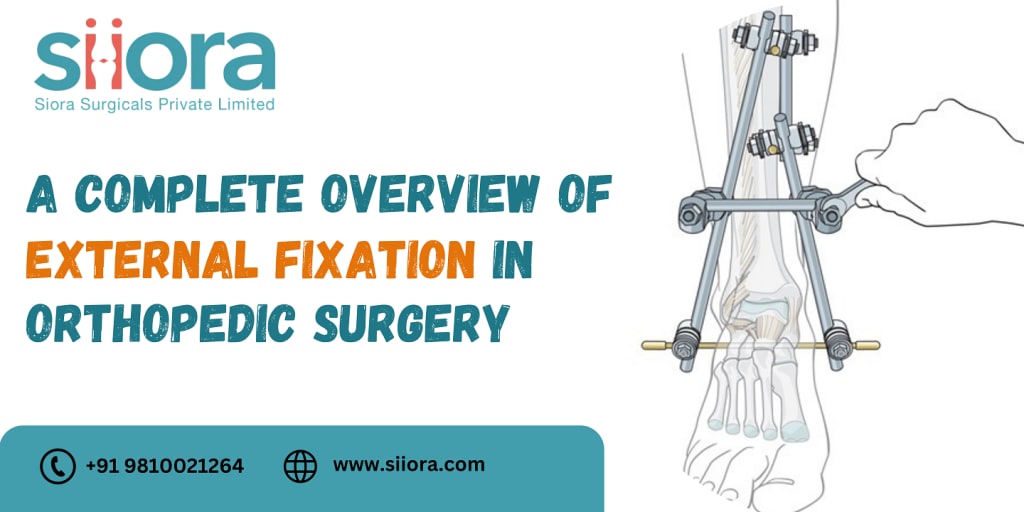
External fixation is a versatile and essential technique in orthopedic surgery used to stabilize fractured bones and manage complex skeletal injuries. This method involves the application of external devices to maintain bone alignment and support healing, particularly in cases where internal fixation may not be feasible or safe. External fixator system has been instrumental in advancing the field of trauma care, deformity correction, and orthopedic oncology.
What is External Fixation?
External fixation involves the placement of pins or wires into the bone, which are then connected to an external frame or scaffold. This setup stabilizes the fractured or misaligned bone, ensuring proper healing. The devices are adjustable, allowing surgeons to modify alignment during the healing process if necessary. Unlike internal fixation methods, external fixation does not require large surgical incisions, reducing the risk of infection and soft tissue complications.
What Are Types of External Fixators?
Monoplanar Fixators
These are single-plane systems that are simple to use and commonly employed for straightforward fractures.
Circular Fixators
These are more complex and typically used for deformity corrections, limb lengthening, and intricate fractures. The Ilizarov apparatus is a well-known circular fixator.
Hybrid Fixators
Combining features of monoplanar and circular systems, hybrid fixators offer greater flexibility for managing challenging fractures and soft tissue injuries.
Indications for External Fixation
External fixation is used in a wide range of clinical scenarios, including:
Severe Fractures: Open fractures or fractures with significant soft tissue damage.
Polytrauma Cases: When immediate stabilization is required to prioritize patient survival.
Infections: For bones affected by osteomyelitis, where internal fixation poses a higher risk.
Deformity Corrections: To address congenital or acquired skeletal deformities.
Limb Lengthening: A gradual process achieved using adjustable external fixators.
What Are the Advantages of External Fixation?
Minimally Invasive: Requires smaller incisions, preserving soft tissue integrity.
Flexibility: Adjustable frames allow for real-time corrections during treatment.
Versatility: Can be used in a wide range of conditions, from trauma to orthopedic reconstructions.
Reduced Risk of Infection: Particularly beneficial in contaminated wounds or open fractures.
Challenges and Complications
While external fixation offers significant benefits, it is not without challenges. Pin-site infections are the most common complication, requiring careful hygiene and monitoring. Other potential issues include delayed union or nonunion of fractures, joint stiffness, and psychological discomfort for patients due to the visibility of the device. Proper patient education and follow-up care are essential to address these challenges.
Advances in External Fixation
Recent advancements have improved the efficacy and patient experience of external fixation. Computer-assisted systems enable precise alignment and correction of deformities. Additionally, the use of bioengineered materials for pins and frames reduces the risk of infection and enhances patient comfort.
Conclusion
External fixation remains a cornerstone of orthopedic surgery, offering a reliable solution for managing complex fractures and skeletal deformities. With continuous innovations, this technique is becoming even more effective, ensuring better outcomes and improved quality of life for patients. Despite its challenges, external fixation’s adaptability and effectiveness make it an invaluable tool in modern orthopedic practice.
To explore advanced and the latest range of orthopedic implants and instruments, visit booth MS.C05 of Siora Surgicals Pvt. Ltd. at Arab Health 2025.
About the Creator
Siora Surgicals
Siora Surgicals Pvt. Ltd. is a world leader in orthopedic implant manufacturing and supplying industry. Operating for over 3 decades, the company holds expertise in manufacturing and supplying hundreds of different types of trauma implants.
Keep reading
More stories from Siora Surgicals and writers in Writers and other communities.
What Are the Benefits of Using a Locking Variable Angle Plate for Fracture Fixation?
Fracture fixation is a critical aspect of orthopedic surgery that aims to restore the function and alignment of broken bones. Traditionally, fracture fixation has involved the use of plates and screws, which serve to stabilize fractures and promote healing. In recent years, the advent of locking variable angle plates has revolutionized the approach to fracture fixation, offering a variety of benefits over conventional systems. These advanced implants not only improve the biomechanical stability of fractures but also enhance the overall outcomes of surgery.
By Siora Surgicalsabout a year ago in Writers
The Room I Still Walk Into
I still walk into that room sometimes. Not with my body. With my mind. The real room no longer exists in the way it once did. The house changed owners. The walls were repainted. The furniture replaced. Someone else now opens that window without knowing how much weight it once held.
By Salman Writes6 days ago in Writers



Comments
There are no comments for this story
Be the first to respond and start the conversation.