
A Bike, a Key, a Beginning
Here is my first story about living abroad, told in a simple way, like a kid would tell it, but it is all true and it is mine.

I arrived in the Netherlands on September 19, 2024. When I stepped off the plane, the air felt colder than back in Greece. The bright lights of the airport and the steady rhythm of wheels turning on the moving walk-ways reminded me that I was in a different world now. My backpack felt heavy—not because of its weight, but because of everything I carried: hope, uncertainty, memories, and the aim for a better future.
My childhood friend had come with me. He didn’t speak many words. He just stood by my side, and that turned a huge airport into something manageable. We rode the train to my new city, the city of bikes: Eindhoven. The centre of Eindhoven reached out with low buildings, warm lights, and a sense of calm movement. I didn’t yet have a favourite café or a hidden bench. I simply liked being in the middle of things, hearing the language swirl around me, feeling the pulse of a city I was deciding to call “mine” for now.
The first days were full of small missions. Find a room. Register with the municipality. Get a bike or at least learn where to rent one. Ask in broken Dutch where the bus stops. Each question felt like a small step into unfamiliar territory. I learned quickly that here people do the thing they don’t always talk much about doing it. I liked that.
On October 14, 2024 I started my job. Less than a month after arrival. That was my small victory. I arrived early that morning, checked my bag twice, and practiced saying my name. I felt tall inside. My new workplace wasn’t glamorous but it was clean and efficient. I did my tasks, asked when I needed help, and learned that being steady is more important than being perfect.
But the weather tested me. One rainy morning I pedalled to work under a sky full of heavy grey clouds. I didn’t have dry clothes for later. My jacket soaked through; water crept into my sleeves. I parked my bike and stood for a moment, feeling drops run down my arms. My socks were wet. My shoes squelched. I didn’t complain. I thought: I’m still going. The ride felt long, the day felt long—but I was still there. Still moving.
Language was a quiet challenge too not war, but friction. People spoke Dutch fast. I caught pieces: “goedemorgen”, “fiets”, “adres”. Sometimes I’d ask, “Could you repeat that please?” and they would kindly do it. I felt small sparks when I succeeded: when the cashier smiled and answered in Dutch instead of switching automatically to English. I kept those sparks.
My childhood friend was my quiet pillar. He didn’t try to direct my life. He simply listened, supported decisions, stayed close when choices seemed murky. One afternoon I said: “I don’t know if staying makes sense.” He replied: “Whatever you decide, I’m right here.” That made the city feel less big.
I found my first apartment alone. A small flat with plain walls but a window and enough space to breathe. I turned the key and felt the click echo like a proclamation: “This is yours.” Living alone taught me new sounds: the hum of the refrigerator at night, the quiet of a Sunday afternoon, the self-talk my mind offers when no one else is listening. I learned to live with myself. With my hopes. With my bumps.
I expected easier. I thought the Netherlands would offer a smooth road out of the old life. But the road was straight-ish with many small bumps: the rain, the language, the cost of living. Still, I was moving forward. Work every weekday. A roof overhead. A route to the centre I now knew without looking at my phone. These weren’t grand triumphs, but they were real.
From September 2024 to today, November 2025, I’ve gathered many days: days of joy, days of sadness, many of simple fatigue. I learned that you can feel proud and tired at the same time. That each day doesn’t need to be perfect to count. I would bike through the centre in the evening just to hear the bells, watch the wheels, remember I’m part of something bigger than my cocoon. On hard days, I’d make tea, call my friend, and say little. Quiet is okay.
There is no monster in my story. No catastrophe. No dramatic rise. My story is made of small honest moments: a wet ride, a first day at work, a key in a door, a friend’s quiet promise. These pieces build a life. Not shiny, but strong.
I also carry a simple rule: if you don’t feel good somewhere, you leave. I used to think leaving means losing. Now I think leaving means choosing. You choose your energy, your space, your dignity. I came here to try. I learned. I will go when it’s time.
What did I learn? A city becomes yours when you have memories of it even small ones. The rain taught me patience. Dry socks felt like treasure. Language isn’t just words; it’s patience, it’s silence, it’s asking again. A friend beside you is a fortress, even if they say nothing. A job can be a bridge, not a cage. And you can be both strong and unsure. That is okay.
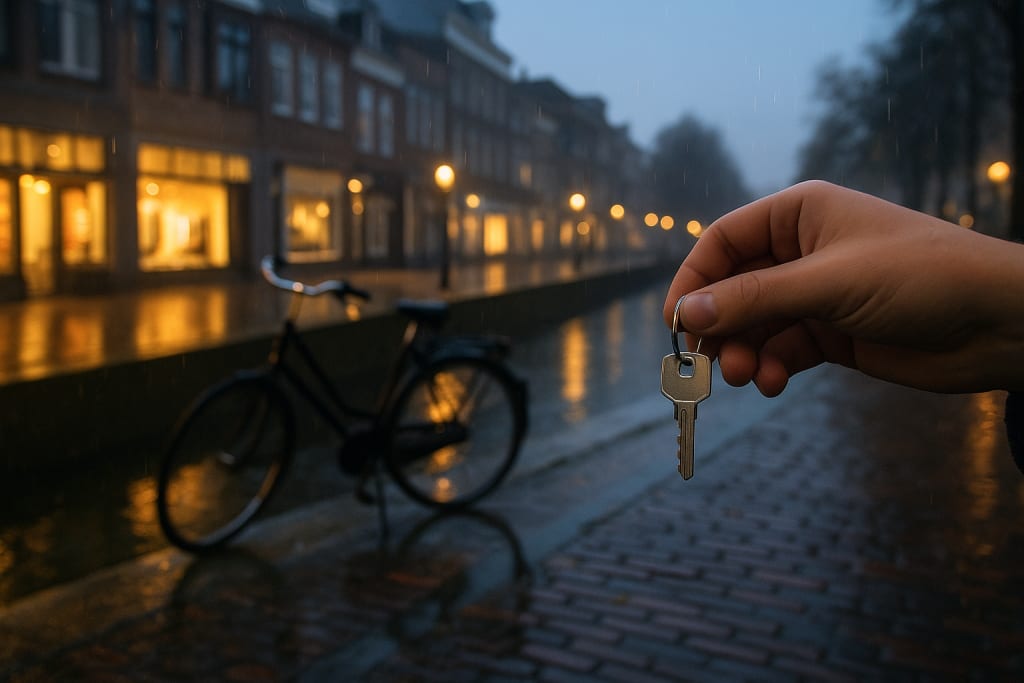
For the final picture: I see my bike parked by the canal after rain. The ground is wet but glimmers. My apartment key lies in my palm, leaving a small mark. I hear the soft hum of the city bells and wheels and footsteps. I feel the drain of the workday but the satisfaction of arrival. I look up at the clouds thinning, let one drop roll down my cheek and think: “Thank you for the lessons.” Then I slip the key into my pocket, press the bike lock, and begin to walk at my pace. Not fast. Not slow. Just mine.
About the Creator
Dimitrios Polychronis
I’m Dimitrios Polixronis, 38. Real stories I lived: what I left unsaid, what I learned later. I write about family, friendships, misfit jobs, second beginnings, and hope’s audacity. No sugarcoating plain words, clear eyes. Walk these pages.
Keep reading
More stories from writers in Writers and other communities.
Why Is Clean, Structured Data Essential for AI-Driven Business Decisions in 2025?
In the world of AI and machine learning, data quality has become a board-level concern. From predictive analytics to real-time decision-making, businesses now rely on AI models to power everything from customer recommendations to supply chain optimizations. However, there’s one crucial piece of the puzzle—structured data.
By Retail Gators4 days ago in Writers



Comments (1)
Nice