
Why Do Automakers Install Speed Governors?
A Look at Manufacturer Practices


Basically, manufacturers don’t want to kill you. Any car that goes 100 mph can turn into a deadly machine, so they install a speed limiter or governor (call it whatever you like) to keep you from exceeding certain speeds. Plus, the engine has its own limits too.
Take a Toyota Corolla, for example. It’s got 140 horsepower and a max RPM of 6,500. Sure, you could push it to 200 km/h or more, but at that point, the engine would be screaming past what the manufacturer recommends. That’s why they make sure those limits aren’t exceeded—for safety and durability. Toyota (and pretty much every other car maker) doesn’t want their cars to get a reputation for falling apart because someone floors them every day. They design their vehicles to be reliable and manageable. If you’re itching to go fast, the racetrack is where you belong.
On top of that, some countries have legal requirements for speed limits. In Japan, for example, cars are capped at 180 km/h, no matter what. I’m guessing that’s based on careful calculations about safety, considering that speeds above that are riskier. There might be other reasons I don’t know about, but you get the idea.
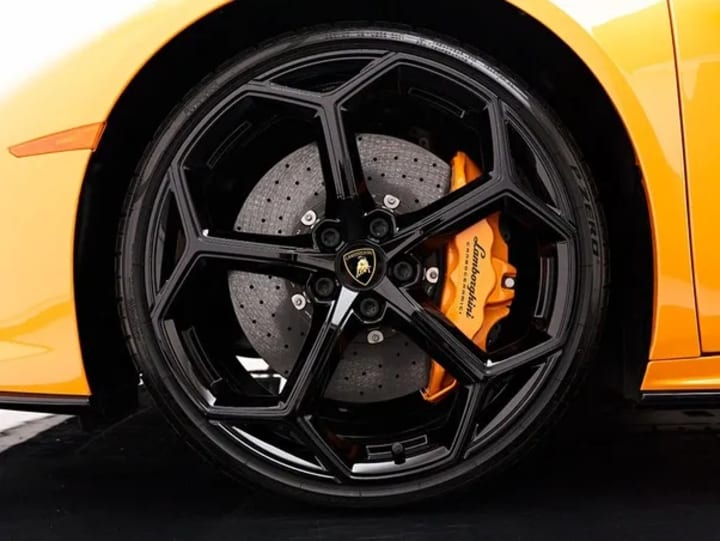
On the other hand, some parts of a car aren’t really designed for high speeds, like the suspension or braking systems. Just think about supercars—they usually have bigger brakes and beefier suspensions to handle high speeds. And it makes sense, right? At those speeds, the car gets “pressed” down by the wind, so the braking system has to be up to the task. Your everyday car? Probably not built for that. Sure, it can brake fine at normal, recommended speeds, but that’s why manufacturers install limiters—to keep you from pushing it too far.
Take aftermarket suspensions as an example. The struts and coils are bigger because they’re built to handle high speeds and more stress. Your regular suspension just can’t keep up with that kind of pressure—it has limits. And while manufacturers can’t exactly stop you from speeding, they can add engine limiters to make sure you don’t go past the car’s maximum safe speed or capacity. Some people bypass those limiters, sure, but that’s uncommon.
There are plenty of reasons for these limits—safety and vehicle design being the main ones. Plus, there’s this unofficial “gentleman’s agreement” between car companies to not make cars that go past a certain speed. Why? Safety, mostly. Imagine street racers zooming around at 300 km/h or more—terrible, right? It’d make the roads dangerous for everyone. And let’s be honest, not everyone needs to drive that fast. Limiters also help the engine last longer by keeping it from overdoing it. In a way, it’s like insurance for your car’s engine.
Some countries just don’t have the infrastructure—or the laws—that make fast driving possible. I mean, not every place is like Europe or Germany, where you’ve got smooth, comfy toll roads. A lot of countries have roads that are narrow, bumpy, or just not built for speed, so driving fast can be pretty risky. That’s why people don’t (or shouldn’t) go fast in those places—it’s just not safe.
It's actually the easiest way for car companies to stop you from going overboard in their vehicles. They can't enforce speed limits directly since the car’s in your control, but they can limit how fast it goes overall. That helps make sure everything under the hood is working properly and keeps you from pushing the car past what it was built to handle. Plus, they’d rather you didn’t turn the thing into a missile and accidentally kill someone. So yeah, it’s basically a safety net they put in place to keep you from going full Fast & Furious.
About the Creator
Pinesthi Mukti Rizky Wibowo
Hi, my name is Eky and here I will write about automotive and other things, most of the writing will be taken from my personal Quora or Medium account. Most of my writing is curated from my Quora account which I have more than 4,000 answers
Keep reading
More stories from Pinesthi Mukti Rizky Wibowo and writers in Wheel and other communities.
Badge Engineering: Does Badge Engineering Impact Car Resale Value?
Badge engineering usually isn’t just done for no reason. It’s often because some brands are more popular in certain countries, so the manufacturer figures the product will sell better with a different name slapped on it. Sometimes, though, it’s about testing the waters — selling a car under another name to see how it does. Honestly, it’s tough to pin down their exact reasons because there are so many possibilities.
By Pinesthi Mukti Rizky Wibowo10 months ago in Wheel
United States Electric Car Market Size to Reach USD 262.9 Billion by 2034 | Exhibiting CAGR of 11.02%
Industry Overview Electric cars, commonly referred to as battery electric vehicles (BEVs) and plug-in hybrid electric vehicles (PHEVs), operate either partially or entirely on electric power. Unlike traditional internal combustion engine vehicles, electric cars reduce tailpipe emissions and lower fuel dependency.
By Ashutosh Srivastava7 days ago in Wheel
What Really Happens to Your Car If You Skip Oil Changes for 10,000 Miles - Asked Car
I’ll never forget the engine teardown that stuck with me from my time at the University of Michigan. A grad student brought in his beat-up Honda Civic nothing fancy, just a daily driver with over 150,000 miles. He figured he was saving time and money by stretching oil changes. “I went maybe 12,000 miles once or twice,” he said with a shrug. When we pulled the valve cover, the sight hit us like a punch: thick, black sludge coating everything, varnish baked onto the camshaft like burnt sugar. The bearings were scored, the chain guides worn down to nubs. That engine wasn’t dying it was already dead. All because the owner treated oil changes like an optional suggestion.
By Cedrick S. Rowan7 days ago in Wheel




Comments (1)
Thanks for the good article.