
The Role of Impact Crushers in Recycling Concrete and Asphalt
This article explores the unique properties of Stone Crusher that make them exceptionally suited for recycling applications and outlines the significant benefits they deliver.
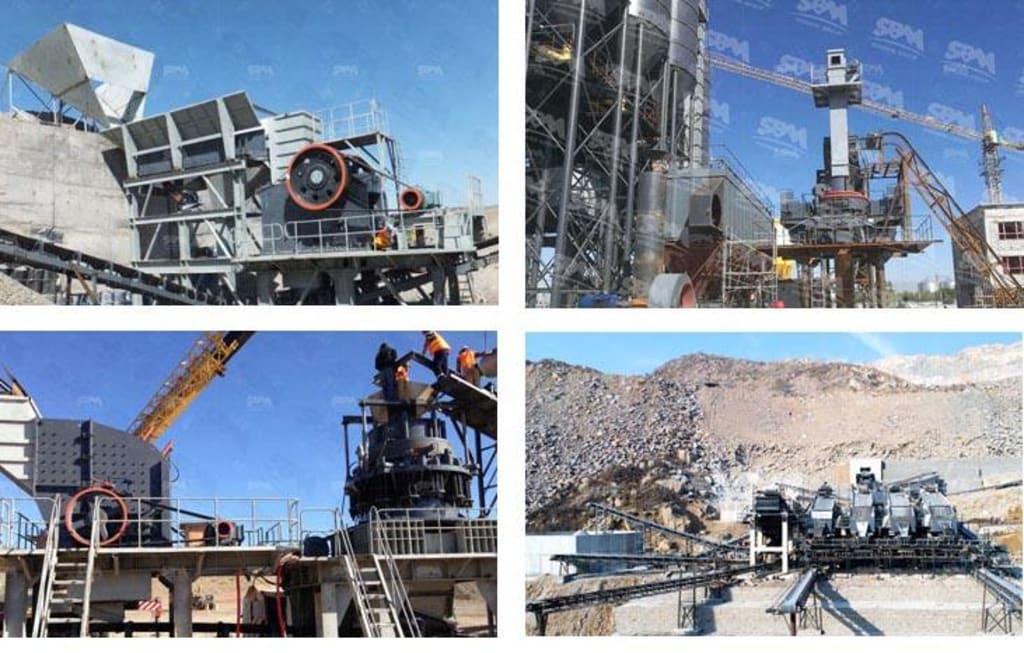
In an era defined by sustainable development and the circular economy, the recycling of Construction and Demolition (C&D) waste, particularly concrete and asphalt, has become a global priority. At the heart of this green revolution is a key piece of equipment: the Stone Crusher, especially impact crusher. Renowned for its high reduction ratio and excellent shaping capabilities, the impact crusher has established itself as the dominant technology for transforming waste into valuable, high-quality aggregate.
This article explores the unique properties of Stone Crusher that make them exceptionally suited for recycling applications and outlines the significant benefits they deliver.
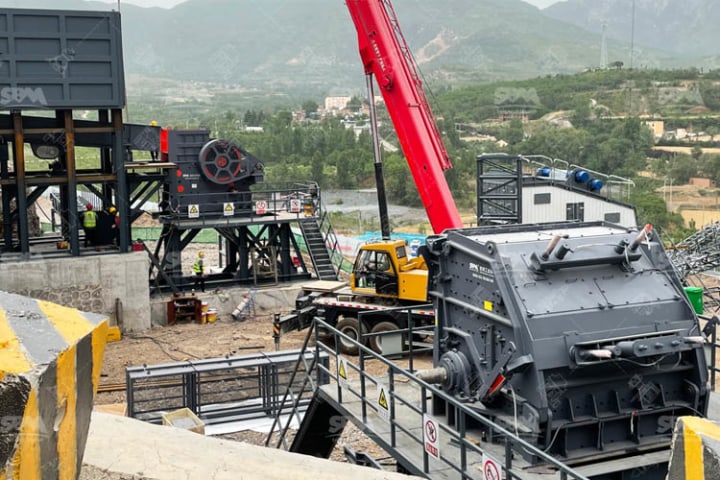
Why Impact Crushers are Ideal for Recycling
Unlike compression-based crushers like jaw or cone crushers that break down material through squeeze pressure, impact crushers utilize high-speed impact force. A fast-spinning rotor equipped with hammers (blow bars) throws the feed material against stationary impact plates (aprons), causing it to shatter along its natural cleavage lines. This fundamental principle offers several critical advantages for processing concrete and asphalt:
1. Superior Liberation of Embedded Materials: Recycled concrete often contains embedded steel rebar, wire mesh, and other contaminants. The aggressive, high-energy impact action is highly effective at breaking the concrete matrix and cleanly separating these metals, which can then be removed by magnets for recycling. This results in a cleaner final aggregate product.
2. Excellent Product Shape (Cubicity): The impact crushing process produces a well-shaped, cubical product. This is a crucial advantage over more flaky or elongated products from some compression crushers. Cubical aggregates are highly desirable as they provide better interlocking in new concrete mixes and asphalt paving, leading to enhanced stability and strength.
3. Ability to Handle Variable Feed: Demolition sites yield materials of inconsistent sizes and compositions. Impact crushers, particularly the Horizontal Shaft Impactors (HSI) commonly used in recycling, are tolerant of this variability and can effectively process large slabs of concrete and chunks of asphalt without pre-breaking.
4. Flexible Adjustability: The final product size and gradation can be easily controlled by adjusting the speed of the rotor and the gap between the rotor and the impact aprons. This allows operators to produce a specific product to meet strict project specifications, from base course material to finer aggregates.
Key Benefits of Recycling with Impact Crushers
The use of impact crushers in concrete and asphalt recycling translates into direct economic and environmental benefits:
1. Reduced Landfill Costs and Environmental Impact: Diverting C&D waste from landfills saves on tipping fees and conserves natural space. It also reduces the carbon footprint associated with transporting virgin materials and disposing of heavy waste.
2. Conservation of Natural Resources: Every ton of recycled concrete or asphalt used replaces a ton of virgin aggregate that would otherwise be quarried. This preserves natural landscapes and reduces the environmental degradation of mining.
3. Economic Value Creation: Recycled concrete aggregate (RCA) and recycled asphalt pavement (RAP) are valuable commodities. They can be sold for use in new construction projects, creating a new revenue stream from what was once considered waste.
4. Lower Material Costs for Projects: Using RCA and RAP is often more cost-effective than purchasing virgin aggregate, providing significant savings on public works, road construction, and private development projects.
Applications of Recycled Materials Processed by Impact Crushers
The high-quality, cubical aggregate produced by impact crushers is suitable for a wide range of applications:
1. Road Base and Sub-base: The primary use for RCA is as a stable, reliable base layer under new roads, parking lots, and foundations.
2. Pipe Bedding: Its well-graded, self-compacting nature makes it ideal for surrounding underground utilities.
New Concrete Production: Processed and cleaned RCA can be used as a partial replacement for virgin aggregate in new structural and non-structural concrete.
3. New Asphalt Production (RAP): Reclaimed Asphalt Pavement can be heated and mixed with new binder and virgin aggregate to produce new asphalt mixes, significantly reducing material costs.
Impact crushers are more than just rock-breaking machines; they are the engines of a sustainable construction industry. Their unique combination of high-impact force, effective material liberation, and superior product shaping makes them the technology of choice for recycling concrete and asphalt. By transforming demolition waste into high-value, specification-grade aggregates, impact crushers play an indispensable role in closing the material loop, driving down project costs, and building a more resource-efficient future. For any operation serious about entering the recycling market or improving its existing process, the impact crusher is not just an option—it is a foundational investment.
About the Creator
Top 10 Pickup Trucks Every Aussie Should Consider in 2026
Choosing the right pickup truck can make a huge difference in daily life, whether you’re hauling gear for work, towing a trailer, or exploring the Australian outback. With 2026 just around the corner, several models are standing out for their performance, reliability, and features. In this guide, we’ll cover the top 10 pickup trucks that every Aussie should consider this year, helping you to pick the right vehicle for your daily life and long-term plans.
By Alec Johnson6 days ago in Wheel
Miss Persephone's Manual to a Seemingly Ordinary Life
Miss Persephone was found at the dining table, her blue eyes swollen, her tears arriving and retreating like the tides of the ocean. Earlier that day, her family had visited her in the retirement home where she had lived for eight years. It was her eightieth birthday.
By Imola Tóth5 days ago in Fiction


Comments
There are no comments for this story
Be the first to respond and start the conversation.