
The Price of Innovation: Why Concept Cars Cost a Fortune (and Production Cars Don’t)
An insight about automotive designs.


The difference is pretty big. Concept cars are usually one-off designs—basically, a way for automakers to show off their ideas and get people interested. Most of the time, they’re just for promotion, though a few actually make it to production.
Since they’re built in tiny numbers, a lot of the work is done by hand. Specialized teams craft bespoke parts, and the whole thing ends up being insanely expensive. Engineers and designers basically get unlimited budgets because these cars aren’t meant to be mass-produced. I mean, no regular buyer is going to drop a few hundred thousand—or even millions—on a concept car. Okay, maybe some would, but you get my point.
One of the biggest differences is the drivetrain. Concept cars usually feature some crazy, cutting-edge engine or propulsion system because engineers don’t have to worry about things like long-term durability. It’s just a concept, so who cares if it breaks down after a few drives? But when it’s time to design a road-legal version, things get a lot more complicated. Durability, maintenance, and practicality suddenly become major concerns—things that don’t matter as much in a concept car.
Basically, concept cars are where designers get to go wild—no real limits, just full-on imagination. They can throw in all kinds of crazy features you’d never see in a regular car, which is why concept cars always seem so cool and futuristic. But that’s the thing—they usually stay as concepts. Most of the time, they never make it to production because they’re just not practical. Manufacturers tend to focus on stuff that’s easier and cheaper to build.
Just look at concept cars—they're often made with super fancy, high-end materials just to look flashy. That’s kind of the whole point. But imagine trying to use those same materials in everyday cars—it’d be a nightmare. They might look awesome in a showroom, but they’re probably not meant for daily use. A lot of those parts just aren’t built for the wear and tear of real roads.
Plus, most concept cars aren’t even designed to be street legal. A bunch of the parts, like the exhaust or lighting setups, wouldn’t pass regulations. They’re there for show, not for real-world driving. If a company actually wanted to mass-produce one of these cars, they’d have to redesign a lot of stuff to meet highway safety standards and legal requirements.
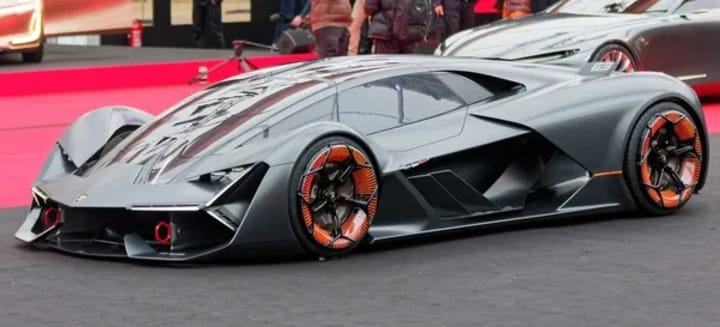
Take the Lamborghini Terzo Millennio, for example. A quick Google search says it cost around 100 million euros to develop, and it probably won’t go into mass production because of all the engineering and cost constraints that make it almost impossible. Most concept cars aren’t designed for daily use; like I said, they’re mainly built to showcase new technology and serve as design studies for future models. The final production car often looks and performs quite differently from the concept.
Now, let’s say someone is wild enough to actually buy the Terzo Millennio. They’d have to shell out at least 100 million euros, since that’s what Lamborghini spent on engineering and development—before even factoring in other costs. That’s insane. For reference, the most expensive car ever sold went for something like 70–90 million USD, so paying 100 million for a single concept car is just ridiculous. And that’s the thing—concept cars usually aren’t meant to be sold. They’re more of a flex from car manufacturers, a way to show off what they can do.
There’s a huge price gap between concept cars and production models. Automakers have to figure out how much people are actually willing to pay for a car, which is no easy task. That’s why concept cars exist—to experiment and study designs before turning them into something consumers might actually buy. And yeah, research and development always cost a ton of money, which is why concept cars are so insanely expensive.
About the Creator
Pinesthi Mukti Rizky Wibowo
Hi, my name is Eky and here I will write about automotive and other things, most of the writing will be taken from my personal Quora or Medium account. Most of my writing is curated from my Quora account which I have more than 4,000 answers
Keep reading
More stories from Pinesthi Mukti Rizky Wibowo and writers in Wheel and other communities.
Why Now? Examining the Tech Behind the E-Scooter Boom
I think the problem is the battery—basically, we've only just gotten to the point where we can make a decent EV battery that works well in scooters. A few years (or even decades) ago, it felt like that was impossible, so most people just saw e-bikes as the only real option. But now, with the whole EV craze, scooters and e-bikes are getting popular again.
By Pinesthi Mukti Rizky Wibowo9 months ago in Wheel
Top 10 Pickup Trucks Every Aussie Should Consider in 2026
Choosing the right pickup truck can make a huge difference in daily life, whether you’re hauling gear for work, towing a trailer, or exploring the Australian outback. With 2026 just around the corner, several models are standing out for their performance, reliability, and features. In this guide, we’ll cover the top 10 pickup trucks that every Aussie should consider this year, helping you to pick the right vehicle for your daily life and long-term plans.
By Alec Johnson6 days ago in Wheel
Car Rental in Dubai for Tourists vs Residents: Key Differences
Both can legally rent cars, but the documentation required, insurance, rental costs, deposit requirements and legal obligations are very similar. Tourists often rent short term with more deposits and less insurance flexibility, while residents are at a lower rate, monthly rent, and better insurance. Understanding these differences can save you hidden charges, fines and coverage gaps.
By Sarath Menon6 days ago in Wheel
Miss Persephone's Manual to a Seemingly Ordinary Life
Miss Persephone was found at the dining table, her blue eyes swollen, her tears arriving and retreating like the tides of the ocean. Earlier that day, her family had visited her in the retirement home where she had lived for eight years. It was her eightieth birthday.
By Imola Tóth4 days ago in Fiction


Comments
There are no comments for this story
Be the first to respond and start the conversation.