
San Diego's EV Infrastructure Gap Creates Golden Opportunity for Mobile Charging Services
As America's Finest City leads California's electric vehicle adoption, traditional charging infrastructure struggles to keep pace with demand.

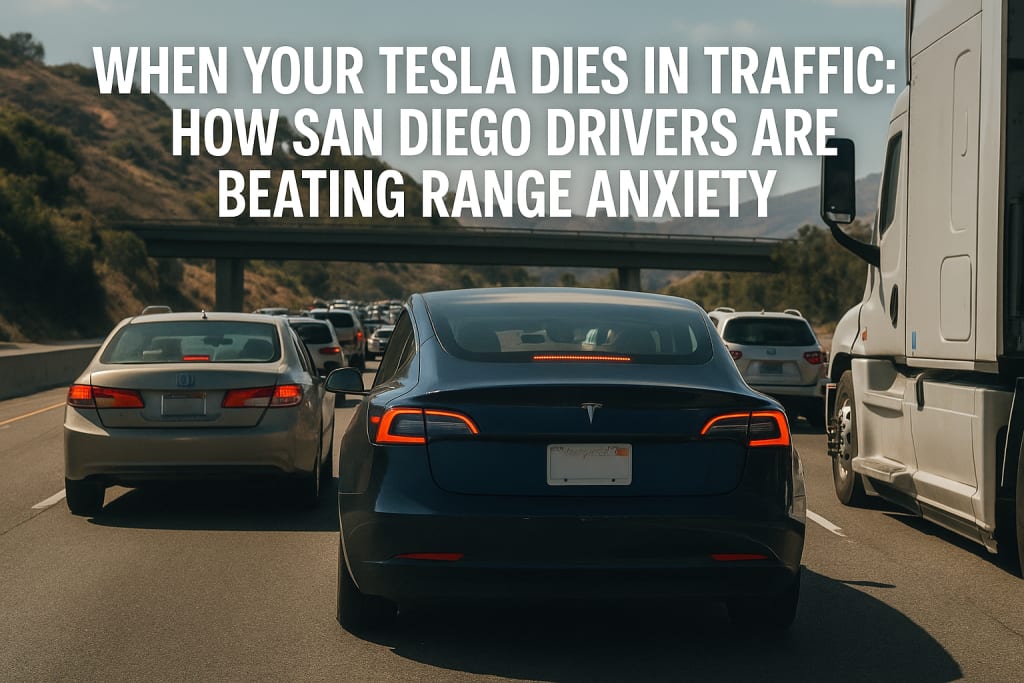
San Diego's electric vehicle revolution is hitting a speed bump, and it's not what you might expect. While the region boasts 2,180 public charging stations—including 228 DC fast chargers—the infrastructure simply can't keep up with the city's rapidly growing EV population. This mismatch between supply and demand has created an unexpected business opportunity that's reshaping how San Diegans think about electric vehicle charging.
The numbers tell a compelling story. California registered 100,671 electric vehicles in the second quarter of 2025, with San Diego County representing a significant portion of that growth. Yet despite having more charging stations than most American cities, San Diego EV drivers regularly encounter the same frustrating scenario: arriving at a charging station only to find every port occupied, broken, or incompatible with their vehicle.
"Range anxiety isn't just about running out of battery anymore," explains Maria Rodriguez, a Carlsbad resident who drives a Tesla Model Y. "It's about whether you'll find an available charger when you need one. I've driven to three different stations before finding one that worked."
Rodriguez's experience reflects a broader challenge facing San Diego's EV ecosystem. The region's charging infrastructure, while extensive on paper, suffers from reliability issues and uneven distribution. Popular destinations like Balboa Park, the Gaslamp Quarter, and coastal areas often see charging stations occupied for hours, creating bottlenecks that discourage potential EV buyers.
This infrastructure gap has coincided with shifting market dynamics that make the timing particularly significant. Federal EV tax credits—worth up to $7,500 for new vehicles—expire September 30, 2025, creating urgency among potential buyers. Meanwhile, California's zero-emission vehicle mandate requires 35% of new car sales to be electric by 2026, ramping up to 100% by 2035.
The convergence of these factors has created fertile ground for mobile EV charging services, which bring power directly to vehicles rather than requiring drivers to seek out fixed stations. Unlike traditional charging infrastructure that requires significant real estate investments, permitting delays, and ongoing maintenance, mobile charging units can deploy wherever demand exists.
For San Diego's tourism-dependent economy, mobile charging offers particular advantages. The city welcomes over 35 million visitors annually, many of whom arrive in rental EVs or their personal electric vehicles. Hotel parking lots, event venues, and popular attractions can now offer charging services without installing permanent infrastructure.
The business model makes sense from multiple angles. Mobile charging services can command premium pricing for convenience while serving underserved areas where traditional charging stations aren't economically viable. They also provide emergency services for stranded EV drivers—a growing concern as the vehicle population expands faster than charging infrastructure.
San Diego's unique geography amplifies these advantages. The region's sprawling layout, from coastal communities to inland suburbs, creates natural service territories where mobile charging can fill gaps between fixed stations. Beach communities like La Jolla and Mission Beach, where parking is limited and installation costs are high, represent ideal markets for mobile services.
The timing couldn't be better for entrepreneurs entering this space. Used EV prices have dropped 8.8% over the past year, making electric vehicles more accessible to middle-income buyers who may not have home charging capabilities. These new EV owners represent a prime customer base for mobile charging services, particularly those living in apartments or condominiums without dedicated parking.
Market data suggests this opportunity extends beyond San Diego. California has installed over 178,000 charging stations statewide, yet demand continues to outstrip supply. The state has invested $1.9 billion in charging infrastructure, with 50% directed toward underserved communities—areas where mobile charging services can provide immediate solutions while permanent infrastructure develops.
The competitive landscape remains relatively open, with most mobile charging companies focused on fleet services rather than individual consumers. This creates opportunities for businesses that can effectively market to retail customers while building relationships with hotels, employers, and event venues.
As San Diego continues its transition to electric transportation, mobile charging services represent more than just a business opportunity—they're a critical bridge technology that can accelerate EV adoption by addressing infrastructure limitations.
Need reliable EV charging in San Diego? BeeCharge delivers fast, professional mobile charging directly to your location. Skip the station hunt and power up wherever you are.
To learn more or schedule the service, call 888-675-9555 or visit beechargedev.com.
About the Creator
Oliver Jones Jr.
Oliver Jones Jr. is a journalist with a keen interest in the dynamic worlds of technology, business, and entrepreneurship.
Keep reading
More stories from Oliver Jones Jr. and writers in Wheel and other communities.
Why Mobile EV Charging is Orlando's Answer to Range Anxiety
Orlando's transformation into a major electric vehicle hub is happening faster than anyone predicted. With over 63,270 electric vehicles now cruising Central Florida's roads—representing a staggering 15.2% increase in just one year—the region is outpacing both national and statewide EV adoption rates. But this rapid growth has exposed a critical gap that's creating both challenges and opportunities for innovative businesses.
By Oliver Jones Jr.7 months ago in Wheel
Why Putrajaya Remains One of the World’s Least Known Government Cities
When people think of Malaysia, the bustling skyline of Kuala Lumpur usually comes to mind. The famous Petronas Twin Towers dominate postcards and travel brochures, symbolizing the country’s modern progress. Yet, few outside Southeast Asia realize that Malaysia’s administrative heart is not Kuala Lumpur at all. Instead, the country’s government operates from a quieter, carefully designed city known as Putrajaya.
By Irshad Abbasi about 17 hours ago in Wheel



Comments
There are no comments for this story
Be the first to respond and start the conversation.