
Rinspeed Squba: World’s First Underwater Car That Actually Works
Dive into the incredible story of the Rinspeed Squba — a concept car that can drive on land and underwater, blending engineering brilliance and James Bond fantasy.
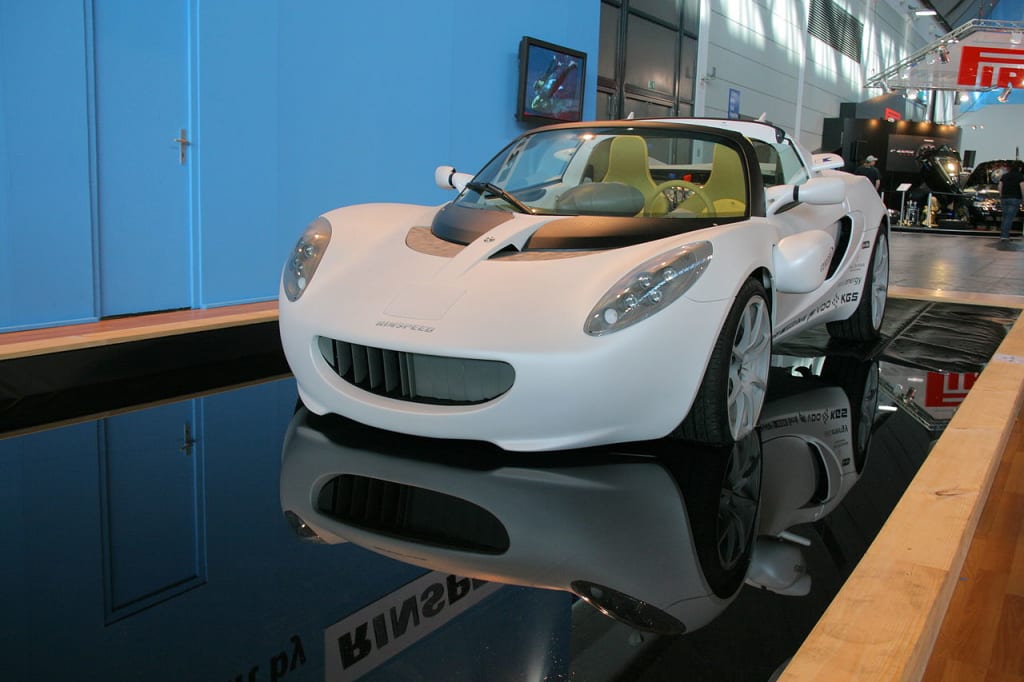
The automotive world has seen a fair share of outrageous concept cars over the years, but none quite as unforgettable and revolutionary as the Rinspeed Squba — the only real diving car in the world. Created by Swiss visionary Frank M. Rinderknecht, the Squba is more than just an experimental vehicle. It is a milestone in the world of mobility innovation, turning the Hollywood fiction of underwater cars into a functional reality. Built over a decade ago, the Squba continues to capture imaginations and remains a centerpiece of automotive history.
The Man Behind the Machine: Frank Rinderknecht
The founder of Rinsspeed, Frank Rinderknecht, has been dedicated to developing futuristic concept cars for over four decades. His journey began 42 years ago, fueled by a desire to rethink the future of driving and mobility. Among all his creations, the Squba stands out as the most iconic one. Though Rinspeed has introduced many bold ideas over the years, nothing compares to the Squba in terms of global attention and media fascination.
From James Bond Fantasy to Engineering Marvel
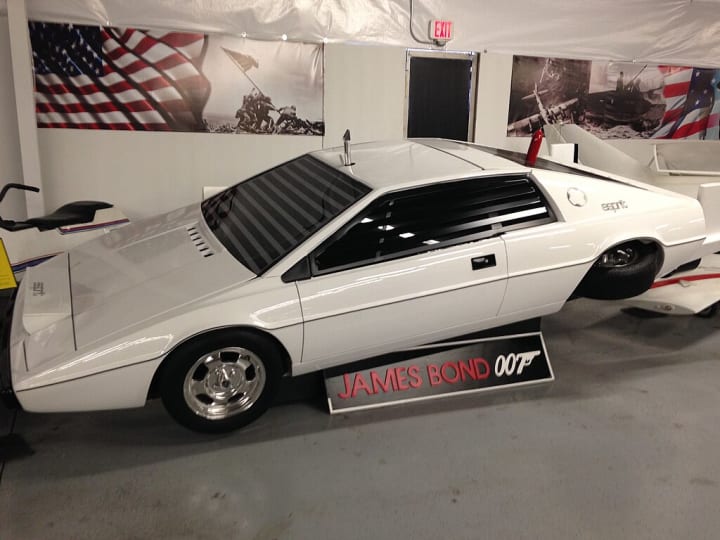
The Squba was inspired by the iconic underwater car featured in the 1977 James Bond film The Spy Who Loved Me. That fictional car, based on a Lotus Esprit, could dive into the ocean and transform into a submarine. However, as Frank points out, it was pure Hollywood illusion — just a visual effect that never truly existed in real life. Rinspeed took on the challenge of transforming that cinematic fantasy into a functioning, real-world vehicle. And they succeeded.
The Lotus Elise Transformation
The Rinspeed Squba is based on the lightweight and agile Lotus Elise. However, its core has been entirely re-engineered to accommodate the complex requirements of underwater driving. Rinspeed replaced the internal combustion engine with an electric motor, which provides the necessary torque for driving both on land and underwater. Using electric propulsion also meant the vehicle would produce no emissions, a critical factor when operating in aquatic environments.
An Open-Air Dive: Engineering with Purpose
One major challenge the team faced during development was the decision between designing a closed or open cabin. While the Bond car was shown as a sealed submarine, creating a pressurized and waterproof cabin in reality would add excessive weight and complexity, and pose safety concerns. Instead, Rinspeed chose to keep the Squba as an open-top vehicle. This bold decision required selecting materials that could dry quickly and withstand constant exposure to water, while also ensuring the safety and comfort of the driver and passenger
A Diving Experience Like No Other
Unlike ordinary diving experience, the Squba allows its occupants to glide underwater while seated in a car — an experience that truly feels out of this world. To breathe underwater, the vehicle is equipped with integrated scuba-style breathing systems that deliver compressed air. As the vehicle submerges, passengers use these systems just like divers would.
Hands-On Underwater Controls
Controlling the Squba underwater is a unique experience. The left hand operates the twin propellers at the back of the car, while the right hand controls the water jets located in the front hood. These jets not only propel the vehicle forward but also assist with steering and directional changes. A digital display provides real-time information about battery levels, speed, and depth, ensuring that the driver can safely navigate underwater environments.
Iconic Design Meets Playful Innovation
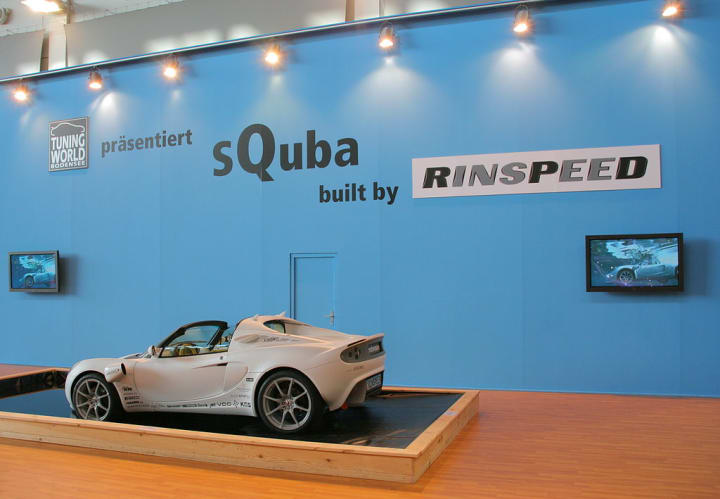
Visually, the Squba is as futuristic as it is functional. The rear of the vehicle houses two large propellers that resemble those of a marine vessel. These are used to maneuver the car beneath the water's surface. Above water, the vehicle operates like any other small electric car, capable of driving seamlessly from road to shoreline and into the depths of the sea. Frank often jokes about the playful elements integrated into the Squba. While James Bond had a fish in his scene when resurfacing, the Rinspeed team humorously chose to include a lobster as part of their demonstration. This small but clever nod to cinematic inspiration is part of what makes the Squba so charming to fans and journalists alike.
Why It Remains One of a Kind
Since its debut, the Squba has attracted massive media attention. During its first public appearance, it was swarmed by journalists from around the world. Despite this enthusiasm and several serious purchase inquiries, Rinspeed chose not to sell or reproduce the Squba. Frank explained that mass-producing such a complex machine — which must drive on land, dive underwater, and resist corrosion — would involve extreme engineering challenges and high risks. Keeping the Squba as a one-off prototype allowed Rinspeed to maintain its uniqueness and legacy.
Even today, more than a decade after it was first revealed, the Squba continues to make headlines and is in high demand for film shoots and photo sessions. Its futuristic design, unmatched functionality, and connection to a beloved movie scene have cemented its place in automotive history.
The Rinspeed Squba is not just a car; it is a bold vision brought to life. It represents the fusion of creative imagination, meticulous engineering, and a passion for pushing boundaries. While others have fantasized about underwater vehicles, Rinspeed actually built one. And in doing so, they created a legacy that goes beyond concept cars — they created a symbol of what’s possible when fiction meets innovation.
About the Creator
5 Best Food Choices at Auto Shows
Attending an auto show is an exciting experience filled with gleaming vehicles, innovative technology, and hours of walking through massive exhibition halls. With so much to see, you need the right fuel to keep your energy levels high. Here are five of the best food choices to enjoy during your next auto show visit.
By Karter Odin6 days ago in Wheel
Self-Driving Cars
If you watched the 2004 Will Smith film ‘I Robot’, you’ll know that a minor plot point is that cars in this future are, by default, self-driving. They can still be driven manually, but this is considered a risky choice which only Smith’s character chooses to do, due to being a fan of such ‘retro’ choices. When his car is wrecked during an attack late in the film, his boss assumes that he crashed due to driving manually (the one time in the film he actually wasn’t). At the time of the film’s release, self-driving cars must have seemed hugely futuristic to help to sell the future setting.
By Joe Morgan6 days ago in Wheel




Comments
There are no comments for this story
Be the first to respond and start the conversation.