
How to Figure Out Chiang Mai’s Public Transport Scene
Follow this guide to understand the public transport scene in Chiang Mai
Thailand is a country visited by thousands of tourists every year. It is a country in Southeast Asia known for its amazing scenery, ancient history and iconic landmarks. Chiang Mai, the cultural capital of Thailand is no exception to the role. With a series of historic temples, lively markets and a mountainous surrounding, this town is ideal for you. Whether you are travelling solo or as a group, it is important to figure out the correct mode of transportation. Navigating Chiang Mai’s public transport system can be a hassle unless you know what to do. With a range of both traditional transport options and modern conveniences, making sense of how to get around efficiently will enhance your experience. Follow this guide to understand the public transport scene in Chiang Mai.
Understanding Chiang Mai’s Transport System
Unlike other parts of Thailand, like Bangkok, Chiang Mai lacks a formal public transportation network such as trains or subways. The city heavily relies on other transportation options to bridge the gap and cover what it lacks in terms of transportation. There are many other transportation options, each with its unique set of pros, cons, and costs.
Songthaews: The Most Common Mode of Transport
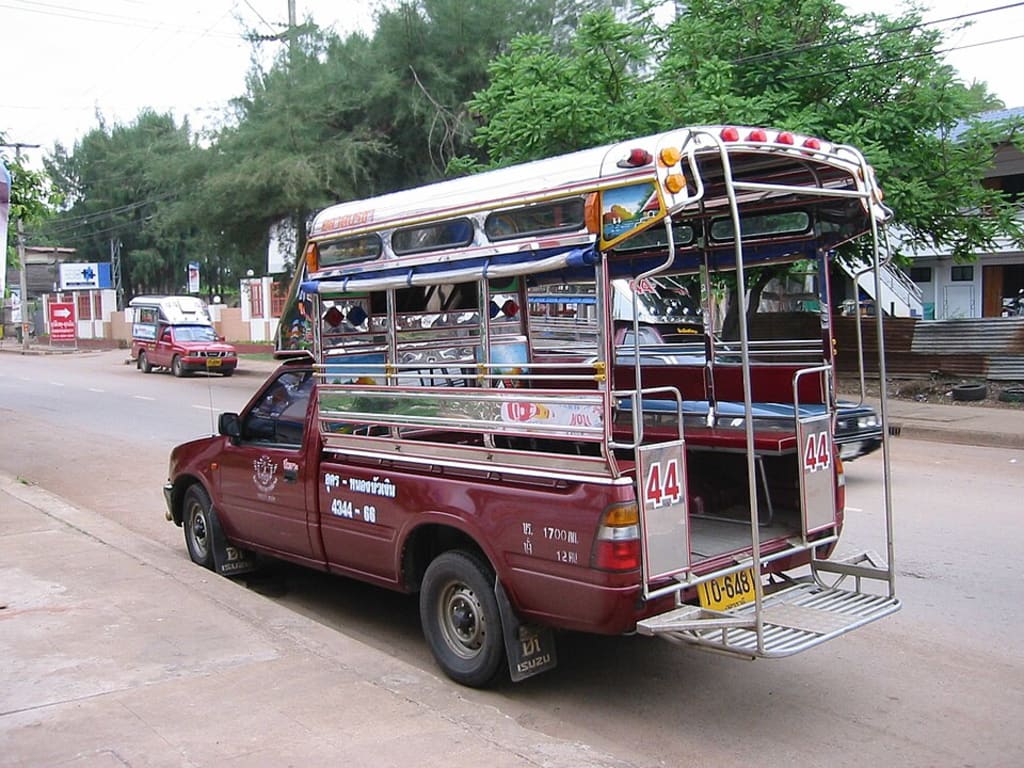
This is the commonest mode of transportation in Chiang Mai. Songthaews are essentially red shared taxis that work as hybrid taxis and buses. They are widely available and quite affordable. Attracting the attention of one of these vehicles is simple: You need to flag them down and tell them your destination.
Pros: This is a relatively inexpensive and widely available method of travelling.
Cons: There is usually no fixed route, so you may need to negotiate with the driver and share the ride with others.
Tuk-Tuks: A Convenient but Pricey Option
Tuk-tuks are motorised taxis that run on three wheels instead of four and are popular for short distances. While they are fun and iconic, they tend to be more expensive than songthaews. Flagging down and negotiating the price is quite easy to do.
Pros: Tuk-tuks are fast and convenient for short distances, especially when navigating traffic.
Cons: Tuks are more expensive than other transport options and can carry only 3 – 4 people at a time.
If you’re heading to Anantara Chiang Mai Resort to stay the night, a tuk-tuk is a quick and enjoyable way to travel within the city centre.
Motorbike Taxis: A Fast Way to Travel
This is an ideal method to travel if you are a solo traveller or you are in a hurry to get to a place. Motorbike taxis can easily navigate through tough spots, especially during the Chiang Mai rush hour.
Pros: Motorbike taxis are a quick and effective way to travel, especially in heavy traffic. They can even pick you up from hotels in Chiang Mai, which is quite convenient.
Cons: It is not the most ideal mode of transport for those with large luggage.
Public Buses: A Budget-Friendly Option
The public buses are an affordable way to get around Chiang Mai, and they are constantly increasing in number. Unfortunately, many tourists don’t opt to use buses. Using the bus system is quite effortless, as it only requires you to come to the nearest bus stop. With that being said if you need to plan, use the RTC app.
Pros: Public buses are a very inexpensive option, and most of them are air-conditioned, which is an added benefit.
Cons: Unfortunately for some, the routes the buses take are limited, and the frequency of buses travelling in the same direction can be low at times.
Buses are best for those travelling from Chiang Mai International Airport to major locations like the Old City and Nimman area.
Bicycles & Motorbike Rentals: Ideal for Adventurers
If you prefer exploring at your own pace, renting a bicycle or motorbike is a great option. Rental shops are available all over the city.
Pros: Flexibility to explore off-the-beaten-path locations.
Cons: It requires confidence in navigating Chiang Mai’s roads, and you shouldn’t forget always to wear a helmet.
About the Creator
Top 10 Pickup Trucks Every Aussie Should Consider in 2026
Choosing the right pickup truck can make a huge difference in daily life, whether you’re hauling gear for work, towing a trailer, or exploring the Australian outback. With 2026 just around the corner, several models are standing out for their performance, reliability, and features. In this guide, we’ll cover the top 10 pickup trucks that every Aussie should consider this year, helping you to pick the right vehicle for your daily life and long-term plans.
By Alec Johnson3 days ago in Wheel
Car Rental in Dubai for Tourists vs Residents: Key Differences
Both can legally rent cars, but the documentation required, insurance, rental costs, deposit requirements and legal obligations are very similar. Tourists often rent short term with more deposits and less insurance flexibility, while residents are at a lower rate, monthly rent, and better insurance. Understanding these differences can save you hidden charges, fines and coverage gaps.
By Sarath Menon3 days ago in Wheel


Comments
There are no comments for this story
Be the first to respond and start the conversation.