
From the Low Banks of the Cumberland River to the High Banks in the 16
Greg Biffle's legacy extends beyond the race track

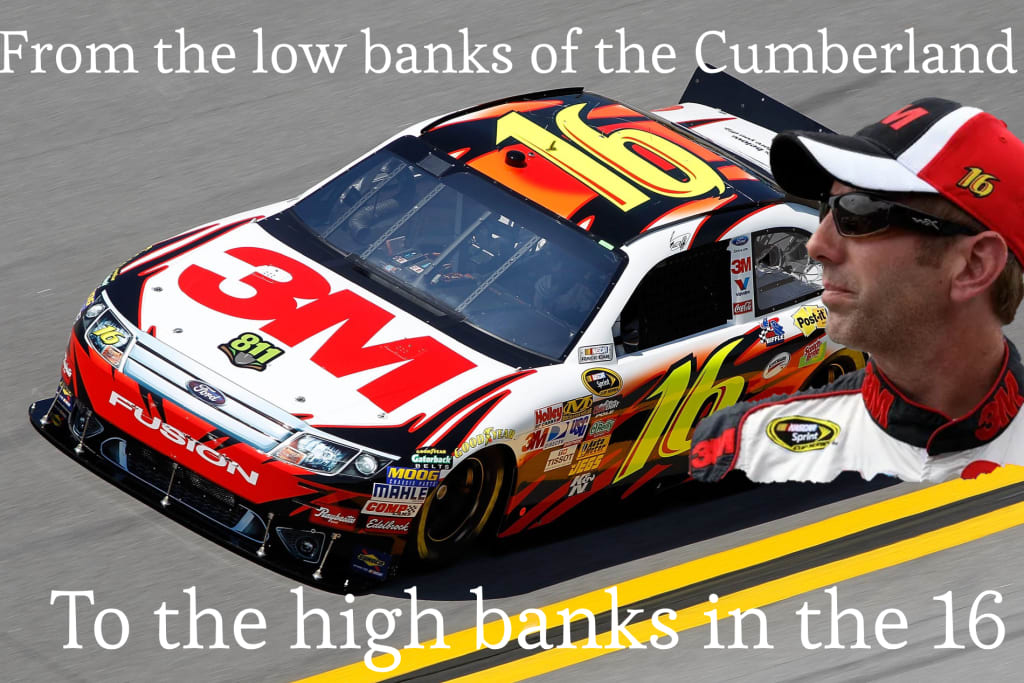
One of the best abilities to have is adaptability. Nobody exemplified that more than Greg Biffle.
It didn't matter what he drove, Biffle would find his way to the front of the field. The winningest driver in the 16 car, he totalled 19 wins in the cup series alone.
Through his career, Biffle won 56 races and hoisted two championships. A life cut too short, he left a legacy on the track and off that few can hope to replicate.
Biffle's story starts like most stock car racers, on the short tracks. But unlike many of those other drivers, he did it across the country from them. Biffle was born in Camas, Washington, far from the drivers that cut their teeth in the North Carolina circuit.
All the same, he started to gain attention in the 1995-96 season of the Winter Heat Series, the first of the four seasons of the Late Model championship. Biffle dominated the season, taking the title and immediately catching the attention of one person, Benny Parsons.
The 1973 Winston Cup Champion, winner of 21 Cup Series races, Parsons had helped the likes of Bill Elliott, Kenny Wallace and Mark Martin get their footing in Nascar. And he made a call to a long time friend, Jack Roush.
Roush had broken onto the stock car scene with the success of Mark Martin in the Cup Series and started to make some headway in the lower series as well. And for the 1998 season, The Cat in the Hat made a call to the 564 area code.
Biffle entered the 1998 season Craftsman Truck Series season driving initially the number 80 for Rousch. At the Walt Disney World Speedway, he immediately turned heads, finishing fifth. He then switched numbers to the 50 and finished fourth at Homestead, a track he became very familiar with over the years.
In that first year, Biffle racked up 12 more top 10s, six top fives and a best finish of second twice, at New Hampshire and Phoenix. He finished eighth in the standings as the highest finishing rookie, finishing as the Rookie of the year title and falling to Ron Hornaday Jr. in the title race.
The 1999 season started quietly for Biffle, recording a top 10 at Evergreen Speedway and fifth at Martinsville. But then there was the break through.
The Memphis 200 was held on May 8th, 1999 appropriately at Memphis Motorsports Park. Biffle won the pole but Kevin Harvick took the lead on the opening lap. Biffle battled his way back and got the lead for the first time on lap 56 before Lonnie Rush Jr. took the lead on lap 64. Harvick would cycle back to the lead but Andy Houston would take it from him on lap 122. Then a caution flew on lap 133 for a spin from Tim Steele.
The race went back to green shortly after, as he started to pull away with 63 to go. But a late caution for a spin threw a late wrench as he hunted for his first win.
Biffle took the green with two laps to go and held the bottom to hold off Harvick to take his first career win.
From there, the floodgates opened. Biffle racked up wins at Portland, Milwaukee, Nazareth, Michigan, Indianapolis Raceway Park, Gateway, Richmond and Las Vegas. Throughout the season, he had only three finishes outside of the top 15.
That led to Biffle holding the points lead going into the final race of the season at California Speedway. He was up by 21 points on Jack Sprague and Dennis Setzer. An early race wreck eliminated any title hopes of Setzer's, leaving the battle between Biffle and Sprague.
The final restart of the race came on lap 99. Sprague was in third with Biffle in seventh. One moved forward and the other moved back. Unfortunately for Biffle, it was Sprague that was able to take the lead. Biffle was held up by a lapped truck and stayed in seventh as Sprauge would take the win and the championship by eight points.
As the century turned, it was time for a slight refresh at Roush. Biffle had been teammates with Joe Ruttman and Mike Bliss in his first two seasons, but it was time for him to play mentor. Rookie Kurt Busch came in as the teams second driver in the 99 truck to go with Biffle. And it ended up being the two that would battle it out for the championship.
They mirrored each other through the early season, neither gaining a major advantage. Biffle was the first to find victory lane, winning at Portland while Busch finished second. And from there, his lead continued to grow.
From Gateway to the season finale, Biffle finished worse than fifth just twice while rattling off wins at Texas, Kentucky, Watkins Glen and Michigan, along with a stretch of second places at Chicago, Richmond and Dover to win the title by over 200 points to his teammate.
The following season, Biffle was promoted to the Busch Series and his car number increased by 10 to the 60. As a one car team, Biffle was able to contend through the weeks. He finished third at Rockingham and a back-to-back of seconds at Las Vegas and Atlanta. His maiden win in the series came in his rookie season, taking the win at Nashville the first race held at the track for the series.
He added wins at Nazareth, Milwaukee, Charlotte and Phoenix to keep him in the title fight with Harvick, Jeff Green, and Jason Keller. However, when Biffle had bad races, Harvick was able to capitalize. Biffle finished 22nd at Daytona, Harvick was second. A 30th at Bristol was matched by a 7th. 37th at Richmond? 5th from Harvick. 43rd at Michigan? That was a second for Happy.
But it was rookie of the year honors for The Biff, beating out Scott Wimmer and Jamie McMurray.
2002 was a different story for Biffle. He remained in the Busch series in the 60 and was a one car organization. But he was the car to beat.
Through the first 13 races, Biffle had four podiums and another top five. Then started the best stretch of his career. He won at Dover, Milwaukee, Gateway and Indianapolis Raceway Park coupled with four seconds, a third and an eighth. Biffle went into Phoenix with a massive points lead over Keller and a third place finish locked up his championship, the second time in as many series that he would be taking home the title.
Biffle made some spot starts in the Cup series in 2002 as well, four for Jack Roush in the 16, four for the 55 of Andy Petree and two for Petty Enterprises. He drove for all three manufacturers at the time that season in Ford, Chevy and Dodge, something very few, if any, other drivers coud say.
Biffle went full time Cup racing in 2003, joining the Roush family with Mark Martin, Matt Kenseth, Jeff Burton and his old Truck Series teammate Kurt Busch.
His first year was quiet for the most part, failing to qualify for Las Vegas before a fifth at Bristol. A majority of his season was spent in the middle of the pack as he got used to the biggest level of stock car racing. But then the summer race at Daytona came around. As with most racing on drafting tracks, the lead changed hands multiple times throughout the contest. Dale Earnheart Jr. got the lead for on lap 127 before Jimmie Johnson took it on 139 for pit stops. But the 48 car's time up front was short as he also pitted.
Biffle, being pushed by his teammate Kenseth, took the lead on lap 140 for the first time. As fuel strategy played out late, Biffle was the lone car that could make it to the end on gas. He stayed out and continued to lead as others either ran out or pitted. On the final lap, Bobby Labonte came out of turn 2 and was out of fuel. Biffle, who was able to grab onto a draft from the back of the pack, held on to take the checkerd flag for the first time in history.
His second season in the Cup Series saw him pick up two wins, at Michigan and Homestead. His sophomore season resulted in four top fives and eight top 10s. But unlike in the Busch and Truck series, Biffle didn't bring home a championship.
Yet the 2005 season saw him right on that doorstep.
He started the season with a win at California, followed by strong runs at Vegas, Atlanta and Bristol before another win at Texas. Add in wins at Darlington, Dover, and Michigan and Biffle was sitting well in the points around the halfway point.
But still he trailed Jimmie Johnson, 2,173 to 2,124. Yet that didn't matter with the Chase format. After the first 26 races, the top 10 in the points reset to 5,000, plus bonus points per win and regular season championship bonus for Tony Stewart.
Biffle started with 5,045, trailing only Stewart by five points. At New Hampshire, Biffle finished fifth but was behind Stewart, who was second that day. The standings were flipped at Dover however, as Jimmie Johnson, Rusty Wallace, Ryan Newman and Mark Martin all jumped the top two. Stewart returned to the top of the standings with a win at Talladega. But Biffle needed to start clawing his way back up.
He would do just that at Kansas and Charlotte with back-to-back podiums placing him third behind a tied Stewart and Johnson by 11 points. No matter what happened in the remaining races, the pair seemed to have a step ahead of Biffle. A win at Homestead jumped him to second in the final standings just to finish 35 points behind Stewart.
2006 and 2007 were a lot quieter for Biffle. He won at Darlington and Homestead in 2006 and again at Kansas in 2007. But it was in 2008 where he found his stride once again. Through the first 16 races, Biffle was in the top 20 all but twice with five top 5s. His consistency led him to a spot in the Chase for the first time in two years, yet he had yet to find his way to victory lane. He entered the Chase with a five way tie for eighth.
But then the flood gates opened. Biffle took the win at New Hampshire and Dover to sit 10 points behind his teammate Carl Edwards and tied with Jimmie Johnson to make it a three driver race. The three finished 1-2-3 at Kansas with Biffle taking the final spot of the trio. But once again, he was unable to claim the title, finishing third to Johnson and Edwards.
Biffle would run full time in the Cup Series until 2016, always posing a threat when the series went to the mile and a halfs or larger. His sucess at places like Homestead and Michigan exemplify his success and consistency at those tracks. Yet he never was able to capture the magic of the 05 or 08 seasons.
While he never hoisted that elusive Cup championship, Biffle is one of just three drivers to have won the Xfinity and Truck series champions. The others being Johnny Benson Jr. and Austin Dillon.
But Biffle's biggest impact in life came off the race track. In 2004, Hurricane Helene hit North Carolina and completely changed the state along with several other states. Portions of roads were submerged, damaged or completely ripped out. Houses were destroyed and countless lives were lost. Many sprung into action, including Greg Biffle.
Biffle had become a private pilot in his spare time and owned a private helicopter. He sprang into action, using his helicopter to help save countless others. Biffle delivered supplies, food, water, anything that the people who were stranded needed as he could get closer to ground in order to make contact with people.
In a time where several had just had their lives changed and altered forever, Biffle brought them a light. Time and again in life there are moments where cliches that fit the situation perfectly. Sometimes heroes don't wear capes, they wear fire suits.
Biffle's kindness out of his own heart led to others jumping to action through any means possible. He had inadvertently started a movement to help communities across the state get back on their feet.
This was nothing new to Biffle however. Not only was he more about taking care of others rather than himself, he did it his way. Quietly. For those who don't know stock car racing, his name isn't setting off any alarms. Those who are fans, they knew he was never into racing for the glory.
Biffle again sprang into action again as hurricane Melissa hit Jamaica the following October. But just as the world started to see the generosity and care for another human Biffle had, he was taken away.
On December 18th, a Cessna Citation 550 crashed at Statesville Regional Airport, killing seven. On the aircraft were Biffle, his wife Cristina, their children, pilots Dennis and Jack Dutton along with Craig Wadsworth. A life that had finally started to touch others had been taken away.
Biffle's impact on the world as a whole may have been brief but it showed just how much he cared about his fellow man, regardless of race, gender or ideology. So long as he was able to, Biffle was going to help. If it meant helping the community, Biffle was going to assist others.
Many know Biffle for his performance and success on the race track. But it was his impact off of it that really touched lives.
In a way, it was as if the Nascar world wanted a way to say thank you and give fans a reminder of what Biffle has meant to them during his time both on and off the track. In the season opening Clash at Bowman Gray Stadium, Ryan Preece, driving for Roush Fenway Keslowski in the number 60, Biffle's old team and number, took the checkered flag to win his first race. And in some way, shape or form, Nascar fans around the world cracked a smile and let out a breath they may not have known they were holding in. He may be gone, but the impact of Greg Biffle will not be forgotten.
Greg Biffle was a rare breed of stock car racer and human being. He didn't chase it for the lights or the glamour. He did it because it was fun and he enjoyed it as a racer. His impact on the track was strong but what he did off the track, helping others in their times of need rather than just sit around and sign a check, that's the memory we fans should always carry with us.
About the Creator
Keep reading
More stories from Ben Hercik and writers in Wheel and other communities.
The resurgence of Richard Childress Racing
One of the teams that has been struggling these past few years in Nascar is Richard Childress Racing. A team that has housed the likes of Ricky Rudd, Dale Earnhardt, Kevin Harvick and Jeff Burton in the past has struggled since losing Harvick to Stewart Hass before the 2014 season. Since then the team has recorded only three wins, 37 top fives, 104 top 10s and outside of Ryan Newman’s runner up finish for the championship in 2014 (which was the year Harvick won his championship) their best points finish was 11th twice.
By Ben Hercik6 years ago in Wheel
The beast
The beast It was early in the 1970`s and I was the geeky kid at school. You know the one that carried a briefcase instead of backpack. The occasional saving grace that kept me from complete social isolation was my brother. Six years my elder and a biker. He would, when the mood strike him, pick me up outside the gates of my all boys secondary school on his motorbike. This was not just any bike, this was "the beast". A full on cafe racer from the 1960`s These were the days before the Japanese had taken over. Before fiberglass fairings and disc brakes and engines the size and weight of a small house.. A Triumph 110, the precursor to the Bonneville although any resemblance to the factory model had long since past. The 650cc engine had been fitted with 11-1 compression pistons that made kick starting it a risky art form. Twin carbs and a 2 into 1 swept up exhaust. Four leading shoe front brakes that left the front wheel spokes no longer that a large match stick Twin leading shoe brakes on the back and an aluminium 5 gallon fuel tank. Clip-ons and rear sets forced the rider into a near prone position hunkered down with his chest embracing the tank. The whole sight was a vision of black and silver, aluminum and chrome with just one nut on the front wheel painted red as a highlight. Like I said, a classic 60`s cafe racer. Dad said "Son one say that bike will kill you". He could not have been more wrong.
By kelvin matchett3 days ago in Wheel
Ferrari’s New Jony Ive–Designed EV Is Swathed in Glass and Aluminum
Ferrari’s New Jony Ive–Designed EV Is Swathed in Glass and Aluminum Subtitle: How a legendary automaker and Apple’s former design chief are reshaping Ferrari’s future with an electric supercar that blends Italian performance with minimalist design
By Sadaqat Ali7 days ago in Wheel


Comments
There are no comments for this story
Be the first to respond and start the conversation.