
F1 Engine Comparison: Are All Power Units Truly Created Equal?
Everything is equal on race.


Most racing events do not allow teams to have faster motors; all must be the same or in uniform to make the race more interesting. In Formula 1, it seems the rules are stricter.
For now, F1 uses a 1.6L V6 engine assisted by an electric motor, where it can produce up to 1,000 HP depending on the team, meaning maybe some produce 950 HP and others close to 1,000 HP, but what is clear is that there is nothing more than that. I think every team must provide dynotest documentation to the FIA or related racing body before they can be cleared to race, and I imagine those dynotest sessions are guarded by the office; they obviously don't want to miss out if a team cheats anyway.
And almost all the specifications are the same, where they must follow FIA standards. Maybe there are some differences in how they make their engines, but in general everything is the same; they are not allowed to use or do anything outside the handbook. Once again, that is to make the race interesting; if one team uses a faster engine, they will dominate the race, and that is cheating. There are many examples of racing teams being sanctioned because of this.
Don’t think you can outsmart the FIA or the scrutineers —they’re watching everything closely to make sure there’s no loophole you can squeeze through. Plenty of teams have been disqualified for trying to cheat, and that’s not something to mess around with. In the end, everything has to be consistent across the board, and no one wants to get caught slipping.
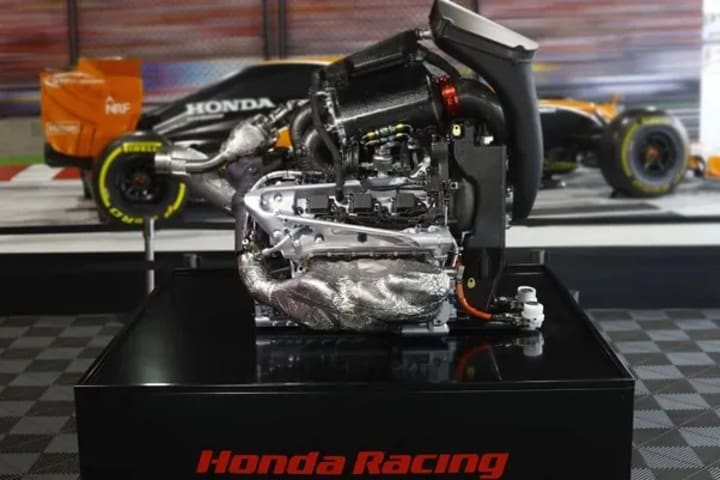
But maybe not everyone ends up with the same results—and that’s okay. Let’s say the max power limit is 1,000 HP. As long as teams stay under that, they’re good. One team might hit 950 HP while another gets closer to 1,000 HP, just because they’ve got more experience with engineering or tuning. So yeah, results can vary, and that’s mostly because the tech and tuning setups are different.
I think the bigger reason, though, is the spare parts. Even if most teams are supposed to use the same parts, each manufacturer has their own little secrets. Some use special materials or unique designs, which can affect power output—some parts might be slightly bigger or smaller. That’s why everything needs to be standardized to keep things fair and competitive. There’s no way the FIA or F1 is going to let one team dominate just because they’ve got some trick up their sleeve.
Still, most things are kept pretty equal, and I think that’s true across most races. There’s always a set of rules or guidelines everyone has to follow to keep the playing field level. The results might still vary, sure, but that’s just racing—there are a lot of variables. That’s why most events set a hard cap, like a horsepower limit. Even if the specs are the same, the final output can still be a bit different. As long as they stay under that limit, it's fair game.
And it’s not just F1. Almost all racing series have rules like this to keep things exciting. I mean, if one team was way faster than the rest, it wouldn’t be fun to watch. We’ve seen this happen before—some team gets a clear edge, and then they get reined in. It’s all about keeping things competitive and fair for the sake of sportsmanship.
So yeah, in most racing events, all cars have to follow the same basic specs. F1’s the same way. It’s what makes the races actually fun and competitive.
About the Creator
Pinesthi Mukti Rizky Wibowo
Hi, my name is Eky and here I will write about automotive and other things, most of the writing will be taken from my personal Quora or Medium account. Most of my writing is curated from my Quora account which I have more than 4,000 answers
Keep reading
More stories from Pinesthi Mukti Rizky Wibowo and writers in Wheel and other communities.
Formula 1 Car Speed & Horsepower: How Fast Can These Beasts Really Go?
F1 cars race on over 20 different tracks worldwide, each with unique characteristics. This makes it tricky to pinpoint a single top speed. Some tracks have long straights where cars can really open up, while others have tighter corners and lower speed limits. Plus, teams constantly adjust the car’s setup—suspension, aerodynamics, and engine settings—to suit each track. So, while an F1 car can theoretically reach very high speeds, the actual top speed achieved varies greatly depending on the circuit.
By Pinesthi Mukti Rizky Wibowo10 months ago in Wheel
A Historic Waterwheel Returns to Family Roots Along the Riverbank
The story of a Historic Waterwheel Returns to Family Roots is more than a tale of wood and water. It is a story of memory, family honor, and deep love for local history. For many years, the old waterwheel stood silent near the bend of a quiet river. Time and storms had worn it down. The wood had faded. The iron had rusted. Yet the spirit of the wheel never faded in the hearts of the family who once built and cared for it.
By Grady Gaston6 days ago in Wheel
Why Elon Musk Keeps Cutting Tesla Prices And What It Means For The Future Of EVs
The discounts keep coming, the stock keeps shaking, and the EV future suddenly feels a lot less predictable I remember the first time I realized Tesla had quietly dropped the price of a car I’d been obsessively speccing out.
By abualyaanart4 days ago in Wheel




Comments
There are no comments for this story
Be the first to respond and start the conversation.