
eSAF: Putting Consumers at Risk — How a Leading Brand Failed
Maybe the title above is a bit confusing for readers who don’t live in Indonesia. Allow me to explain in a minute.


Honda Indonesia, or AHM, introduced the eSAF frame for its scooter lineup in Indonesia. The frame is said to be stronger and lighter thanks to a special type of alloy. Since it’s lighter, it’s expected to boost performance—especially for lower- or mid-range scooters in Indonesia. Honda started using the eSAF frame on its scooters from the 2020 model year onward, and they’re still using it today.

According to Honda’s website, the eSAF frame was designed to give consumers a budget-friendly, high-performance scooter, thanks to its lightweight and ergonomic build. If you look at the frame, the riding angle is sharper, which supposedly makes the scooter more comfortable to use.
It’s also meant to make maintenance and spare part replacements easier—or at least, that’s what they claim. What’s clear is that the eSAF frame is used on nearly all of Honda Indonesia’s scooter models (except for a few flagship types or anything above 160 cc). You’ll mostly see it on 110cc scooters. Most Indonesians use scooters for commuting, and affordability is key—you can get a brand-new Honda BeAT in Indonesia for under USD 1,500.
Honda has been the top player in Indonesia’s motorbike market for decades, along with Yamaha. Like in many other countries, Honda is trusted because it makes bikes that match what people actually need—cheap parts and great fuel economy. Honestly, I think that’s why people choose Honda pretty much everywhere.

So, the issue is with Honda’s eSAF frame—it tends to rust pretty easily and can eventually break with regular use. This has caused a huge stir in the Indonesian motorbike scene, especially since Honda scooters are the top-selling bikes there. Naturally, a lot of people are worried about their safety (which makes sense—nobody wants their motorbike to snap in half while riding, right?). People have been calling on the government to investigate and hold Honda accountable for the whole thing. From what I’ve seen, a few people have actually gotten injured because the frame gave out, and there are tons of photos floating around on social media showing the damage.
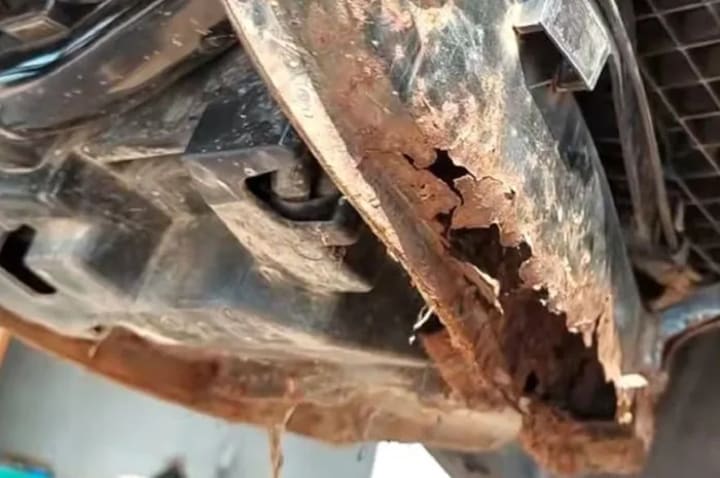
Some folks think the core problem is with the frame material itself—they say it was downgraded on purpose, probably to cut costs. On top of that, the anti-rust coating isn’t applied thoroughly, so the frame rusts out more quickly. Apparently, the water drainage design inside the frame isn’t great either. Water gets in, stays trapped, and that just speeds up the rusting. There have been cases where the frame started rusting out in less than two years of use.
Naturally, Honda hasn’t really said much about all this. Instead of taking responsibility, they offered a replacement frame for around $100 to those whose bikes broke—which is pretty odd, honestly. When have you ever seen a motorcycle company just casually sell a new frame to replace a faulty one? Usually, they’d issue a recall, especially since this isn’t an old product.
But yeah, no recall so far. Over time, the whole eSAF situation has kinda faded from social media. Still, some people are out there fighting for their rights, especially the ones who’ve already had their frames break. As of now, though, there’s still no real resolution in sight.
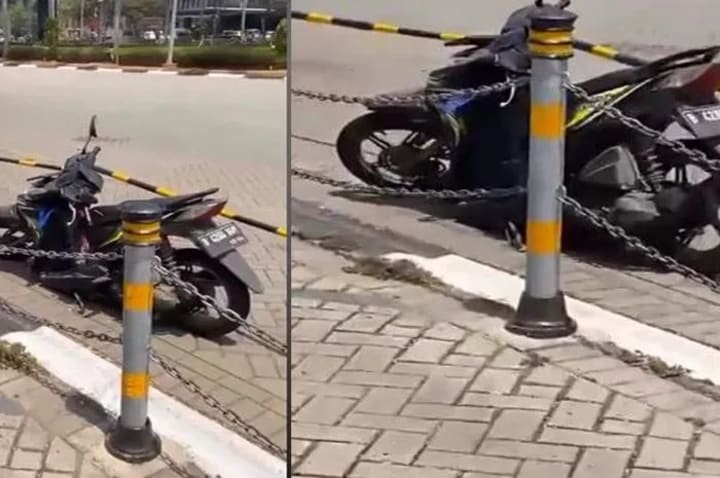
This all happened because Honda and a few other big brands have basically become cartels in the motorcycle world—especially in Indonesia. They sell so many bikes that stuff like this doesn’t even make a dent in their sales.
They probably feel there’s no real need to do a recall because it’s not profitable, and maybe there aren’t that many damaged units (even though that’s clearly wrong—people’s lives are at stake). But they know they can get away with it. Let’s be honest: Honda’s a cartel in the Indonesian auto scene. They’ve got a lot of “hands,” or influence, across the industry. Just look at which bikes sell the most in Indonesia—it’s pretty easy to figure out what kind of moves they’re making based on that.

A similar case (though not as dangerous) is with a Yamaha motorbike that has a flawed engine design where the oil slowly burns off and runs out over time. This issue has been happening since 2015, and lots of people have complained about it. But unless Yamaha—one of the top manufacturers in Indonesia—redesigns or fixes the engine, they'll just keep selling tons of bikes anyway, since consumers don’t have many other options. Sure, there are brands like Kawasaki and Suzuki, but they mostly operate in niche markets.
This kind of cartel-like behavior has been going on for decades. These two big manufacturers have been pretty stingy when it comes to innovation, and the public gets stuck with cheap bikes that are underpowered and lacking features—yet still priced high. I get that in the end, demand drives everything, but if these companies weren’t acting like a cartel and “regulating” the market from within the government, there could be way more brands and options for people to choose from.

The manufacturer won’t do a recall because it takes a lot of time and money. This whole situation is a bit like the Takata airbag scandal from a few years ago—it almost bankrupted Takata.
In countries with strict regulations, maybe the manufacturer wouldn’t be able to get away with this. But in developing countries, they’ve got a lot more “freedom” thanks to their market share and the power to lobby the government.
The lack of strong regulations—combined with the fact that they basically dominate the market—makes them feel untouchable. So when stuff like this happens, sure, some people will stop buying Honda bikes. Used prices for certain Honda scooters with eSAF frames have dropped. But despite that, they’re still selling a ton of new ones. Why? Because people don’t have many other options. Switching brands means sacrificing peace of mind—fewer service centers, lower resale value, etc. So Honda doesn’t feel any real pressure to act. People keep buying whatever they put out.
To sum it all up: Honda has basically turned into an automotive cartel, helped along by a government whose safety standards haven’t been updated in decades. They’re totally comfortable in this position because they dominate sales in Indonesia. It’s a different story for Yamaha or Suzuki—when there’s an issue, they move fast. Take the Yamaha MT-25, for example: it had a problem with the clutch housing, and Yamaha issued a recall right away to avoid losing market share. But Honda? They just chill because their bikes keep flying off the shelves anyway.

A similar case happened in the U.S. with the Ford Pinto back in 1972. There was a flaw in the design of the gas tank, so in an accident, it could explode on impact. Ford didn’t fix it—not because they couldn’t, but because they calculated it would be cheaper to just pay off the victims than to redesign the car.
Fast forward to now, Honda’s doing something that feels kinda similar. Instead of redesigning the eSAF frame or doing a proper recall, it looks like they’re more focused on silencing complaints or spinning the story through bloggers and influencers—basically choosing whatever’s cheaper and faster. Recalls and redesigns take time and money, and let’s be real: they’ve got enough power to avoid that route.
This kind of cartel-like behavior isn’t rare in the auto industry. It happens more than we realize, mostly because these companies have so much control. Just like any other powerful group, they can suppress criticism and brush off issues with their products—especially when we, as consumers, are heavily dependent on what they make.
So yeah, this could happen to anyone. That’s why we, as consumers, need to stay sharp and question things—especially when it comes to big-ticket items like cars or bikes. We shouldn’t let our loyalty to a brand blind us to the fact that their number one job should always be keeping us safe.
About the Creator
Pinesthi Mukti Rizky Wibowo
Hi, my name is Eky and here I will write about automotive and other things, most of the writing will be taken from my personal Quora or Medium account. Most of my writing is curated from my Quora account which I have more than 4,000 answers
Keep reading
More stories from Pinesthi Mukti Rizky Wibowo and writers in Wheel and other communities.
BYD Leads Price Cuts: How Intense Competition Impacts Chinese Electric Vehicle Market
Have you ever seen a BYD? If you haven’t heard of it, it’s a Chinese electric car that’s been getting pretty popular in a lot of countries, especially around Asia. They’re popular mainly because (let’s be real) they’re cheap, and they actually seem to make a pretty decent car. At least for daily use, it holds up fine. I read somewhere that they’ve even overtaken Tesla in terms of sales, which honestly isn’t that shocking—Chinese companies are usually pretty aggressive when it comes to competition.
By Pinesthi Mukti Rizky Wibowo11 months ago in Wheel
Self-Driving Cars
If you watched the 2004 Will Smith film ‘I Robot’, you’ll know that a minor plot point is that cars in this future are, by default, self-driving. They can still be driven manually, but this is considered a risky choice which only Smith’s character chooses to do, due to being a fan of such ‘retro’ choices. When his car is wrecked during an attack late in the film, his boss assumes that he crashed due to driving manually (the one time in the film he actually wasn’t). At the time of the film’s release, self-driving cars must have seemed hugely futuristic to help to sell the future setting.
By Joe Morgan7 days ago in Wheel



Comments
There are no comments for this story
Be the first to respond and start the conversation.