
Driven by Vision: The Birth of Toyota Automobiles
From Looms to Legendary Engines – The Inspiring Journey of Kiichiro Toyoda and Japan’s Automotive Giant

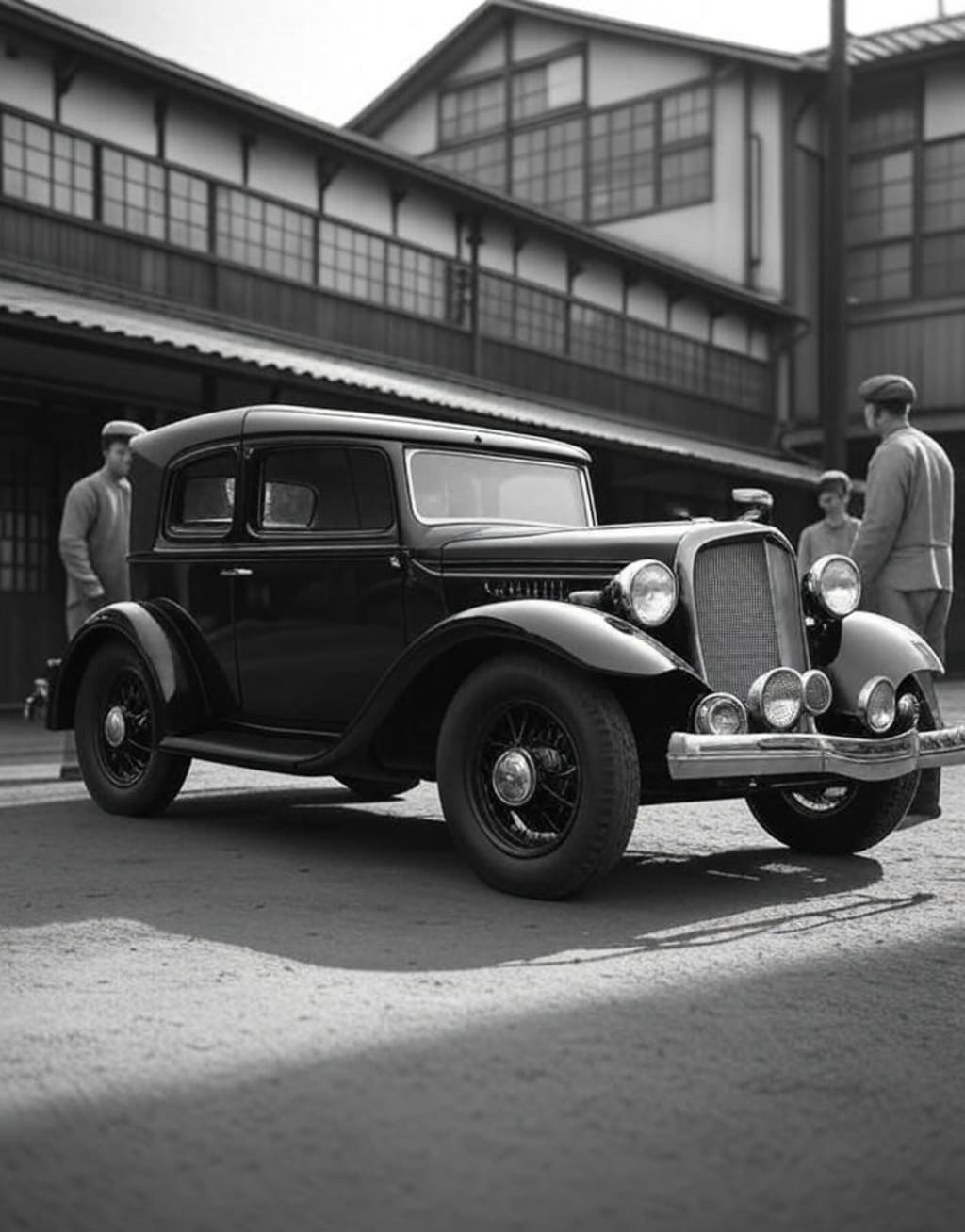
Long before the name Toyota became a symbol of reliability and innovation in the automotive world, it belonged to a humble family business in Japan known for producing weaving looms. This is the fascinating story of how a small loom company transformed into one of the world’s largest and most respected car manufacturers.
It all began in the early 20th century in Japan, with a man named Sakichi Toyoda. Sakichi was an inventive genius with a passion for creating machines that could make life easier. He invented the Toyoda Automatic Loom in 1924, a revolutionary device that could stop automatically when a thread broke—a simple idea, yet one that saved time and improved quality. This loom brought great success to the Toyoda family, and Sakichi’s company flourished in the textile industry.
However, it was Sakichi’s son, Kiichiro Toyoda, who would steer the family into a completely new direction.
Kiichiro had always been fascinated by machinery and innovation. In the 1920s, Japan relied heavily on imported automobiles from the West. Most cars came from the United States and Europe, and few Japanese companies had dared to dream of building their own. But Kiichiro believed that Japan could create its own car industry—and that he would be the one to lead it.
In 1930, after traveling to Europe and the U.S. to study their automobile production techniques, Kiichiro returned home filled with ambition. He used the profits from his father's loom business to begin experimenting with building engines and vehicles. Despite doubts from investors and peers, he was determined to bring the automobile revolution to Japan.
By 1933, Kiichiro had established an automobile division within the Toyoda Automatic Loom Works. Two years later, in 1935, he completed the first prototype of a passenger car—the Model A1. Alongside it, the team also developed their first engine, the Type A engine, which powered the car. The A1 was a modest vehicle, but it was proof that Japanese engineers could design and build their own cars.
In 1936, Toyota produced its first passenger car for the public—the Model AA. It was inspired by American car design but made with Japanese innovation and care. The following year, the automobile division officially became its own company: the Toyota Motor Corporation. The name was changed from “Toyoda” to “Toyota” for easier pronunciation in foreign markets and because the word used fewer brushstrokes in Japanese, symbolizing efficiency.
In the beginning, Toyota faced enormous challenges. Japan was preparing for war, and the government focused on military vehicles. Then, after World War II, the country was devastated—its economy in ruins, its infrastructure damaged. Factories were destroyed, and demand for consumer goods was low.
Yet Kiichiro never gave up.
In 1947, Toyota launched its first post-war passenger car, the SA, also known as the “Toyopet.” It was small, affordable, and simple—perfect for a country trying to rebuild. Sales were slow at first, but the foundation had been laid. Over time, Toyota adapted to consumer needs, improved its production techniques, and embraced innovation.
A major breakthrough came in the 1950s when Toyota adopted a revolutionary manufacturing system. It was based on reducing waste, increasing efficiency, and continuously improving processes. Known today as the Toyota Production System, this method became a global model for manufacturing excellence.
Toyota also focused on quality. In the 1960s and 70s, when Japanese cars were still looked down upon in Western markets, Toyota quietly improved design, safety, and durability. Models like the Corolla gained popularity for their reliability and value. By the 1980s, Toyota was no longer just a Japanese company—it was a global powerhouse.
Today, Toyota builds millions of cars each year and has created legendary models like the Land Cruiser, Prius, Camry, and Hilux. It was the first company to mass-produce a hybrid vehicle, and it continues to lead in fuel efficiency, green technology, and innovation.
But at the heart of its journey is a simple truth: it all started with a dream. A young man named Kiichiro Toyoda, standing in his father’s loom factory, imagined something bigger—cars built by Japanese hands, driving on Japanese roads. His courage to follow that dream, even when others doubted, changed the world.
The Toyota story is not just about engines and machines. It’s a story of vision, persistence, and the belief that with hard work and purpose, even the most impossible dreams can come true.
About the Creator
Raza Ullah
Raza Ullah writes heartfelt stories about family, education, history, and human values. His work reflects real-life struggles, love, and culture—aiming to inspire, teach, and connect people through meaningful storytelling.
Keep reading
More stories from Raza Ullah and writers in Wheel and other communities.
Branches of the Same Tree
In the peaceful village of Zaytoon, where olive trees swayed with the wind and the sky stretched endlessly above, young Amal lived in a small house that always seemed full—of voices, laughter, and people. It wasn’t just her parents and siblings. It was her uncles, aunts, cousins, grandparents, and even second cousins. Everyone came and went like the tide, bringing stories, food, advice, and sometimes a little too much noise.
By Raza Ullah7 months ago in Humans
Rego Hacks That Save Hundreds in 2026
Vehicle registration is one of those unavoidable expenses that many drivers accept without question, yet a closer look often reveals opportunities to save real money. As 2026 approaches, changes in transport policies, vehicle classifications, and digital systems mean drivers who stay informed can reduce rego costs legally and with minimal effort. Whether you own a daily commuter, a secondary car, or an aging vehicle you barely use, understanding how registration works can help you avoid paying more than necessary.
By Austin Peck3 days ago in Wheel
Reducing Scrap And Rework: How Checking Fixtures Improve Quality And Lower Costs In Automotive Manufacturing
In automotive manufacturing, where margins are tight and production volumes are high, even small dimensional errors can snowball into significant financial losses. Scrap, rework, warranty claims, and line stoppages all stem from one core issue: parts that do not meet design intent.
By Alexander Belsey7 days ago in Wheel


Comments (2)
What a car industry.
What an invention