
Can Baojun 310 Beat Honda Brio and Toyota Agya in the LCGC Segment?
Can Baojun 310 Beat Honda Brio and Toyota Agya in the LCGC Segment?

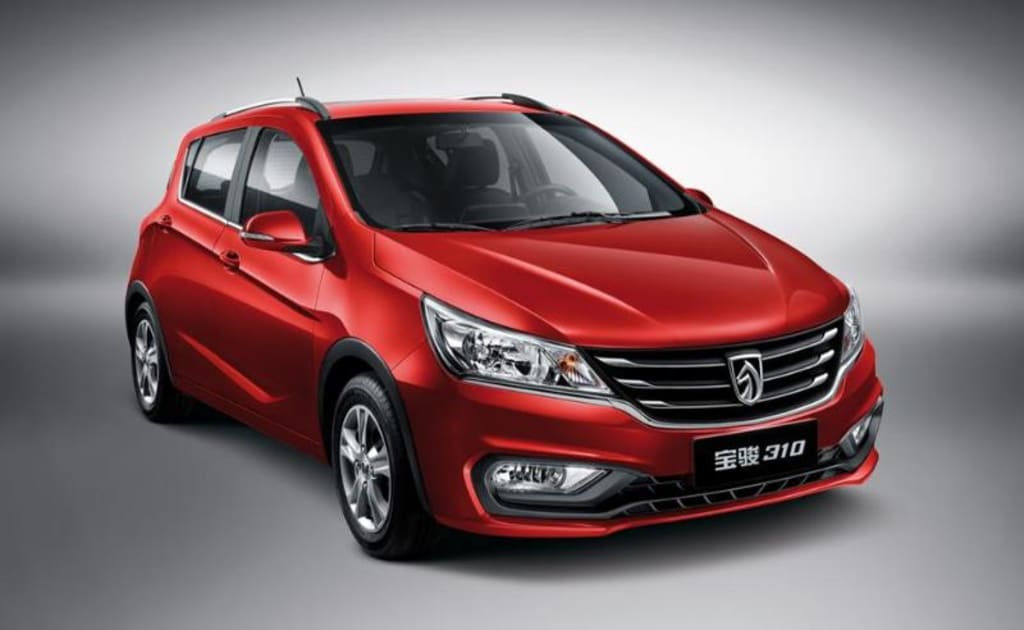
Although not yet in Indonesia, the news of Baojun 310's arrival is a hot topic of conversation for the LCGC segment in Indonesia. Indeed, the presence of Baojun 310 in Indonesia is still unknown when it will be carried out, given the pandemic outbreak that has hampered all processes.
If this Baojun 310 enters Indonesia, this car will be under the auspices of PT. SGMW Motor Wuling Indonesia. In Indonesia, the name Baojun will no longer be used and will be replaced by Wuling, just like other Wuling models that have already been active in Indonesia.
Looking at Wuling's existing products in Indonesia, it's not wrong if we say that Wuling products do have many models that have a variety of interesting features that other cars in its class may not have. Not only that, the very affordable price is also one of the characteristics of this Chinese car product.
If this car enters Indonesia, it will compete in the LCGC segment. In Indonesia alone, the LCGC segment is arguably still dominated by Honda Brio and Toyota Agya. Then with this fierce competition, can Baojun 310 beat the Honda Brio and Toyota Agya in the LCGC segment?
Space Comparison
LCGC cars are not only known for their low prices and high fuel efficiency, but also for their compact bodies. Let's look at the comparison of the dimensions of the Baojun 310, Honda Brio and Toyota Agya.
Based on the comparison, we can see that the Baojun 310 has a longer dimension when compared to the other two models. As for the width itself, the Baojun 310 has the same body width as the Honda Brio, while the Toyota Agya has the smallest body width.
Then for its own height, Baojun 310 has a body height that is still inferior to the Honda Brio and Toyota Agya. Nevertheless, the headroom that is owned by Baojun 310 is still quite free.
The thing to pay attention to in this car is the wheelbase. The wheelbase that is owned by Baojun 310 has the largest size compared to the other two cars. This of course will ensure passenger comfort thanks to a more flexible cabin.
Comparison of Fuel Consumption
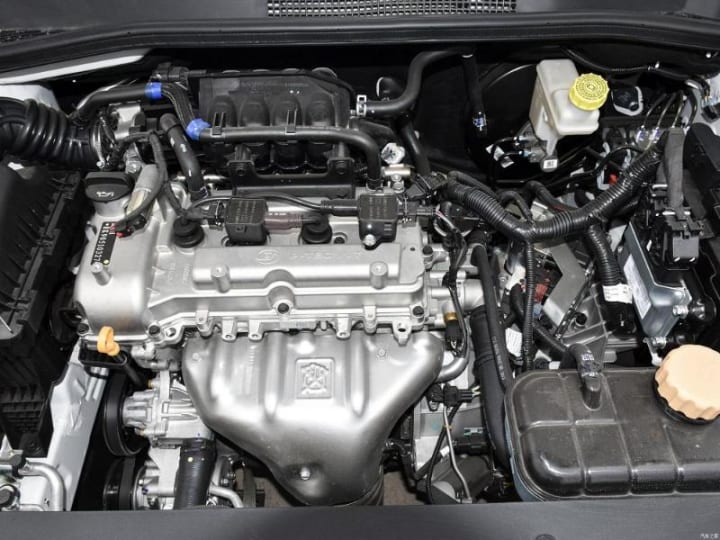
Before going straight to the comparison of fuel consumption, it is better if we discuss a little about the engines of these three car models. The Baojun 310 is armed with a P-TEC engine with a capacity of 1.2 liters.
This engine is then combined with a 5-speed manual transmission system. This engine configuration can generate power of 81.9 PS at 5,600 rpm and a torque of 116 Nm at 3,600-4,000 rpm.
Then we move on to the Honda Brio engine. The Honda Brio consists of 5 different variants marketed in Indonesia, but the five variants both carry a SOHC 4 Cylinder in line, 16 valves i-VTEC + DBW with a capacity of 1.2 liters.
This engine is mated to 2 types of transmission, namely a 5-speed manual transmission and a CVT automatic transmission with Earth Dreams Technology. On paper, this machine is capable of producing a power of 90 PS at 6,000 rpm and 110 Nm of torque at 4,800 rpm.
Finally, let's discuss the Toyota Agya engine. This Japanese manufacturer LCGC car has engine options with a capacity of 1.0 liter and 1.2 liter. But what we will compare this time is only an engine with a capacity of 1.2 liters.
Toyota Agya uses a 3NR-VE DOHC VVT-i engine with a capacity of 1.2 liters combined with two transmission system options. The two types of transmission include a 5-speed manual transmission and a 4-speed automatic transmission. The power output itself reaches 88 PS at 6,000 rpm and the torque reaches 107 Nm at 4,200 rpm.
Judging from its power, the engine owned by the Honda Brio is arguably the most powerful of the three models, although the difference is insignificant. As for the torque itself, the Baojun 310 has the highest torque of all these models.
Safety Features Comparison
Regarding safety features, it should be the main focus of a car. Not only comfortable, a good car must also have good safety features so that consumers can drive safely. Now, let's compare the safety features of these three car models.
Baojun 310 is equipped with standard safety features, such as airbags and seat belts. Not only that, this car is also equipped with advanced active safety features, such as the Anti-lock Braking System, Brake Assist, and Electronic Brake Distribution. Do not forget that this car is also equipped with the Child Safety Locks feature for the safety of child passengers.
In order to provide more security, this car also features a seat belt usage reminder and an open-door reminder. To minimize the impact of injuries when there is a collision, the front and side of the car have also been pinned with collision protectors.
Then for the Honda Brio, this car is equipped with an Anti-lock Braking System, Brake Assist, Electronic Brake Distribution, and a Parking Sensor as its active safety features. As for the passive safety features, this car is equipped with airbags, seat belts, child safety locks and ISOFIX.
For Toyota Agya, this car is arguably quite lacking in safety features. As an active safety feature, this car is only equipped with a parking sensor. And for the passive safety system, this car is equipped with Dual SRS Airbags, seat belts, Child Safety Locks, and ISOFIX.
Conclusion
Baojun 310 is an LCGC car, of course what you are looking for is an affordable price. Baojun 310 itself is reportedly priced at IDR 150 million. This price is certainly still higher if we compare it to the Honda Brio which is priced starting at IDR 144 million and the Toyota Agya with prices starting at IDR 143.8 million.
But keep in mind that actually the consideration of buying a good car does not only refer to a cheap price, but rather to the value for money that we will get on a car. Baojun 310 itself has good value for money.
The engine is powerful, quite economical, and most importantly, this car has a variety of cutting-edge features that the other two cars don't yet have. If we look objectively, the Wuling Baojun 310 has the opportunity to compete with the Honda Brio and Toyota Agya in the LCGC segment.
About the Creator
Keep reading
More stories from David Thompson and writers in Wheel and other communities.
Why Putrajaya Remains One of the World’s Least Known Government Cities
When people think of Malaysia, the bustling skyline of Kuala Lumpur usually comes to mind. The famous Petronas Twin Towers dominate postcards and travel brochures, symbolizing the country’s modern progress. Yet, few outside Southeast Asia realize that Malaysia’s administrative heart is not Kuala Lumpur at all. Instead, the country’s government operates from a quieter, carefully designed city known as Putrajaya.
By Irshad Abbasi 2 days ago in Wheel




Comments
There are no comments for this story
Be the first to respond and start the conversation.