
Australia Mining Truck Market Steadily Advances on Sustainable Mining and Fleet Modernization
Market set to grow from USD 729.1 Million in 2025 to 967.79 Million by 2034 as mining activity intensifies and electric and autonomous technologies gain traction.

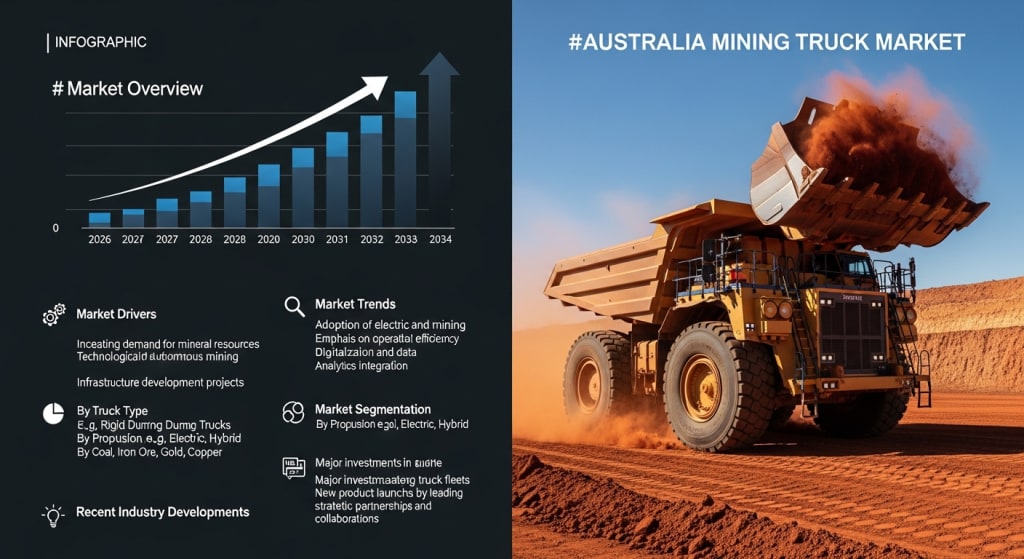
The Australia mining truck market reached an estimated USD 729.1 Million in 2025 and is forecast to grow to 967.79 Million by 2034, exhibiting a compound annual growth rate (CAGR) of 3.20% over 2025–2033, according to IMARC Group. This growth reflects the enduring importance of mining haulage capabilities in Australia’s extensive mining sector, where robust transport and material handling solutions are critical to operational productivity.
Mining trucks — heavy-duty vehicles engineered to transport large volumes of ore, rock, and other materials — form a cornerstone of resource extraction projects across the country. Over the historical period from 2019 to 2024, demand was buoyed by ongoing mineral and coal mining activity that maintained fleet replacement cycles and incremental capacity additions.
Through the forecast period to 2033, growth remains underpinned by the mining industry’s increasing emphasis on efficiency, sustainability, and fleet modernization. Operators are investing in advanced truck types optimized for varied payload capacities, improved powertrains, and emerging autonomous capabilities — trends that are reshaping the structure of the market.
With broad segmentation across type, payload, application, drive system, and geography, the market reflects both traditional operational needs and nascent technological inflection points.
Request a Sample Report with Latest 2026 Data & Forecasts:
Why the Market Is Growing So Rapidly
Australia’s sustained mining activity continues to be a major growth driver for the mining truck market. The country remains a global powerhouse in commodities such as iron ore, coal, and base metals, which require extensive haulage operations to move large material volumes from pit to processing sites. Large open-pit coal and iron ore operations, in particular, rely on high-capacity trucks that can deliver continuous cycles of haulage with minimal downtime.
Within the market’s segmentation, bottom dump trucks remain the dominant vehicle type, capturing around a 45% share, due to their operational efficiency in discharging bulk materials and suitability for open-pit configurations. These trucks facilitate quick material discharge without complex maneuvering, helping reduce cycle times in high-activity mine sites.
Medium-capacity trucks (<90 metric tons) are also prominent, representing approximately 35% of the market. These vehicles offer cost-efficient hauling solutions, particularly for mines with terrain constraints or specialized operational patterns that benefit from greater maneuverability and lower fuel consumption.
A third driver is the emphasis on operational efficiency and cost control. Mining operators are aggressively targeting lower operating costs, higher uptime, and optimized logistics. This has accelerated replacement of ageing fleets with modern trucks that feature advanced engines, telematics systems, and predictive maintenance tools that help reduce fuel use and unplanned maintenance events.
Increasing focus on sustainability and low-emission operations is influencing procurement strategies. Partnerships and agreements — such as deals for electric mining truck deliveries to major miners — are laying foundations for cleaner fleets that reduce carbon footprints and align with broader environmental, social, and governance (ESG) goals in the mining sector.
Finally, mining companies are gradually adopting technology-enhanced solutions such as autonomous haulage systems and digital fleet management platforms, enabling greater safety, productivity, and remote operation capabilities. These technologies are expected to support future demand as they become more widespread and cost-effective.
What the Opportunities Are
1. Electrification and Zero-Emission Trucks
The transition toward electric and hybrid mining trucks offers opportunities for equipment manufacturers and energy providers to deploy cleaner haulage solutions that reduce diesel dependency and lower operational emissions.
2. Telematics and Fleet Analytics
Demand for advanced telematics systems that deliver real-time insights on vehicle health, route effectiveness, and fuel efficiency is set to grow, enabling operators to optimize fleet performance.
3. Autonomous Haulage and Safety Technologies
Autonomous truck systems paired with collision-avoidance and remote monitoring capabilities can significantly enhance safety and reduce labor costs, offering a competitive edge for early adopters.
4. Lightweight and High-Durability Materials
Use of advanced materials such as high-strength steels and composites can improve payload efficiency and extend operational life, attracting interest from operators focused on long-term ROI.
5. Service and Aftermarket Support Expansion
As fleets modernize, there’s an opportunity to grow maintenance, repair, and parts support networks — particularly in remote regions where mining operations are concentrated.
6. Rental and Leasing Solutions
Offering flexible financing and leasing options lowers acquisition hurdles for smaller operators, enabling broader fleet upgrades and shorter replacement cycles.
7. Integration with Renewable Energy Infrastructure
Mine sites incorporating renewable power generation and energy storage can support electric truck operations, reducing fuel costs and enhancing sustainability metrics — an attractive prospect for stakeholders aligned with ESG objectives.
Recent News & Developments in Australia Mining Truck Market
• March 2025: Government regulators unveiled new incentives aimed at supporting low-emission mining equipment deployment. These policy measures include tax breaks for zero-emission truck procurement and grants to support charging infrastructure at mine sites. The initiative is expected to encourage adoption of cleaner haulage fleets across major mining operations, aligning with national emissions reduction goals.
• June 2025: Fortescue Metals Group announced a landmark procurement deal for 150–200 electric mining trucks from a global OEM, scheduled for delivery between 2028 and 2030. This strategic investment supports Fortescue’s commitment to achieve zero ground emissions by 2030 and demonstrates the increasing commercial priority of sustainable mining technologies.
• September 2025: Industry reports indicate upticks in autonomous haulage integration, with several large mines launching pilot programs that incorporate AI-enabled navigation and fleet coordination systems. These advancements have reportedly improved cycle efficiency and reduced safety incidents, strengthening business cases for wider deployment.
Why Should You Know About the Australia Mining Truck Market?
The Australia mining truck market plays a critical role in powering one of the nation’s largest economic sectors — mining — which contributes significantly to exports and employment. As traditional mining activities continue and new mineral projects come online, demand for efficient, reliable, and technologically advanced haulage solutions will remain robust. For investors, this market offers stable long-term growth supported by modernization and sustainability drivers. Machinery manufacturers and service providers can tap into trends toward electrification, automation, and smart fleet management. Policymakers benefit from promoting cleaner technologies that lower environmental impact while sustaining industrial output. Understanding this market is essential for stakeholders aiming to capitalize on evolving equipment needs and shape the future of mining operations in Australia.
About the Creator
Rashi Sharma
I am a market researcher.
Keep reading
More stories from Rashi Sharma and writers in Wheel and other communities.
Australia Electric Kettle Market: Smart Design, Energy Efficiency, and Premium Innovation Drive Growth
The Australia electric kettle market is undergoing a steady transformation, evolving from a basic household appliance segment into a design-driven, technology-enabled consumer market. According to IMARC Group, the market reached a value of USD 53.20 million in 2024 and is projected to grow to USD 112.75 million by 2033, expanding at a compound annual growth rate (CAGR) of 7.80% during 2025–2033. This robust trajectory reflects how changing lifestyles, rising energy consciousness, and product innovation are reshaping demand across Australian households and commercial establishments.
By Rashi Sharma23 days ago in Wheel
Australia Motorcycle Tires Market: Demand, Price, Business Opportunity, and Driven Growth
According to IMARC Group, the Australia motorcycle tires market reached USD 105.6 Million in 2025 and is expected to grow to USD 207.9 Million by 2034, exhibiting a 7.81% compound annual growth rate (CAGR) during 2026–2034. This robust growth reflects increasing motorcycle ownership, rising aftermarket demand for higher-performance tyres, and expanding interest in both leisure and utilitarian riding. Motorcycle tyres play a critical role in rider safety, fuel efficiency, ride comfort and overall handling — making them an indispensable part of Australia’s two-wheeled ecosystem. As riders pursue higher performance, longer wear life and improved safety features, demand for advanced tubeless, radial and sport-oriented tyre technologies continues to rise.
By Shrestha Roy4 days ago in Wheel
Dead Car Battery? Affordable Jump Starters That Actually Work
A dead car battery is one of those problems that always seems to happen at the worst possible time. You might be late for work, stuck in a parking lot, or far from anyone who can help. While roadside assistance is useful, waiting for help is not always convenient.
By Austin Peck2 days ago in Wheel



Comments
There are no comments for this story
Be the first to respond and start the conversation.