
YOUR GO-TO GUIDE FOR MAKING THE MOST OF 3 DAYS IN ROME
YOUR GO-TO GUIDE FOR MAKING THE MOST OF 3 DAYS IN ROME

Rome has so much to offer in the way of art, architecture, culture, cuisine, and history. Yet, with so much to do or see, it’s easy to feel intimidated or overwhelmed, especially if it’s your first time (or you haven’t visited in a while).
Nevertheless, that shouldn’t stand in your way!
In my many years as a personal travel advisor, I’ve come to learn that successful trips to Rome share some common elements.
That’s why I highly recommend visiting the Eternal City with a curated itinerary that mixes traditional stops with off-the-beaten-path adventures to ensure you derive the best experience from your trip.
To help you get started, I’ve created this itinerary brimming with ideas and insider tips that will help you save time, navigate Rome’s iconic sites with ease and get the most out of your 3 days in Rome.
DAY 1 | VATICAN CITY | ST. PETER’S BASILICA | TRASTEVERE
Start your day early in the morning (before 8 am) and explore the Roman streets before the city awakens.
This way, you’ll get to enjoy the city with barely anyone around, other than a few locals walking their dogs or heading to work.
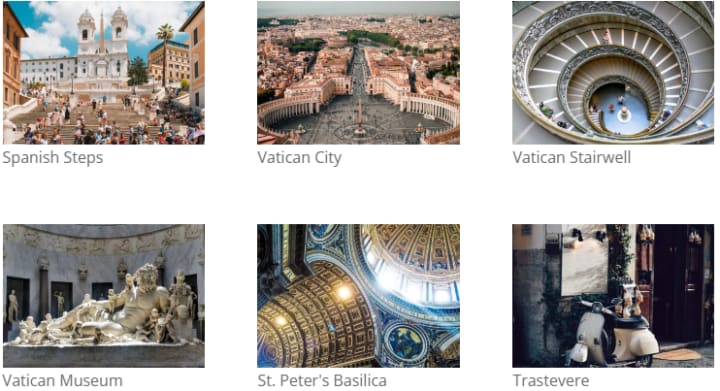
As the sun rises, climb the gorgeous Piazza di Spagna also known as “Spanish Steps,” and take in the spectacular architecture where modern life and ancient history converge.
In an effort to preserve this UNESCO World Heritage Site, people are no longer allowed to sit on the Spanish Steps as of 2019. Doing so can attract a fine of 250+ Euros if you damage or dirty the steps in any way.
Insider Tip #1: There are cafes within every block or two. These are actually called “bars” in Rome because locals drink their espressos whilst standing at the bar. Take some time to blend in with the locals and enjoy a classic Italian breakfast consisting of cappuccino and cornetto (the Italian version of the French croissant). Keep in mind that in heavy tourist areas, there’s usually an extra charge to sit at the al fresco tables on the street.
The next stop is Vatican City, the Roman Catholic Church headquarters, and the Pope’s official residence.
I highly recommend starting your visit with the Vatican Museums and afterward heading over to St. Peter’s Basilica — one of the most renowned works of Renaissance architecture and the largest church in the world.
There are over 54 galleries, known as the Vatican Museums, within the city and the art collections (over 70,000 works of art) here are simply stunning.
Your visit to St. Peter’s Basilica should include climbing to the top of its dome for a breathtaking view of St. Peter’s Square and most of the city of Rome. St. Peter’s Square is a colossal plaza that was built directly over the burial site of Saint Peter, one of Jesus’ twelve apostles.
With a capacity to hold 300,00 people, the Pope can address as many people as possible during the various liturgies he presides over throughout the year.
Make sure to stop by the famous Sistine Chapel, which holds the striking ceiling art and frescoes painted by legendary Italian artist, Michelangelo.
Kindly dress modestly in reverence to the religious city-state. At the very least, both men and women should have their necklines, shoulders and knees covered when they enter churches.
Insider Tip #2: Board the Metro Line A and get off at the Ottaviano-S. Pietro station. From here, it’s just a 5-minute walk to St. Peter’s Square. Like most European cities, using public transport or walking is often the easiest way to get around.
If you want to learn a lot more about the history and architecture of the Vatican plus view its hidden gems such as restricted passageways, I would love to help you plan the perfect Vatican City trip.
To top off your day, take an evening stroll through the vibrant and colorful Trastevere neighborhood. This is a must-stop for every foodie as some of Rome’s best restaurants can be found here.
It’s also a great place to interact with locals.
Insider Tip #3: Ask for an aperitivo (a traditional Italian pre-meal drink) at one of the trendy wine bars. If possible, check out the award-winning La Gatta Buia; they have an unbelievable Fiori di Zucca!
DAY 2 | COLOSSEUM | PALATINE HILL | ROMAN FORUM
The best way to begin your second day is to hop aboard the Metropolitana (subway) and take a ride to the Colosseo station.
Once you’ve arrived, you’ll need to stop by the ticket counter and purchase a ticket that will grant access to the Colosseum, Palatine Hill and the Roman Forum.
Preferably, get a tourist pass, which can be easily booked online in advance. All the different varieties of Rome City Passes offer fast-tracked entry and free admission to at least the Colosseum.
The best option is the 3- day OMNIA Vatican & Rome Card, which offers the most benefits, including a skip-the-line entry to the three sites scheduled for Day two.
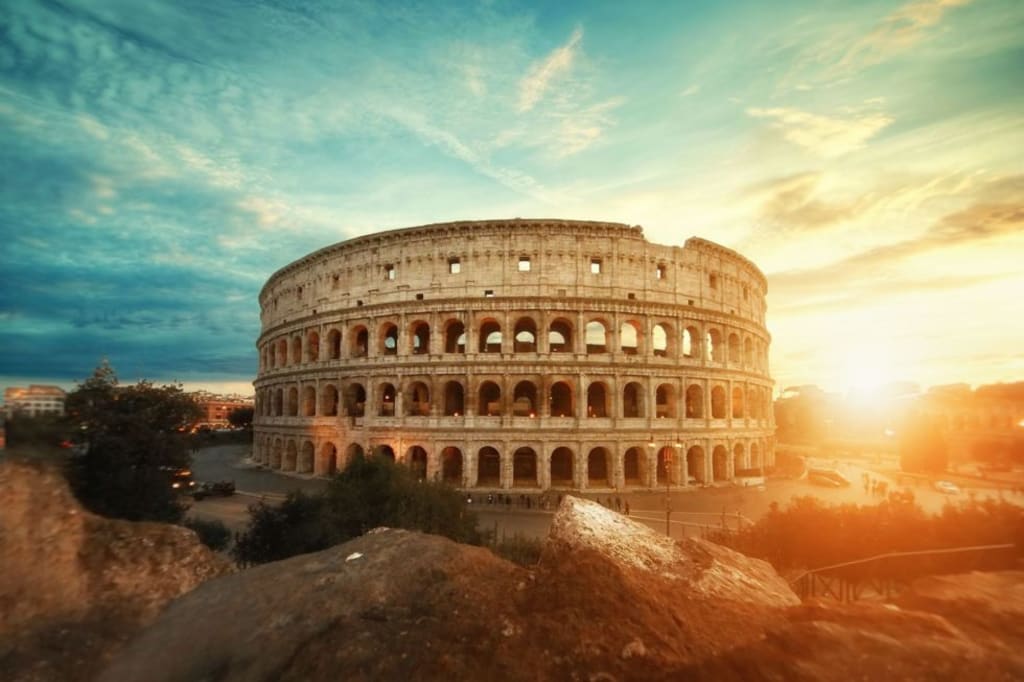
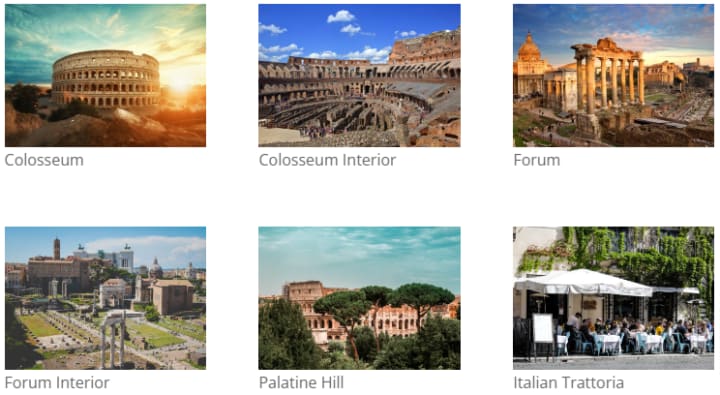
The Colosseum is a staple of any 3-day itinerary for Rome. With almost 2,000 years of history, this monument provides a fantastic glimpse into the ancient Roman Empire’s social life.
This giant amphitheater had a seating capacity of 50,000 spectators and was often packed full during the infamous gladiator combats and gruesome animal hunts it hosted.
If you want a really in-depth experience, you should consider hiring a tour guide. This way, you get VIP access to the underground chambers and upper tiers of the Colosseum, which are often restricted to the public.
Also, a guide will give you so much more history and context than you would get wandering around alone.
But exactly how do you go about finding the right guide for you? Here’s where working with a travel specialist really comes in handy.
I’ll save you the hassle of combing through the internet to find one by personally taking care of all the arrangements and organizing your tour with a licensed guide.
With a passionate and knowledgeable English-speaking local guide waiting for you, you can relax and look forward to your incredible Colosseum visit.
The next stop is the Colosseum’s next-door neighbor: the Roman Forum. Take a stroll across the ruins of the Roman Forum buildings that were once the center of political, religious, and social life during the Roman Empire.
The Roman Forum was a multi-purpose site that accommodated government buildings and law courts in ancient Rome. It also hosted events such as elections, public meetings and criminal trials.
On the last Sunday of every month, it is free to visit the Roman Forum and Colosseum.
Avoid this day as the archeological sites will often be very crowded with visitors and locals alike making the most of the free access.
Next, it’s time to hike up the Palatine Hill and enjoy the magnificent view over the city of Rome, the Colosseum and other famous monuments.
The majestic Palatine Hill, one of the 7 hills of ancient Rome, used to be a lavish neighborhood where most aristocrats lived and emperors built their palaces.
Insider Tip #4: Bring a bottle of water with you as it can get unbearably hot during summer, and there is not a lot of shade available for visitors.
Good thing there are “Nasoni,” public water fountains scattered all over Rome, so make sure to bring a reusable water bottle to fill up.
Also, wear comfortable walking shoes as there are a lot of uneven and dusty surfaces.
At the end of the day, grab some dinner at a traditional trattoria and indulge in authentic local cuisine among the locals. Afterward, get some rest for your final day!
DAY 3 | PANTHEON | JEWISH GHETTO | PIAZZA NAVONA
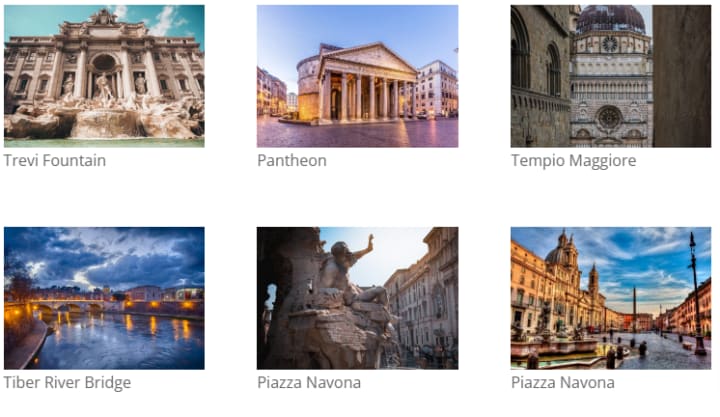
Begin your last day with a stop at the Trevi Fountain, the largest and most impressive Baroque fountain in Italy.
Did you know that roughly 1 million euros worth of coins gets collected from the fountain every year to be donated to local charities?
According to legend, tossing one coin into the Trevi Fountain means you’ll return to The Eternal City, a second coin means you’ll return and fall in love, and a third toss means you’ll return, find love, and marry.
A proper coin toss is done using your right hand to throw one coin at a time over your left shoulder. Whether or not you believe in luck, at least you know your coin toss is going to a greater cause.
The Trevi Fountain tends to be quite crowded during the day. However, if you arrive very early in the morning, sat at 6:00 AM, you’ll be able to enjoy this place with only a few other early risers around.
Quality time to take some Insta-worthy pictures at one of the most beautiful fountains in the world definitely warrants an early start. Don’t you think so?
Next, head over to the Pantheon, one of the most well-preserved ancient Roman structures. A walk inside this monument will make you really appreciate its marvelous architecture.
Dedicated initially to mythological deities, it became a church in the 7th century.
Today, the Pantheon also serves as the burial place of important Italian figures such as Vittorio Emanuele II (the first king of Italy). While visiting, be respectful and keep your voice low.
During your lunch hour, explore the Jewish Ghetto and discover its rich history. Walk along the lively main street of Via Portico d’Ottavia and sample the unique flavors of Roman Jewish cuisine.
You’ll find many restaurant options serving everything from deep-fried artichokes to pizzas and gelatos. Don’t miss the Pasticceria Boccione bakery and Nonna Betta, an Italian kosher restaurant.
Insider Tip #5: For bonafide foodies, a guided food tour in Rome offers the chance to taste some unique dishes you’d have a hard time finding on your own. As an award-winning travel curator, one of my specialties is creating immersive culinary experiences that invite clients to discover local cuisines and forge a deeper connection with their destination.
Visit the magnificent Tempio Maggiore, one of the most important religious and cultural symbols for the Jewish community in Rome.
After your delectable lunch, stroll over to nearby Largo di Torre Argentina, which also functions as a well-known cat sanctuary. The cats are well cared for by a local charity, and feeding them is strictly prohibited.
Lastly, you must explore Piazza Navona. This elegant showcase square was built on the ruins of the Stadium of Domitian. Actually, a quick look at the map of Navona Square, you’ll see it has an oval shape resembling a stadium.
Many of the most famous landmarks in this square are fountains. A prime example is the 17th century Fontana Dei Quattro Fiumi found at the center of the piazza.
If possible, visit the Piazza Navona at sunset as the lighting in the Square is awe-inspiring.
Remember to pick up a gelato beforehand (from one of the many gelaterias nearby) and bask in the delicious coolness as your visit to the Eternal City comes to a brilliant end.
Now that you’ve accomplished an impressive three-day visit, enjoy your last glass of Italian wine and have a good night’s sleep before returning home from this wondrous City Break.
What are some of your favorite places to visit in Rome? Comment below.
***
DID YOU FIND THE TRAVEL ITINERARY HELPFUL?
Then you’ll want to download my more comprehensive Destination Guide to Rome. I’ve crafted this gorgeously stylish resource to spark your imagination and inspire your next adventure.
***
TRANSFORM YOUR TOURIST EXPERIENCE INTO A LOCAL EXPERIENCE
Rome has thousands of tourist attractions and restaurants! Despite all these options, most excursions end up feeling bland and unimaginative.
The sad truth is that popular tour packages take a cookie-cutter approach to planning outings because they have to accommodate large numbers of visitors.
Yet, what would really make your 3 days in Rome extra special are things like private tours, behind-the-scenes access, little hidden gems and off-the-beaten-path activities.
However, these are often not always easily accessible to everyone. That’s why I recommend working with a travel advisor.
Beyond simplifying the planning process, a personalized travel specialist will curate a trip filled with authentic, local experiences. Does this sound like something you’d enjoy? Drop me a line to discuss your next trip.
About the Creator
Tee McNeill
My name is Tee McNeill and I’m an award-winning personal travel advisor. I’m here to help you navigate our new travel world during these uncertain times.
Keep reading
More stories from Tee McNeill and writers in Wander and other communities.
WHERE SHOULD YOU PLAN YOUR POST-LOCKDOWN TRIP
Since early 2021, it has been hard to plan holidays with travel restrictions, self-isolation and revolving lockdowns. But as travel destinations start to safely reopen, there are dozens of luxurious trip possibilities and awe-inspiring destinations waiting to be explored.
By Tee McNeill4 years ago in Wander
Literary Heartbeats
Step through an unassuming storefront in Saratoga Springs, New York. Let the city’s familiar bustle fade behind you. Sink into the creak of hardwood floors as your gaze is drawn toward a labyrinth unfolding, room after room, swollen with stories. This is the Lyrical Ballad Bookstore—a place where literary ghosts linger, and generations of readers, writers, and dreamers have lost themselves amid 200,000 volumes of wonder.
By Kristen Barenthaler3 days ago in Wander
Take a Hike in Central America
In Guatemala, at Lake Atitlán is the Atitlán Volcano. The hike takes 5 to 6 hours to complete. Beautiful Lake Atitlan is among the top attractions in Central America and among the best hikes. This is an impressive crater lake flanked by three volcanoes and surrounded by steep, scenic hills.
By Rasma Raistersabout 11 hours ago in Wander


Comments
There are no comments for this story
Be the first to respond and start the conversation.