
Why Turkey's Geography is So special?
Turkey: A Geographical Miracle Bridging Asia and Europe
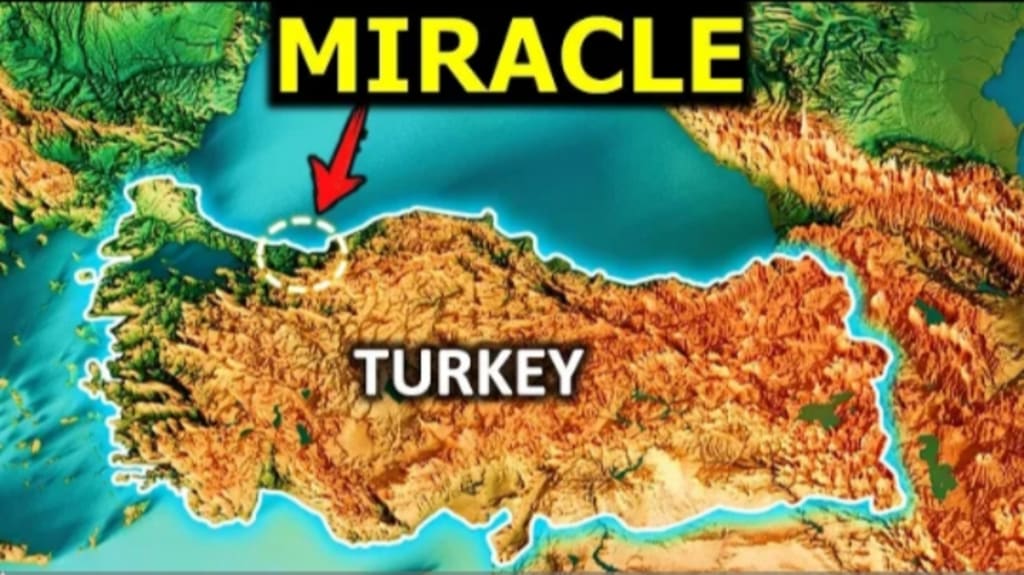
*Turkey: A Geographical Miracle Bridging Asia and Europe*
Turkey's unique geography has made it a crucial crossroads between Asia and Europe, connecting the two continents. The modern Turkish state, confined to the Anatolian Peninsula, boasts an impressive history as a hub of power and trade.
*Strategic Location*
The Bosphorus Strait, linking the Black Sea to the Mediterranean, facilitated the rise of Istanbul, a city that has served as the capital of various empires, including the Greeks, Persians, Macedonians, Byzantines, and Ottomans. The Dardanelles Strait, another narrow passage, connects Anatolia to the Balkans, Southern Europe, and the Greek Islands.
*Geological Wonders*
The North Anatolian fault line, formed by the collision of Eurasian and Anatolian plates, created remarkable geographical features. The Pontic Mountain Range, with peaks reaching 4,000 meters, fosters fertile lands in northern Turkey. This region's climate, influenced by the Black Sea and Mediterranean, supports lush green landscapes, contrasting with the hot and dry southern regions.
*Historical Significance*
Anatolia's strategic location has made it a prized possession for empires throughout history. The Spartans, Burgis, Romans, and Ottomans all recognized its importance. The region's access to two seas facilitated trade, connecting the Persian Empire to Egypt and Mesopotamia. Alexander the Great's conquest of Anatolia led to the collapse of the Persian Empire.
*The Taurus Mountain Range: Natural Protection and Challenge*
The Taurus Mountains have shielded Anatolia from invaders, including the Mongols in the 13th century. However, this range also poses economic and infrastructural challenges, contributing to the eastern side's relative underdevelopment.
*Kurdish Presence and Tensions*
Turkey's eastern regions are home to a significant Kurdish population, with approximately 15% of Turkey's population identifying as Kurdish. The Kurdish people's desire for autonomy has led to militant organizations and conflicts with Turkey, Syria, Iraq, and Iran.
*Rivers and Tensions*
The Tigris and Euphrates rivers, originating in Turkey's mountains, flow into Syria, Iraq, and Iran. While historically significant for trade, these rivers now fuel tensions due to Turkey's dam-building projects.
*Turkey's Modern Advantages and Challenges*
Turkey's strategic location generates significant GDP through exports and control of the straits. However, sharing borders with eight countries, including Syria and Iraq, poses geopolitical challenges.
*Conclusion*
Turkey's geography has shaped its history, making it a vital connection between Asia and Europe. Understanding the complex interplay between geography, history, and politics provides valuable insights into the region's significance and ongoing tensions.
About the Creator
Keep reading
More stories from Abira Sahi and writers in Wander and other communities.
How One Scam Destroyed the Whole Country?
*The Lebanon Financial Crisis: A Tale of Corruption and Betrayal* Lebanon, once dubbed the "Switzerland of the Middle East," has been ravaged by a catastrophic financial crisis, leaving 80% of its population below the poverty line and eight in ten citizens unemployed. The country's inflation rate has skyrocketed to 171%, with its currency devaluing drastically from 1,500 Lebanese pounds per dollar to 15,000.
By Abira Sahiabout a year ago in Wander
Worth the Wait: Puerto Viejo, Costa Rica
Beach bumming in a small Caribbean beach town sounded like a perfect way to end our 6-month trip through Mexico and Central America. Or so we thought. The foul, fishy stench of rotten seaweed hit our nostrils as we stepped from the cramped bus and looked out at a rather depressing, empty, and underwhelming black sand beach. It was pouring with rain, and we had to quickly fish out our ponchos. We thought, this couldn’t be it, could it?
By Sh*t Happens - Lost Girl Travel8 days ago in Wander
Turkey: Take THEM With You.
The first time I went to Istanbul, I went with my sister. The second time, I brought family. Picture from the trip. Same city. Same accommodation - right in the center of everything, the spot we'd found the first time and couldn't justify leaving.
By Destiny S. Harris7 days ago in Wander
The First Rainbow Baby
Pitter-patter, pitter-patter. The rain fell in rhythmic splatters, slowly slowing, but still constant. Mira rolled onto her side pulling the blanket tight against her ears, but still she could hear chitter-chatter and scurrying feet of the creatures that refused to sleep in the lower decks.
By A. J. Schoenfeldabout 19 hours ago in Fiction



Comments (1)
well done