
Wheelchair accessible wildlife Safari.
What you should know about the safari for people who use wheelchair.

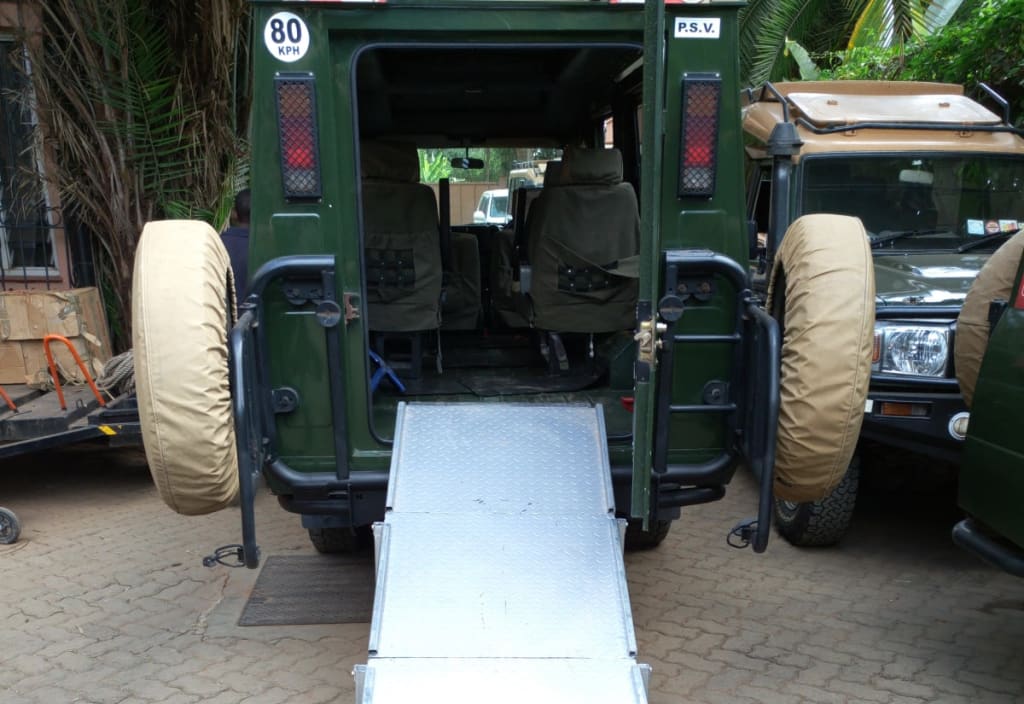
A safari in Africa is one of the most satisfying ways to see wild animals, beautiful landscapes, and nature up close. But sometimes, a person may be using wheelchair but wants to go for a safari. Everyone deserves to experience nature and wildlife up close, regardless of whether they have physical ability or not.
And because of this, there is a special safari designed for people who use wheelchairs or with limited mobility access. It is known as a wheelchair accessible safari. This type of safari is designed for: People who use wheelchairs, People with limited mobility, those who cannot climb stairs or walk long distances, and older travellers or people with other physical disabilities who are supposed to avoid difficult terrain.
In this article we are going to see all about safari for people who use wheelchair.
A wheelchair accessible safari.
A wheelchair accessible safari is a wildlife safari which is designed so that people who use wheelchairs can travel without being limited by the terrain, transportation, or lodging. This means to ensure that a safari has special services and amenities to make sure that the paths, vehicles, accommodation, meals, and wildlife-viewing areas usable to people with wheelchairs.
Some of the special services and preparations may include:
- Having vehicles which are adapted for wheelchairs: Cars having ramps, wide doors, secure anchor points and a wide space inside.
- Lodges, camps, and tents with accessible rooms: should have roll in showers, grab bars, wider doorways and level or ramped access.
- Paths and walkways that are paved or level, with minimal steps or steps replaced by ramps.
- Support services: guides or staff trained to assist people with disabilities.
- Flexible itineraries to allow rest, shorter drives, slower pace, and so on.
Wheelchair accessible safaris are available in Tanzania. Several tour operators do provide wheelchair accessible services to many national parks such as Serengeti, Ngorongoro, Tarangire, and Lake Manyara. Also in these national parks there are lodges that have the best services for wheelchair accessible cars.
But for the best experience, it is better to have a trip when weather and wildlife conditions are good and also when accessibility infrastructure is at its best. So, for wheelchair accessible safari, it is better to consider the following:
- Dry season: during this season, roads are less muddy which makes it easier for vehicles and wheelchair movement.
- Off-peak times. Because there are fewer tourists, and this means that there is a room for more personalized attention and a better service.
- Advance booking. Because accessible lodges and vehicles are fewer and they fill early, so having an early booking will be great.
How to plan a successful wheelchair accessible safari
A successful wheelchair accessible safari must be planned carefully and early so as to avoid any unnecessary inconveniences. To plan a successful safari, do the following:
A. Do your research
• Search and find the tour operators who provide a wheelchair accessible safaris. Look at their websites, read the reviews.
• Contact them to confirm what “accessible” covers from their side. Some of tour operators may not have full access, such that they may have accessible rooms, but not vehicles fitted for wheelchairs and so on.
B. Ask the right questions
Before you book, ask yourself the following questions:
• Is the safari vehicle specially modified for wheelchair accessible? Does it have ramps, tie downs, and enough space?
• Are there lodges that have roll in showers, grab bars, raised toilet seats, ground floor or ramped access?
• What are the walking distances, path conditions, steps, thresholds?
• How are transfers handled? (from and to the airport or between one lodge to another)
• Are their staff trained to assist guests with disabilities?
• What will happen in case of medical emergencies?
• What are the costs for any extra support or equipment such as assistants or medical items?
C. Carefully plan your itinerary with the tour operator
The itinerary should allow time for rest days or lighter activity days, it should have shorter drives or if game drives may take longer, check the possibility if they can be cut short while having the best wildlife experience and make sure you pick parks or reserves with more level terrain and good road quality. For instance, Ngorongoro Crater’s floor is relatively flat and perfect for this kind of safari.
D. Prepare your own gear and support
- Bring or arrange for any equipment you need. If you are using electric wheelchairs don’t forget to bring spare batteries, some extra cushions and seat belts.
- If you need medical support or have special health considerations, it is better to get your travel insurance covered for your safari.
- Also make sure you have a backup plan for the unexpected situations such as bad weather, vehicle breakdowns, or unexpected barriers.
E. Confirm all the logistics early
Make sure you book your flights, airport transfers and lodges, early and in advance.
Make sure the lodge or camp knows you are coming, and they know your condition so they can prepare accessible facilities for you.
Check park entrance rules, permits, any special arrangements needed (check with the tour operator).
Challenges of this type of safari and how to curb them
While a wheelchair-accessible safari is a wonderful experience, there are some challenges that travelers with mobility needs might face. And the good news is that most of these challenges can be managed with proper planning and by choosing the right safari provider.
Rough roads and uneven terrain can be a major challenge. Many safari parks have roads that can become bumpy, rocky, or even muddy during the rainy season. This can make game drives uncomfortable for wheelchair users. To avoid this, it is better to travel during the dry season when roads are less muddy and are more stable. It is also important to choose operators who use special vehicles with strong suspensions and comfortable seating.
Lack of fully accessible lodging is another common issue. Some lodges may advertise accessibility but still have steps, narrow doorways, or bathrooms that are not easy to use for someone in a wheelchair. To avoid these inconveniences, travelers should ask for detailed descriptions or photos of the rooms and lodges. They should confirm that there are roll-in showers, grab bars, ground-floor rooms, ramps, and enough turning space for wheelchairs to pass.
Limited availability of accessible safari vehicles can also be a problem. Not all safari operators have vehicles modified for wheelchair use. And if they do, there may be only one or two vehicles available. This means that if you need this safari, you need to book and reserve in advance. Booking early and choosing companies that specialize in accessible safaris will help ensure that the right vehicle is available for you.
Another challenge is that not all staff may be trained to assist travelers with disabilities. This can sometimes lead to challenges, especially during transfers or when there is an emergency. That is why it is important to choose a safari company that has its staff who are experienced in working with guests who have mobility challenges. Communicate clearly with the operator about your specific needs before the trip is very important.
If travelers using wheelchairs prepare themselves in advance concerning the issues above, they can enjoy a safe, comfortable, and unforgettable safari experience.
Costs and budgeting
Wheelchair accessible safaris often cost more than normal standard safaris, and this is due to, Special equipment used during the safari, Extra staff or support services and also lodges with high standards of accessibility tend to be more expensive.
So, when planning, you should budget for: Your transportation (flights, safari vehicles, airport transfers adapted for wheelchair). Lodging, Park entrance fees, Guide fees, meals and other extras such as medical insurance, assistive devices, tips, possibly paying for additional assistants.
To get clear breakdown, you have to contact the tour operator, and you should be given a full cost breakdowns and clear explanation of what is included/excluded in the price.
Wild safari in Tanzania is different and satisfying, so it good to ask questions, plan well in advance, and budget properly to enjoy the best experience.
About the Creator
Jaynevy Tours
Jaynevy Tours offers personalized Tanzanian safaris to Serengeti, Ngorongoro Crater, and Zanzibar. Expert guides and unique experiences for all.
Keep reading
More stories from Jaynevy Tours and writers in Wander and other communities.



Another Walk Through Hulne Park, Alnwick
Introduction There are three walks in Hulne Park, and I have written aboutmy walks here before, but this is my wander in 2026. I now always choose Walk 1 because you get some of the best views on this one. It's the light blue oneon themap below.
By Mike Singleton 💜 Mikeydred 4 days ago in Wander

Comments
There are no comments for this story
Be the first to respond and start the conversation.