
The best places for birdwatching in Tanzania
The best and rare places for birdwatching.

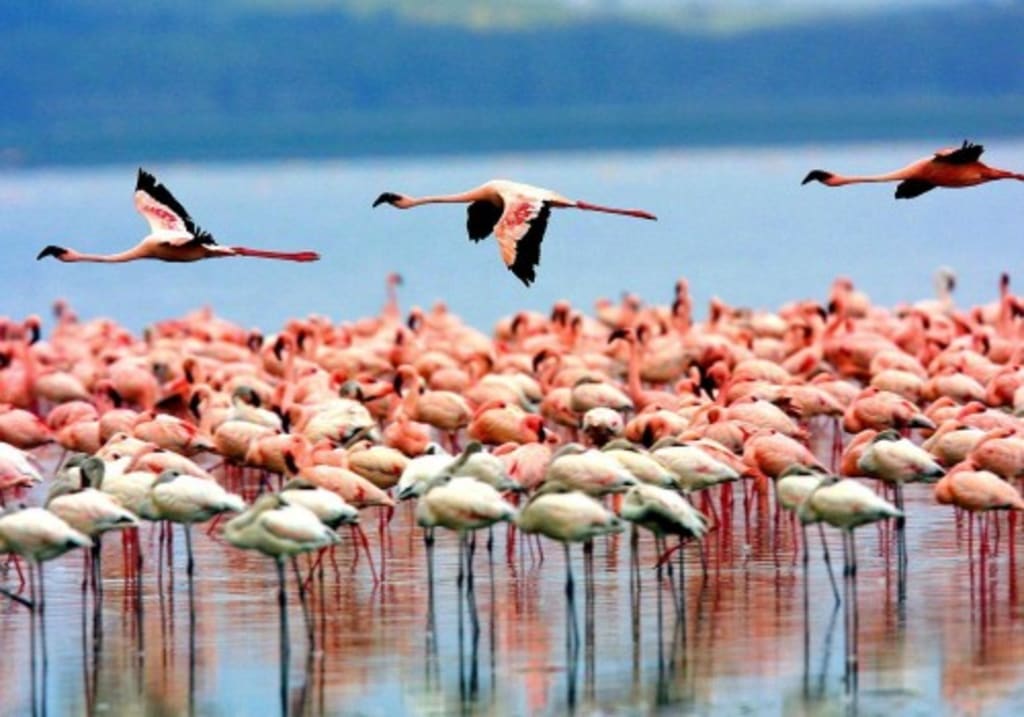
The world is filled with a lot of wonders. Some of these wonders are birds. Looking at those birds gives a wonderful satisfaction like no other.
The world in general has more than 11,000 known species of birds. And out of those species, 1,100 species are found in Tanzania (which is 10% of all the bird species in the world). This makes Tanzania as one of the top sites for bird watching and photography.
Now, in Tanzania, these birds are not found just anywhere, there are special places where anyone can do the bird watching and enjoy the sight. In this article, we will explore all places in Tanzania where any bird lover may visit and satisfactorily enjoy bird watching.
Lets go and explore the places where you can do birdwatching in Tanzania:
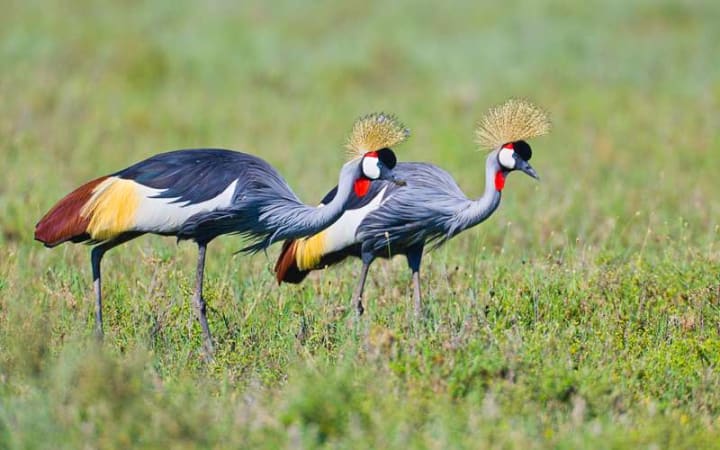
Serengeti is one of the most famous of national parks in Africa and the world. This park stretches across the plains of the central plateau between Africa's largest lake, Lake Victoria, and the Great Rift Valley. It is here in Serengeti national park where the legendary Great Migration, takes place.
In Serengeti you will find about 500 species of birds here. There is no place where you will find so many species of birds in one place anywhere else in Tanzania or neighboring Kenya than Serengeti. One of the advantage of bird watching in Serengeti is that, the place is surrounded by other wildlife animals.
On the western part of the Serengeti, there is an Africa's largest lake, Lake Victoria, which also attracts birds from different areas. The parts on the southern shore of Victoria are also good for birdwatching, especially in areas such as Rubondo and Saanane islands.
Some of the birds found in Serengeti include the Secretary Bird, Kori Bustard (one of the heaviest flying birds), Southern Ground Hornbill, Lilac‐breasted Roller, Martial Eagle. You may also see migratory birds during the wet season.
When to Visit & What Helps:
Both wet season (roughly November to May) and dry season (June to October) are perfect to visit, but these seasons do offer different experiences. Wet season has fewer birds while dry season concentrates wildlife (and birds) around water sources, making them easier to see. Early morning or late afternoon are best for bird activity.
This national park is also located in the northern Tanzania, very close to the Rift Valley. This national park has an alkaline lake, floodplains, woodlands, groundwater forests. This lake is shallow and this factor attracts large numbers of water birds.
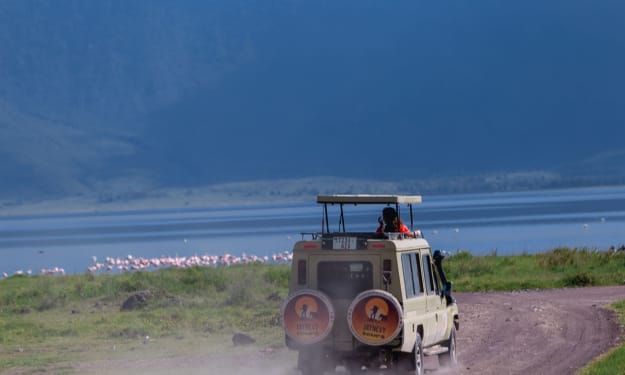
Some the birds which are often seen include Greater and Lesser Flamingos, Pelicans, African Fish Eagle, Silvery‐cheeked Hornbill, Grey‐headed Kingfisher. The flocks of flamingos when are congested in a lake, they turning parts of the lake pink and make the lake look very beautiful.
Because of its size, different animals, and ease of access, Lake Manyara is great for both casual birdwatchers and those who are serious birdwatchers.
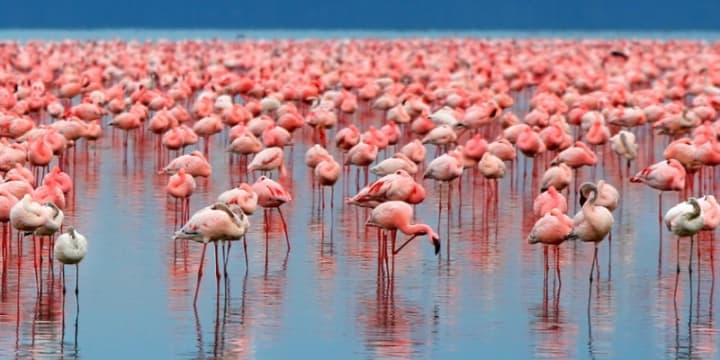
This national park is also located in the northern Tanzania, west of Lake Manyara and east of Lake Eyasi. The landscape of this national park includes large baobab trees, dry woodlands, seasonal swamps and rivers. In dry seasons, water may become scarce causing birds to cluster around permanent water sources.
Here there are over 500 species of birds that have been recorded. Some birds to be found here include Yellow‐collared Lovebird, Red‐and‐yellow Barbet, African Grey Hornbill, Vulturine Guineafowl, Ashy Starling.
The best time to visit for a birdwatcher is a dry season, because a lot of birds concentrate at waterholes. However, during wet season also has green growth and insect activity which also attract different birds.
4. Ngorongoro Conservation Area and Crater
This is a large caldera (volcanic crater) found in northern Tanzania. In this crater there are forests, grasslands, lakes and wetlands. It has been noted as a UNESCO World Heritage Site.
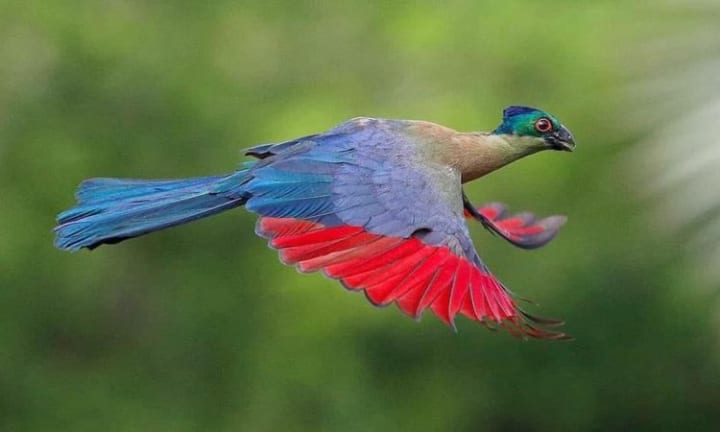
There are so many species of birds that can be found in Ngorongoro because of is unique ecosystem. Birds that can be found here are such as Lesser Flamingos on the lakes, Golden‐winged Sunbird, Schalow’s Turaco, Augur Buzzard, Verreaux’s Eagle, Fischer’s Lovebird.
5. Ruaha National Park
This national park is located in the southern Tanzania, and it is more remote than many northern parks. It has miombo woodlands, riverine habitats, open floodplains, and semi‐arid plains.
In this national park there are around 497 bird species recorded. Some of these include Southern Ground Hornbill, Bat Hawk, Bateleur, White‐backed Night Heron, African Fish Eagle, Lilac‐breasted Roller, Ruaha Red‐billed Hornbill (a more local species).
This national park is unique because it is less crowded, remote, and has southern‐zone bird species that you may not see in the northern parks.
6. Eastern Arc Mountains: Usambara, Pare, Udzungwa
These are mountain ranges and forested zones, that are found in the eastern and southern Tanzania. The Eastern Arc Mountains are among the oldest mountains in Africa and are covered with forests that are moist, with cloud cover in places most of the time. Because of the age and isolation of these mountains, many bird species here have evolved, birds species that are found nowhere else.
The Eastern Arc Mountains, including Usambara, Pare, Udzungwa, have many endemics (birds that live only in those forests).
In the Usambara Mountains you may see the Usambara Weaver, Usambara Eagle‐Owl, Usambara Akalat, Usambara Greenbul, Usambara Tailorbird. wildbirding.tours
In South Pare Mountains, you may see birds like South Pare White eye, Usambara Double collared Sunbird. wildbirding.tours
In East Usambara, also there are Amani Sunbird, Half collared Kingfisher, Purple banded Sunbird, Birds of prey like Ayres’s Hawk eagle.
In Udzungwa Mountains National Park, there are forest species such as Udzungwa Forest Partridge, Red capped Forest Warbler, Sharpe’s Akalat, Rufous winged Sunbird, and so on
What Makes These Mountains Special is that, due to the fact of altitude change, mist and isolated forests, many bird species here have small ranges and are hard to find elsewhere. For people who are excited about rare birds, these mountain forests are among the best places to visit.
7. Selous Game Reserve (Nyerere National Park)
This national park is located in the southern part of Tanzania. It is one of the largest protected wilderness areas in Africa, especially its wild rivers, wetlands, woodlands, and miombo forest.
Here you may find many waterbirds like African Skimmer, White backed Night Heron, Pel’s Fishing Owl, among others. Also there are woodland and forest birds in the miombo zones. This park is excellent for boats or walking along rivers to see birds.
8. Mikumi National Park.
This national park is close to Dar es Salaam, has a good mix of forest edge, grassland, riverine habitats. Here there are over 500 species recorded. Birds like Uluguru Violet backed Sunbird, Red throated Wryneck, Grey Kestrel are found here.
How to Plan a Birdwatching Trip in Tanzania
Here are some useful tips to prepare yourself for so as to get the best experience:
- Choose your habitat depending on what birds you want. If you want forest bird species, go to mountain forests, and for water birds species go to the lakes, rivers or wetlands.
- Season matters: Wet seasons bring migrants and active breeding behavior; dry seasons make it easier to find birds near water.
- Guides are very helpful: Local bird guides know the places where rare or forest birds hide, and they often know the behavior of these birds.
- Respect nature: Stay quiet, follow rules in national parks, do not disturb nests or birds, do not feed birds, minimize litering.
Tanzania offers some of the world’s best birdwatching experiences. If you are curious about waterbirds, forest bird species, raptors, or rare endemic birds, Tanzania is the best. Welcome to Tanzania.
About the Creator
Jaynevy Tours
Jaynevy Tours offers personalized Tanzanian safaris to Serengeti, Ngorongoro Crater, and Zanzibar. Expert guides and unique experiences for all.
Keep reading
More stories from Jaynevy Tours and writers in Wander and other communities.
The best destinations in Tanzania for family vacation in 2026
Tanzania is one of the top family vacation destinations in Africa. it offers a wonderful wildlife safaris, beautiful beaches, cultural tours, and so much outdoor adventures. From Tanzania there is the famous Serengeti, Ngorongoro and the beautiful beaches of Zanzibar. Tanzania and its destinations has something for every safari lover and vacation lover.
By Jaynevy Tours6 months ago in Wander
Worth the Wait: Puerto Viejo, Costa Rica
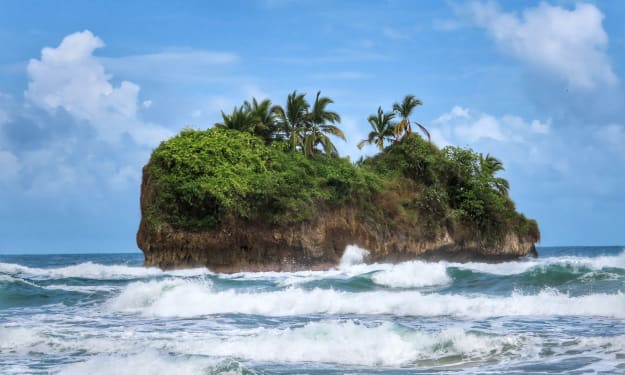
Beach bumming in a small Caribbean beach town sounded like a perfect way to end our 6-month trip through Mexico and Central America. Or so we thought. The foul, fishy stench of rotten seaweed hit our nostrils as we stepped from the cramped bus and looked out at a rather depressing, empty, and underwhelming black sand beach. It was pouring with rain, and we had to quickly fish out our ponchos. We thought, this couldn’t be it, could it?
By Sh*t Happens - Lost Girl Travel7 days ago in Wander
What Hidden Costs Should You Know in Armenia Tour Packages?
Booking Armenia Tour Packages is one of the easiest ways to explore this beautiful Caucasus destination. Many travel packages include hotels, transfers, and sightseeing tours, making travel convenient and organized. However, travelers should also be aware that some hidden costs may not always be included in the initial price.
By Viacation Tourism2 days ago in Wander


Comments
There are no comments for this story
Be the first to respond and start the conversation.