
What if ASEAN was a country?
A Thought Experiment on the Unification of ASEAN into a single nation
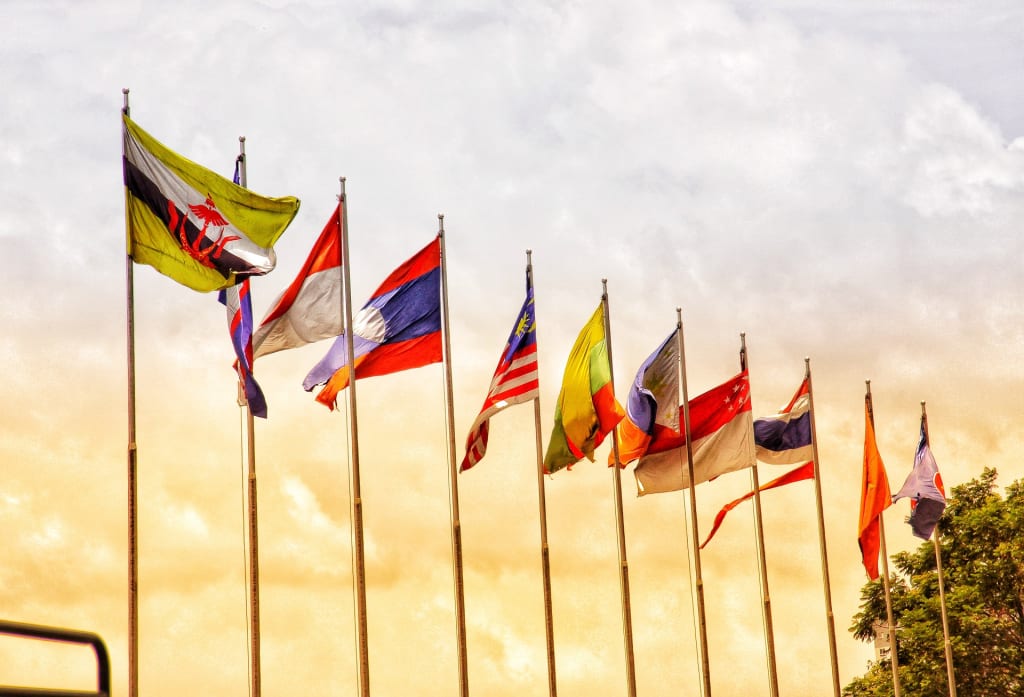
Imagine a world where the Association of Southeast Asian Nations (ASEAN) has finally achieved its long-standing goal of unification, forming a single, powerful nation-state. This new nation, which we shall call the United States of Southeast Asia (USSA), has become a dominant player on the world stage, with a population of over 650 million and a GDP of over $3.1 trillion. The USSA has a rich history and culture, with a diverse population that speaks dozens of languages and practices numerous religions.
The idea of ASEAN unification has been around for decades, but it was only in recent years that the necessary political and economic conditions were finally in place to make it a reality. The process of unification was a long and difficult one, with numerous challenges and setbacks along the way. However, the end result was worth it: a unified Southeast Asia that is stronger and more prosperous than ever before.
The new nation of USSA is made up of ten former ASEAN member states: Brunei, Cambodia, Indonesia, Laos, Malaysia, Myanmar, the Philippines, Singapore, Thailand, and Vietnam. Each of these states has its own unique history and culture, but they are united by a common language (English), a common currency (the ASEAN dollar), and a common system of government (a federal parliamentary democracy). The USSA is divided into ten administrative regions, each corresponding to one of the former ASEAN member states.
The benefits of unification are immediately apparent. The USSA is now one of the largest economies in the world, with a large and growing middle class that is driving economic growth and development. The USSA is also home to a vibrant cultural scene, with artists, writers, and musicians from across the region coming together to create a unique and dynamic culture that draws on the traditions of all ten member states.
One of the key challenges of unification was the issue of language. With so many different languages spoken across the region, it was clear that a common language would be necessary for effective communication and governance. After much debate and discussion, English was chosen as the official language of the USSA. This decision was not without controversy, as many people felt that it would lead to the loss of local languages and cultures. However, proponents of English argued that it was the most widely spoken language in the world, and that it would help to unify the region and facilitate communication with the rest of the world.
Another challenge of unification was the issue of governance. With such a large and diverse population, it was clear that a strong and effective system of government would be necessary to ensure stability and prosperity. The USSA is now a federal parliamentary democracy, with power divided between the central government in the capital city of Jakarta and the ten regional governments. Each region has its own elected governor and legislative assembly, and the central government is headed by a prime minister and a cabinet.
Despite these challenges, the USSA has emerged as a powerful and prosperous nation-state. The benefits of unification are apparent in every aspect of society, from the economy to the arts. The USSA has become a major player on the world stage, with a strong and influential voice in international affairs. The region is now able to speak with one voice on issues such as climate change, human rights, and economic development.
However, there are also some potential drawbacks to ASEAN unification. One of the most significant is the loss of local identity and culture. With English now the official language of the USSA, there is a risk that local languages and cultures could be overshadowed and lost. There is also a risk that the central government could become too powerful, at the expense of the regional governments.
Another potential issue is the question of representation. With such a large and diverse population, it is important to ensure that all voices are heard and that all regions are represented equally. There is a risk that certain regions could be marginalized or overlooked, especially if the central government is too powerful. It is important for the USSA to have a system of checks and balances to ensure that power is distributed fairly and that everyone has a say in how the country is run.
Despite these potential drawbacks, the benefits of ASEAN unification far outweigh the costs. The USSA is now a major player on the world stage, with a strong and influential voice in international affairs. The region is able to speak with one voice on issues such as climate change, human rights, and economic development. The USSA is also more prosperous and stable than ever before, with a growing middle class that is driving economic growth and development.
In conclusion, the unification of ASEAN into a single nation-state is a powerful thought experiment that raises many interesting questions and challenges. While there are certainly potential drawbacks to such a scenario, the benefits are significant and far-reaching. The USSA would be a major player on the world stage, with a strong and influential voice in international affairs. The region would be more prosperous and stable than ever before, with a growing middle class that is driving economic growth and development. Ultimately, the unification of ASEAN into a single nation-state is a compelling vision of a more integrated, connected, and prosperous Southeast Asia.
About the Creator
Keep reading
More stories from Alejandrino Abrina and writers in Wander and other communities.
In the Eyes of a Modern Immortal
As an immortal who has lived for over 2,000 years, I have seen many wonders of the world. I have witnessed the rise and fall of empires, the birth of religions, and the evolution of mankind. I have traveled far and wide, seen the most beautiful landscapes and met the most interesting people. But even after all these years, the world still holds many surprises for me.
By Alejandrino Abrina3 years ago in Fiction
Worth the Wait: Puerto Viejo, Costa Rica
Beach bumming in a small Caribbean beach town sounded like a perfect way to end our 6-month trip through Mexico and Central America. Or so we thought. The foul, fishy stench of rotten seaweed hit our nostrils as we stepped from the cramped bus and looked out at a rather depressing, empty, and underwhelming black sand beach. It was pouring with rain, and we had to quickly fish out our ponchos. We thought, this couldn’t be it, could it?
By Sh*t Happens - Lost Girl Travel4 days ago in Wander
Early March 2026: 4 Goals Accomplished
It's early March and I've now accomplished my 4th writing goal for the year of 2026. Before diving into the behind-the-scenes of it... why not tell you up front what that accomplishment was? I was published in a 2nd publication for this year. Published in Helix Literary Magazine out of Central Connecticut State University. You can read it for free right now!
By Stephen Kramer Avitabile4 days ago in Writers




Comments
There are no comments for this story
Be the first to respond and start the conversation.