
What A Load Of Rubbish
London Sits On 2000 Years Of Rubbish
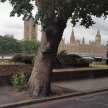

Did you know London sits on 2000 years of rubbish? It’s true. It’s not any old rubbish, either. It’s Roman rubbish.
Romans In London
London is steeped in history, with the Roman settlement of Londinium, founded in AD 43. The city grew, got burned, and rebuilt itself many times, each era leaving behind a whole load of rubbish.
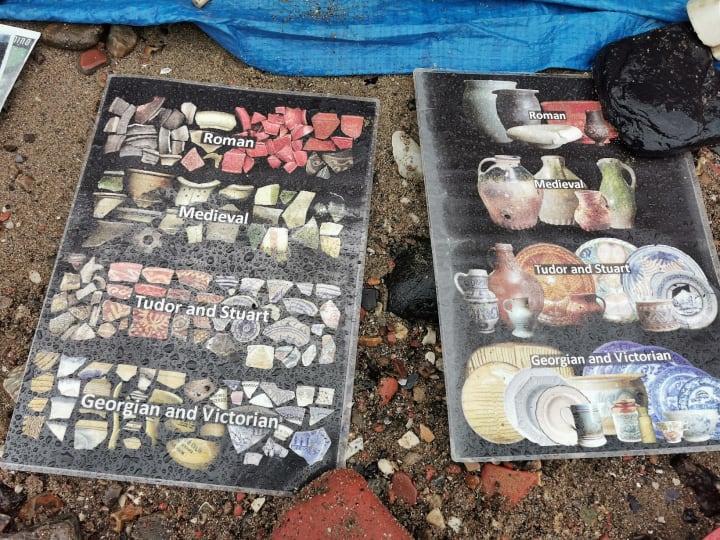
Archaeologists have unearthed everything from Roman pottery shards to medieval cesspits brimming with organic waste, all buried beneath the modern metropolis.

The River Thames, once a dumping ground for rubbish and sewage, has shifted its banks over centuries, preserving discarded relics in mud and silt.
The Great Fire of 1666 and the Blitz added charred and shattered contributions to this collection.
The London Wall
The London Wall, constructed by the Romans in the late 2nd or early 3rd century AD, was a formidable defensive barrier encircling Londinium. It stretched roughly 3 kilometres and stood up to 6 metres high.

The Romans didn’t have Dustbin collections like we do today. So what did those living near the Wall do? Throw the rubbish in the River Thames or over the London Wall.

Streets like Cheapside sit atop a chaotic mix of bones, broken tools, and lost coins while the city’s tube tunnels weave through a hidden landscape of forgotten filth.


The Rubbish
Excavations along the wall’s base, like those near the Tower Hill area, have uncovered heaps of refuse, including pottery fragments, oyster shells, and even leather shoes, and very well preserved due to the anaerobic mud.
The wall’s northern stretches, where settlements were denser, saw the most debris, with some spots effectively raising the ground level as rubbish accumulated. The London Wall might have been a bastion of strength, but the human side of life in Londonium was more chaotic.
Mud Larking
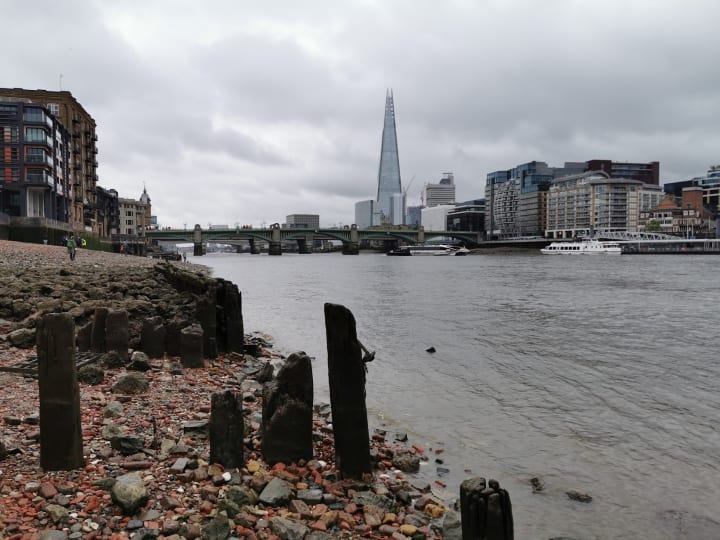
I went mudlarking along the Thames and saw first-hand the different types of objects thrown onto the river banks as the tide went out.
Since creating Tabby London, I've been fascinated by history. I paid little attention in history classes, but now I seek it out wherever and wherever I can. So, I didn't hesitate to sign up for the Mudlarking experience because London sits on 2000 years worth of rubbish. The River Thames will inevitably throw some junk onto the river shoreline.
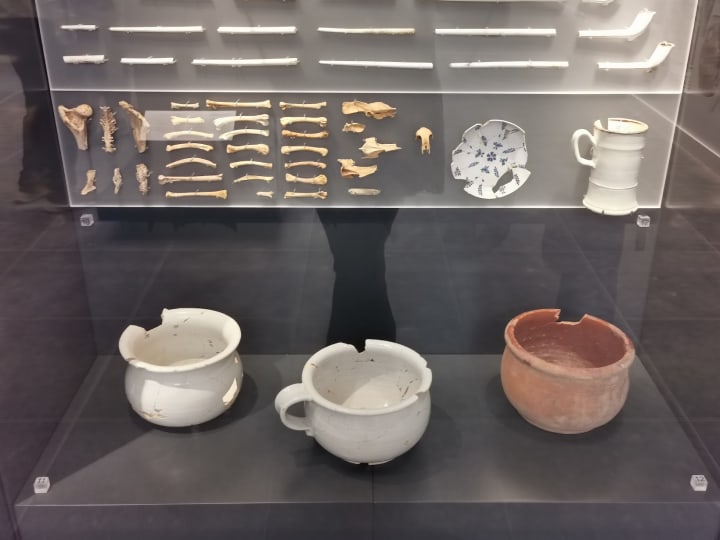
I went to Mudlarking on a school trip when I was seven years old, and I remember being fascinated by the plentiful clay pipes on the river shore. Clay pipes, like today's vapes, were accessible to people, primarily men, who visited taverns in the 16th Century.
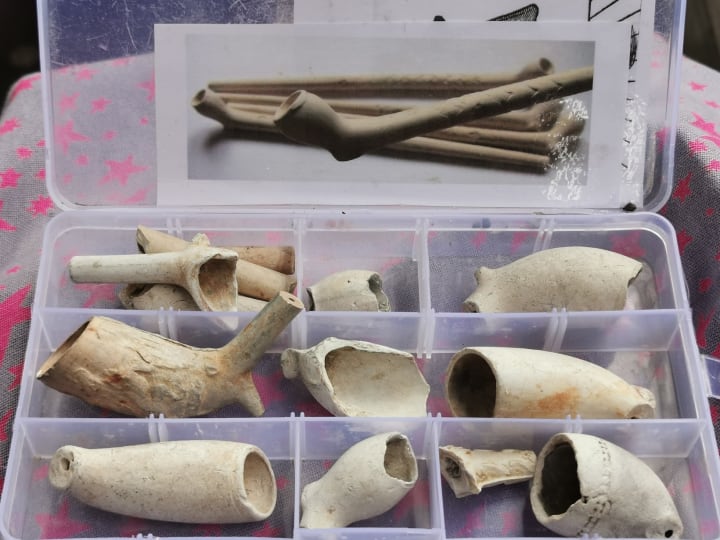
I thought nothing about Mudlarking after my school trip, but recently, I read about it while researching the Museum of London. I once saw a cabinet filled with objects found on the river shoreline. I also knew they had strict rules about taking anything from the riverbed when the tide was out.
My favourite part was the wrap-up, where we learned the history behind the items we found: pottery pieces dating back to King Henry VIII's time, tiles from the Edwardian and Victorian eras, and glass dating to 1780.
Some of the bones dated back 500 years. This piece of history wowed me.
Parting Comments
Modern Londoners walk around unknowingly over this vast, smelly legacy. This is a testament to the city’s knack for piling the new atop the old and turning yesterday’s rubbish into the foundation of tomorrow.
Thanks to compacted layers of waste, the ground level has risen by as much as 10 metres in some areas, forcing builders to sink foundations deeper into the earth.
‘One man’s trash is another man’s treasure’ rings true in London.
Thank you for your attention.
Best wishes
Tabby
F you enjoyed reading this article and want to support my work, you can now buy me a coffee ☕️.
https://buymeacoffee.com/tabbylondon?new=1
About the Creator
Tabby London
The London I've been discovering is usually off the well-beaten track.I love the nooks and crannies and walking along the streets steeped in centuries worth of history. I'm fond of Zone 1 because that's where it all began centuries ago.
Keep reading
More stories from Tabby London and writers in Wander and other communities.
The Amphitheatre Under The Guildhall Art Museum
Did you know that there is the remains of a Roman Amphitheatre underneath the Guildhall Art Museum in The City of London? The Square Mile as it’s known is filled with history in every nook and cranny. I have been to the Amphitheatre before as part of a school trip as a child. However, it’s a completely different experience as an adult.
By Tabby London12 months ago in Wander
Another Walk Through Hulne Park, Alnwick
Introduction There are three walks in Hulne Park, and I have written aboutmy walks here before, but this is my wander in 2026. I now always choose Walk 1 because you get some of the best views on this one. It's the light blue oneon themap below.
By Mike Singleton 💜 Mikeydred 4 days ago in Wander
Review of 'Man on the Run'
My wife and I saw Man on the Run, a nearly 2-hour documentary on Amazon Prime, about Wings, Paul McCartney's group that flew around the world from shortly after The Beatles broke up in early 1970 to shortly after John Lennon was murdered at the end of 1980, making a Beatles reunion forever impossible.
By Paul Levinson7 days ago in Beat


Comments
There are no comments for this story
Be the first to respond and start the conversation.