
Walk Among the Ghosts of the Past
Ghost towns across the US


Cahawba, Alabama has an interesting history. It was the capital of the state of Alabama from 1820 to 1825 until it flooded so many times residents had to flee. Then for many years, Cahawba remained a hub of cotton distribution. The town was the home of the Confederate Castle Morgan prison during the Civil War where thousands of Union soldiers were imprisoned between 1863 and 1865 when another flood cleared the town. By the 1900s most of the buildings were demolished.

What was left could be visited by tourists. The welcome center was built in the image of a notable general's cottage and includes a small museum of artifacts and photos from Cahawba's past.

Visitors can take self-guided tours of the major Civil War sites and the cemetery.

They can walk along a woodsy nature trail and see the Crocheron Columns. These are the only things remaining of the Crocheron Mansion where important negotiations were made during the Battle of Selma.
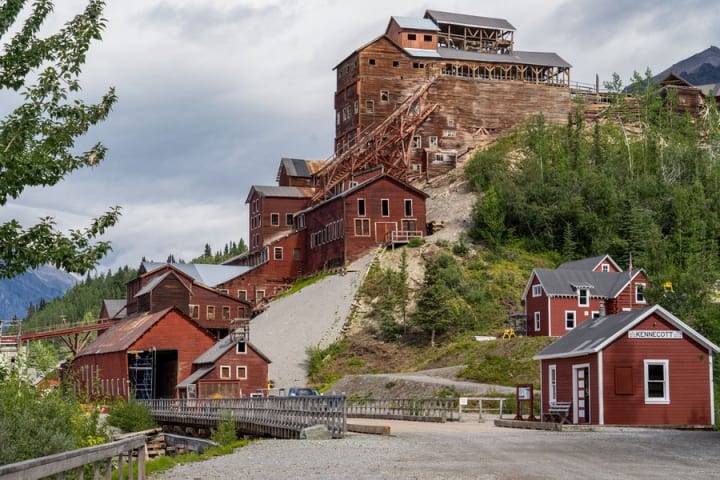
Kennecott, Alaska is where copper miners went in the early 1900s. At this time two prospectors discovered $200 million dollars worth of copper and established the Utah Copper Company in 1903. Soon along with J.P. Morgan and the Guggenheims, the place became a "company town" with a tennis court and skating rink. One of the five mines had the world's richest copper concentrations and was called "Bonanza." When the copper supply started to run low the mines were shuttered in 1938.
Today Kennecott is a National Historic Landmark in the heart of Wrangell-St. Elias National Park. You'll find the iconic red mill upon a hill 14 stories above a glacier. It can be explored by those taking the official Kennecott Mill Town Tour.
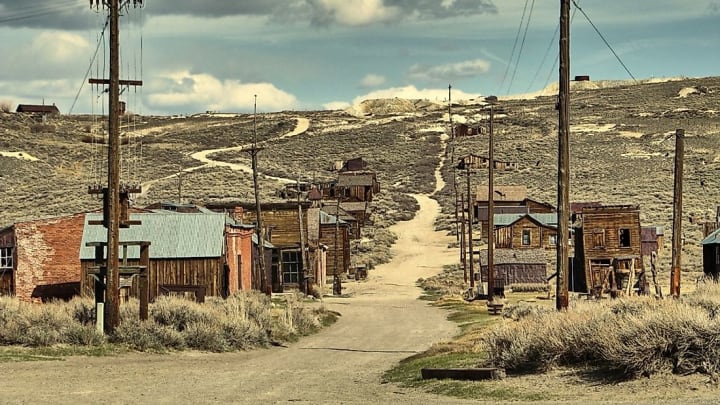
Bodie, California looks just like you stepped onto a Western movie set. It is one of the most famous ghost towns in the US. William S. Bodey established the town in 1859 after discovering gold. During the California Gold Rush, there were 10,000 people in the town which was roughly the same population as Los Angeles. There were 2,000 buildings in the town by 1880. When the gold supply depleted the townsfolk moved out and the last mine was closed in 1942.

Today Bodies is a National Historic site with buildings in various stages of decay. Inns still have pool tables with balls and cues waiting for players. Some store shelves still remain stocked. During the summer visitors can take guided tours through the Standard Mill to see how gold was extracted.

St. Elmo, Colorado was founded in 1880 and became a gold mining town and a popular stop on the Pacific Railroad. There are 2000 residents and over 150 mines. Dance halls kept all the folks happy. In 1910 when the Alpine Tunnel closed the liveliness stopped. Some residents remained and another 30 years down the line the postmaster died and postal service was discontinued.
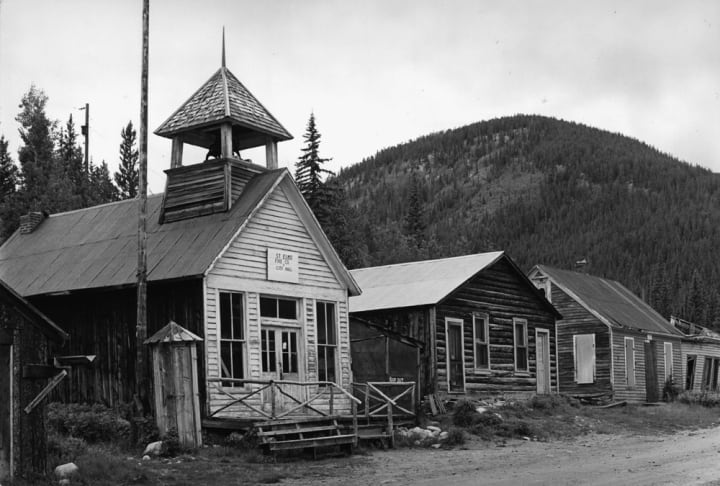
St. Elmo turned into one of the best-preserved ghost towns in the US. Of the remaining buildings, the Town Hall was reconstructed in 2000 after a fire. Visitors can tour the old mining roads, fish in Chalk Creek, stay in a historic cabin and shop at the general store that is open all summer.
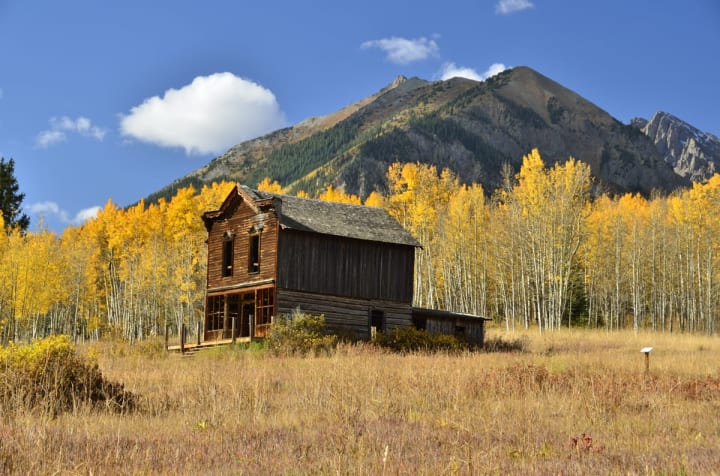
Ashcroft, Colorado developed when two prospectors discovered silver in 1880 and created a Miner's Protective Association attracting 23 other miners. Streets were built and a courthouse, In five years there were 3,500 residents. However, the mines emptied and by the end of 1885, only 100 residents remained.

The Winter Olympics came to the area in the 1930s and the Highland Bavarian Lodge was built. The two men who built the lodge were Billy Fiske, captain of the American bobsled team and the youngest gold medalist in any Winter Olympic sport and his business partner Ted Ryan. Fiske was killed in WW II and the dream ended. Since 1939 Ashcroft has been a ghost town.

Virginia City, Montana was the former home of the famous frontierswoman Calamity Jane. This old gold mining town didn't have a proper justice system and there were many robberies and murders and gangs of outlaws known as road agents killed 100 people between 1863 and 1864. Virginia City served as the capital of Montana Territory before it became a state and the population grew to 10,000. After the gold ran out so did the people.

Nearly half the buildings in town are originals or have been restored and it has become a lively tourist destination with live music and other performances. There are tours for visitors to choose from depending on what interests them.

Garnet, Montana was named for the semi-precious red gems prospectors discovered along with gold. The town was inhabited from the 1860s to about 1912 at which time a fire razed half of the town. Garnet only lasted as long as the mines did. However, the isolated town maintained four hotels, two barbershops, a doctor's office, ad a school. It also had a daily stagecoach route to nearby towns.

Today you can see over 30 historic buildings among them a dozen cabins, a store and part of the J.K. Wells Hotel. The interiors are practically untouched and have dishes, furniture, and even clothes. Every June there is Garnet Day with activities for the public. In the wintertime, two cabins are available for rent. There are nature trails and visitors can enjoy hiking, fishing, skiing, off-roading, and camping.

Rhyolite, Nevada was a Gold Rush town founded in 1904 and deserted by 1915. The town sits on the edge of Death Valley. During its day there were hotels, a hospital, an opera house and a symphony and it even had its own stock exchange. What ended the town was the Panic of 1907 when banks failed, mines closed, and the newspaper shut down. The famed Montgomery Shoshone Mine stopped operating in 1911 and the town was deserted a few years later.

Rhyolite can be seen in some old Westerns among them "The Air Mail." Visitors can see the remains of the three-story bank, part of the old jail, general store, and train station. Outside of town visitors can enjoy the Goldwell Open-Air Museum.

Batsto Village, New Jersey was derived from the Swedish word batstu meaning sauna. It was a bustling ironworks town supplying the Continental Army during the Revolutionary War. Founded in 1766 the "company town" was owned by William Richards before its iron and coal production was replaced by a mine in Pennsylvania. In 1876 industrialist Joseph Wharton bought the town experimenting with manufacturing and agriculture. He also moved on to Pennsylvania.
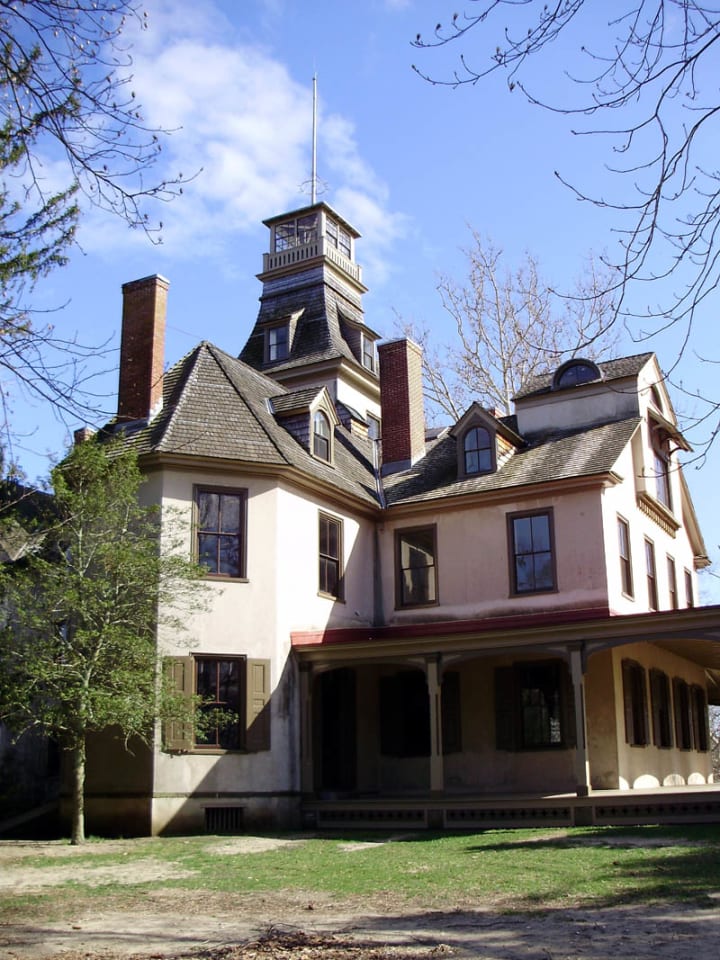
Today more than 40 original structures remain including Batsto Mansion, a sawmill, a blacksmith, ice and milk houses, a carriage house and stable and a general store. It is even possible to mail letters at the operational post office. It is maintained as a historical site, with a museum and visitor center.

Glenrio, Texas/New Mexico is a relic of the legendary Route 66 and straddles the Texas-New Mexico border. It was founded in 1903 and became a popular stopover for travelers. The town lost its significance in the early 1970s when the I-40 was built. Today visitors enjoy stopping by for some Route 66 nostalgia.
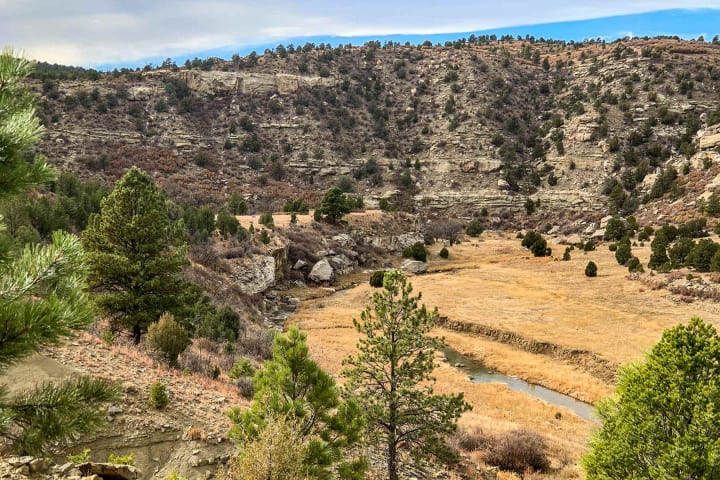
Dawson, New Mexico began as a promising company town for Dawson Fuel Company in 1901 but unfortunately, there were a series of devastating decennial explosions in the coal mines. The town reached a population of about 9000 when immigrants from Europe and Mexico moved in then in 1913 an explosion ended the community and people moved on.
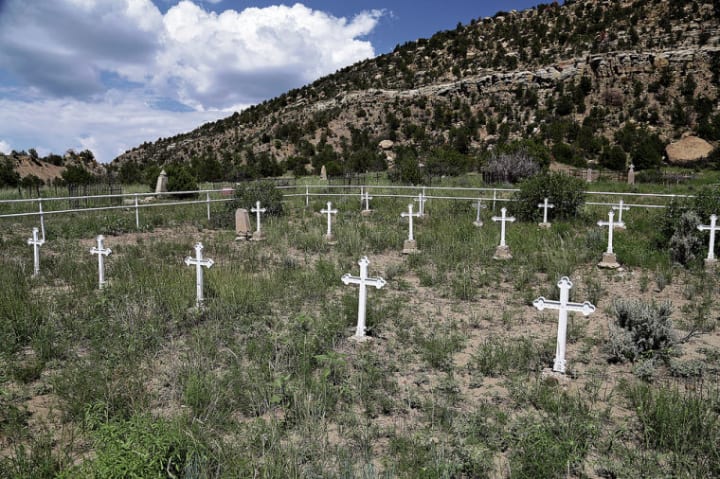
As demand for coal declined the last mine was closed in 1950. Most of the structures were demolished and the rest left to decay. The only notable landmark left is the Dawson Cemetery where you can see the white crosses on the graves of the nearly 400 people who died in mine explosions. It has become a haunted place and people have seen lights like those on mining helmets bobbing along, have heard moans and voices and have seen ghostly figures.
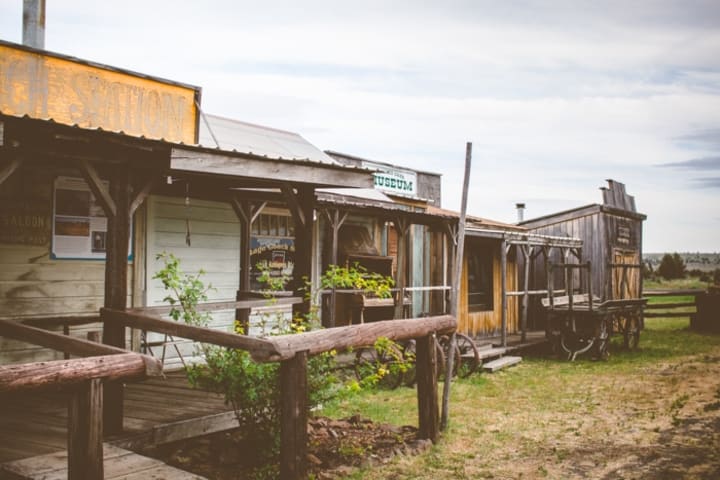
Shaniko, Oregon was the "Wool Capital of the World". In 1900 the Columbia Southern Railway came to the area connecting it to other parts of Oregon and surrounding states, The town was incorporated in 1901 and produced 2000 tons of wool that were shipped to other communities along the rail line. What brought decline to the town was another better railroad and two fires in the business district.
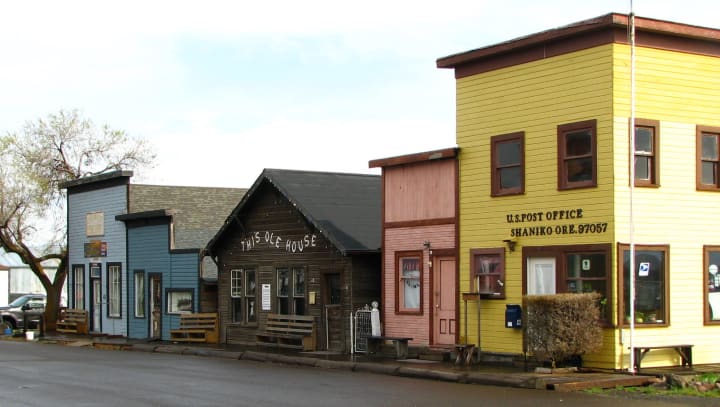
Since the 1950s Shanko has been a ghost town. Its main attraction is the Shanko Hotel which was built in 1902 and had guest rooms, a bank, and a dance hall. Other buildings here are the Sage Museum, Shanko School, city hall, jail, post office, and a wool barn. Businesses along "Shanko Row" open in the summertime for passing visitors including the popular ice cream shop Goldies.

Centralia, Pennsylvania was a thriving coal-mining town in the late 1800s, It had a population of about 2700. An abandoned mine caught fire in 1962 and since then it has been smouldering underground. There are only a few residents remaining today.
Awareness for the town came through the 2006 horror movie "Silent Hill" The coal that is fueling the fire is supposed to last for another 250 years. This means there are not a lot of visitors due to the toxic chemicals.

Mystic, South Dakota is located in the Black Hills and started as a small creekside camp in 1876. By 1885 the town had a post office, then came a rail line followed by another and it became responsible for importing coal into the Black Hills and exporting timber and gold.
Unfortunately, floods destroyed the bridges and rail lines, the town's sawmill burned down and the Great Depression almost finished the town. However, Mystic managed to rebuild and recover until the end of WW II.
Then the passenger trains stopped going to Mystic and the sawmill closed in 1952, followed by the post office, the parlors, and finally, the residents left. With over a dozen buildings left, the town is on the National Register of Historic Places. It is lovely to see the McCahan Chapel which is still used occasionally. Visitors can see the town and trek the Michelson Rail Trail.
About the Creator
Rasma Raisters
My passions are writing and creating poetry. I write for several sites online and have four themed blogs on Wordpress. Please follow me on Twitter.
Keep reading
More stories from Rasma Raisters and writers in Wander and other communities.
Living In Majestic Palaces
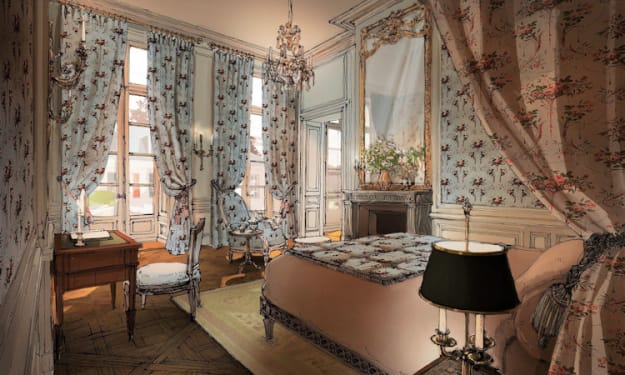
Europe France One of the famous palaces in the world is the Palace of Versailles. If you can imagine finding yourself among such luxury where once Louis XVI and Marie Antoinette lived. Walking the corridors of history could seem to be an impossible dream. Yet, now a luxury boutique hotel Airelles Chateau de Versailles, Le Grand Controle has opened its door within the palace walls. Visitors have a choice of rooms, suites and a luxurious apartment. Hotel guests can also get access to the palace after hours and can sign up for behind-the-scenes tours.
By Rasma Raisters4 years ago in Wander
Worth the Wait: Puerto Viejo, Costa Rica
Beach bumming in a small Caribbean beach town sounded like a perfect way to end our 6-month trip through Mexico and Central America. Or so we thought. The foul, fishy stench of rotten seaweed hit our nostrils as we stepped from the cramped bus and looked out at a rather depressing, empty, and underwhelming black sand beach. It was pouring with rain, and we had to quickly fish out our ponchos. We thought, this couldn’t be it, could it?
By Sh*t Happens - Lost Girl Travel6 days ago in Wander
Turkey: Take THEM With You.
The first time I went to Istanbul, I went with my sister. The second time, I brought family. Picture from the trip. Same city. Same accommodation - right in the center of everything, the spot we'd found the first time and couldn't justify leaving.
By Destiny S. Harris5 days ago in Wander
A More Human Vocal
When we launched Vocal nearly a decade ago, the world was a very different place. LLMs did not exist, and stories were created one at a time by people sitting down to write, revise, and share something personal. Many of our assumptions about publishing, trust, and participation were built for a world where effort and output were inseparable.
By Justin @ Vocal7 days ago in Resources



Comments
There are no comments for this story
Be the first to respond and start the conversation.